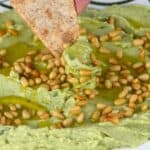
Fresh Basil Hummus
Fresh basil hummus combines creamy homemade hummus with fresh basil for a vibrant, flavorful basil dip reminiscent of pesto! All you need is 5 ingredients for this dip - perfect for serving with pita, crackers, and spread on wraps and sandwiches!
Servings: 8
Equipment
- Blender/Food processor or Hand-held blender
Ingredients
- 18 oz cooked chickpeas 2.5 cups (or canned equivalent)
- 3 Tbsp tahini
- 1/2 tsp salt
- 1 lemon juiced; adjust the amount to taste
- 1 garlic clove large; adjust the amount to taste; can use roasted
- 0.7 oz fresh basil leaves
- 1/4 cup ice water or more if desired
Instructions
Step 1: Prepare the Chickpeas
- If you aren't using canned or cooked/leftover chickpeas, you’ll first need to soak and cook dried chickpeas. If doing so, plan for the time required (they need to soak for 8+ hours before cooking for 40-50 minutes). I regularly cook them for around 40 minutes. However, the aim here is for them to be mushier than regular–so usually cook for between 50-60 minutes, with ½ teaspoon baking soda added to the cooking liquid.
- If you’re using canned chickpeas and don’t mind a slightly thicker hummus, then move on to step two. Otherwise, add the contents of your can and ½ teaspoon baking soda to a small saucepan. Then bring to a boil over high heat. Once boiling, reduce heat and simmer for around 20 minutes, or until the chickpeas are mushy.Once cooked, the baking soda will help to loosen some of the skins. I personally leave these in the hummus (as they’re so soft anyway). But if you want even smoother results, you can pick out some loose skins (no need to peel each individual chickpea).
Step 2: Blend the Basil Hummus
- Place all the ingredients (except the ice water) either in a blender, food processor, or large bowl (to use an immersion blender).
- Blend until smooth, stopping to scrape down the sides of the jug/bowl a couple of times. Once a paste-like consistency, add the ice water–one tablespoon at a time until the basil hummus is smooth and creamy.You can add a little additional ice water if you want an even thinner hummus. But try not to add too much as it will become watery and can impact the shelf life.
Step 3: Garnish and Serve
- Transfer the hummus to your serving bowl/plate and top with a drizzle of extra virgin olive oil and some lightly toasted pine nuts.
- To toast the pine nuts, heat a skillet over medium, then add the pine nuts. Cook until golden and fragrant, stirring often to avoid burning.Then serve the fresh pesto hummus and enjoy!
How Make Ahead and Store?
- Make ahead: when using homemade elements (tahini, cooked chickpeas), these can be prepared several days (or longer) in advance. You can also prepare the entire basil hummus the day before serving. This will give all the flavors a chance to "marinate" and develop – for even better basil hummus!Store: store any leftover basil hummus in an airtight container in the fridge for 4-5 days. To help prevent early spoilage, you can pour a thin layer of olive oil over the top of the hummus while storing.Freeze: transfer the pesto hummus to a freezer-safe container with some headspace. Then freeze for 3-4 months (or 5-6 when adding a layer of olive oil over the top). When you want to enjoy some hummus, allow it to thaw in the fridge before giving it a good stir or quick blitz in a blender to bring it back to the correct consistency.During the freezing/thawing process, the flavor may be slightly affected. So feel free to "top it up" with extra seasoning, lemon, garlic, etc., if needed.
Notes
- For more mellow raw garlic: if you aren't a fan of the robust flavor of raw garlic, you can mellow this by soaking the garlic in ice water for 10-15 minutes before adding it to the hummus.
- Adjust the flavors to personal taste: all the main elements in hummus are adjustable. People prefer more or less garlic, lemon juice, and tahini. The recipe is my particular favorite combination. However, I recommend everyone start by only adding a portion of what is written and increasing to taste.
- Where to source basil: the most frugal way would be to grow your own. However, after that, farmer's markets are usually more cost-efficient than supermarket basil. However, if you purchase it from the supermarket, it's best to purchase the basil in the clamshell packages (usually fresher and cheaper).
- The color of the basil hummus: not only can this vary anyway, based on your basil, but also, basil can darken when oxidized (which happens once blended). If you want it to retain the bright green flavor, you can blanch the basil leaves in boiling water for 5 seconds, then quickly transfer to an ice bath. Pat dry, then continue with the recipe.
- Adjust the amount of water: based on your preferred consistency of homemade hummus, you may want to add a little less or more ice water. Add it incrementally so you don’t accidentally add too much.
- Allow hummus to rest: when possible, I recommend making this green hummus recipe a day in advance. The longer the basil dip has to "marinate" and for the flavor to meld, the better the flavor.
Nutrition
Calories: 143kcal | Carbohydrates: 20g | Protein: 7g | Fat: 5g | Saturated Fat: 1g | Polyunsaturated Fat: 2g | Monounsaturated Fat: 2g | Sodium: 153mg | Potassium: 239mg | Fiber: 6g | Sugar: 3g | Vitamin A: 155IU | Vitamin C: 9mg | Calcium: 48mg | Iron: 2mg