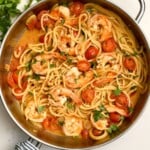
Shrimp Pasta
Juicy jumbo shrimp tossed with spaghetti or linguine in a light, glossy sauce of garlic, cherry tomatoes, white wine, lemon, and homemade shrimp stock. Fresh, bright, and full of seafood flavor without cream or heavy tomato sauce.
Servings: 2
Equipment
- Large deep skillet with lid
- Fine mesh strainer
- Small saucepan
- Tongs for cooking
Ingredients
For the pasta and shrimp
- 10 jumbo raw shrimp (about 3/4 lb) whole, head-on shrimp are preferred. You can also use peeled and deveined shrimp, with tails left on if preferred.
- 7 ounces spaghetti or linguine
- 10 cherry tomatoes (about 3/4 cup), halved
- 3 garlic cloves thinly sliced
- 1 tablespoon extra-virgin olive oil
- 1 3/4 tablespoons unsalted butter divided
- 1/3 cup dry white wine
- 1/3 cup homemade shrimp stock plus a little extra if needed
- pinch of red pepper flakes adjust to taste
- zest of half lemon
- 1 teaspoon fresh lemon juice adjust to taste
- 1 handful fresh flat-leaf parsley chopped
- salt to taste
- freshly ground black pepper to taste
- fresh arugula to serve (optional)
Optional quick homemade shrimp stock
- heads and shells from the shrimp
- 1 tablespoon olive oil
- 1 garlic clove lightly crushed
- 1 1/2 cups water
Instructions
- If making the optional shrimp stock, heat 1 tablespoon olive oil in a small saucepan over medium-high heat. Add the shrimp heads and shells and sauté for 2 to 3 minutes, stirring and pressing down on the heads with a wooden spoon until they turn orange and become very aromatic. Add the crushed garlic clove and 1 and 1/2 cups water. Bring just to a boil, then lower to a gentle simmer for 10 to 15 minutes, occasionally pressing the heads and shells to extract their juices. Strain through a fine-mesh sieve, pressing the shells to extract as much liquid as possible. Do not salt the stock. Do not simmer for longer than 15 minutes or the stock can become bitter.
- Bring a large pot of water to a boil and salt it generously. Add the spaghetti or linguine and cook until about 2 minutes less than the package directions for al dente, since it will finish cooking in the sauce. Before draining, reserve at least 1 full cup of pasta cooking water. Drain the pasta but do not rinse it.
- Pat the shrimp very dry with paper towels and season lightly with salt and black pepper on both sides. Drying them well helps them sear rather than steam.
- Heat a large skillet over medium-high heat. Add 1 tablespoon olive oil and 1 tablespoon butter. Once the butter is gently foaming, arrange the shrimp in a single layer. Cook for about 60 to 90 seconds on the first side, then flip and cook for 30 to 60 seconds on the second side. Immediately transfer the shrimp to a plate. They should be almost cooked but not completely firm, as they will return to the pan at the end.
- Reduce the skillet to medium heat. In the same pan with the flavorful juices from the shrimp, add the sliced garlic and a small pinch of red pepper flakes. Cook for just 20 to 30 seconds, stirring constantly. Do not let the garlic brown.
- Add the halved cherry tomatoes and a tiny pinch of salt. Cook for 2 to 3 minutes, just until the tomatoes begin to soften and release some juice. Some should still hold their shape.
- Pour in the white wine and increase the heat slightly if needed. Let it bubble for 1 to 2 minutes.
- Add the shrimp stock and let it bubble for about 1 minute. The sauce should still look quite loose and juicy at this stage.
- Add the drained pasta directly to the skillet along with about 1/4 cup reserved pasta water. Toss over medium heat for 1 to 2 minutes until the sauce becomes silky and glossy. If the pasta starts looking dry, add another splash of pasta water or shrimp stock.
- Return the seared shrimp to the skillet, including any juices from the plate. Toss for only 30 to 60 seconds, just until warmed through. Turn off the heat.
- With the heat off, add the chopped parsley, lemon zest, a small squeeze of lemon juice, and the cold finishing butter. Toss until the butter melts into the sauce. Taste and adjust salt, pepper, or lemon as needed. Serve immediately, with fresh arugula alongside if desired.
Notes
- Shrimp stock: optional but strongly recommended if using whole shrimp with heads and shells. It adds remarkable seafood depth. Without it, use low-sodium seafood stock or mild vegetable stock.
- Wine substitution: replace the white wine with an equal amount of additional shrimp stock or low-sodium seafood stock, then add about 1 extra teaspoon of lemon juice at the end. Stock and lemon keeps the sauce savory and bright.
- Do not overcook the shrimp. Sear them briefly, remove them, and return them only at the very end for 30 to 60 seconds.
- Keep the sauce slightly looser than you think it needs to be. The pasta continues absorbing liquid as it sits and after plating.