

This post may contain affiliate links. If you buy through them, I earn a small commission at no extra cost to you. As an Amazon Associate I earn from qualifying purchases. Read my disclosure policy.
After trying shrimp pasta at countless restaurants, I knew exactly what I wanted from my homemade version: juicy shrimp, plenty of garlic and fresh tomatoes, and a light, glossy sauce packed with real seafood flavor. Some restaurant versions are beautifully fresh and saucy, while others taste overwhelmingly of tomato or end up dry. I wanted to get it right at home.
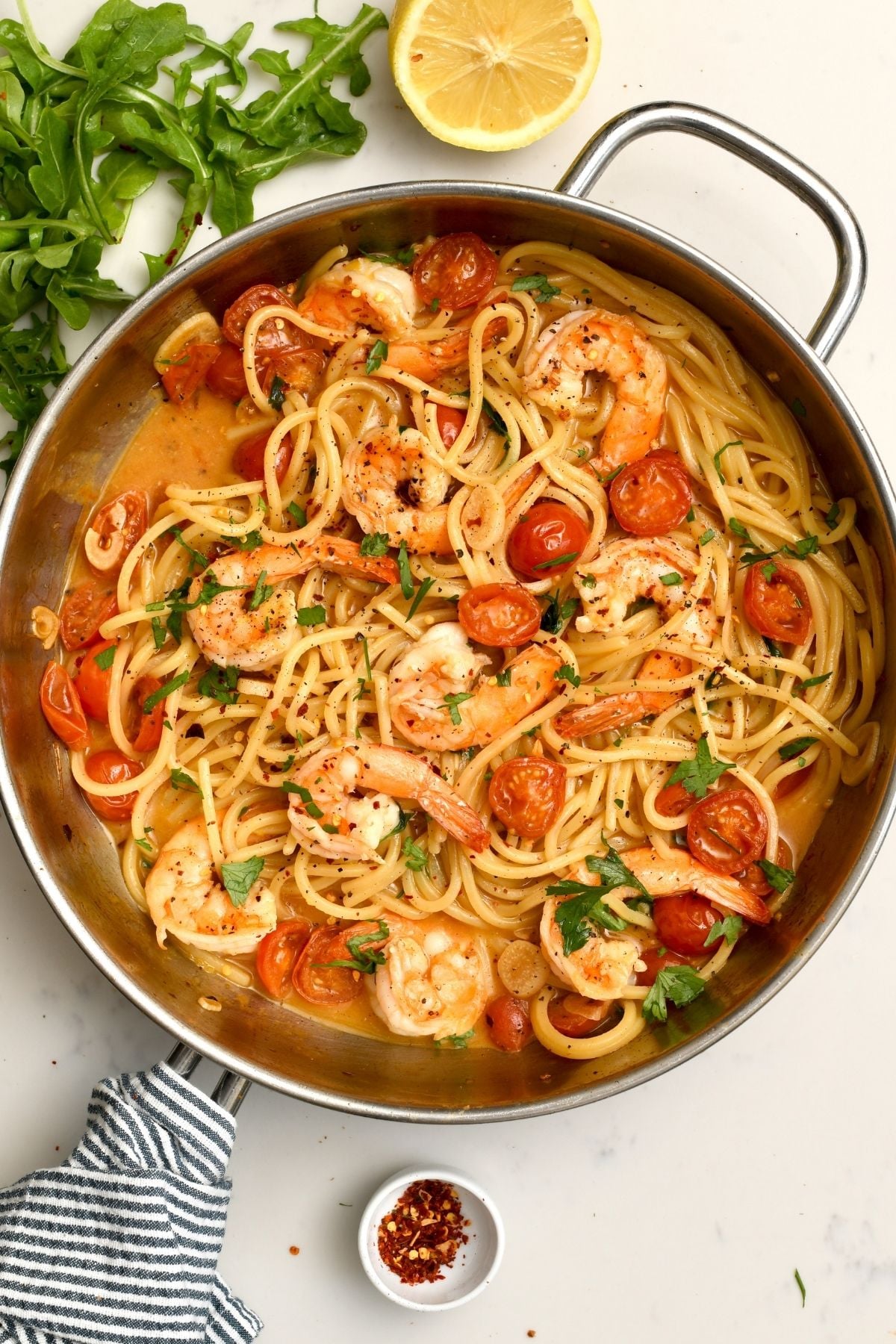
The secret turned out to be a quick homemade shrimp stock made from the shells and heads, which takes just minutes and transforms the entire sauce without needing cream or tomato paste.
If you love seafood pasta, you might also enjoy my shrimp scampi or this simple garlic butter shrimp for an even quicker weeknight meal.
Shrimp pasta ingredients
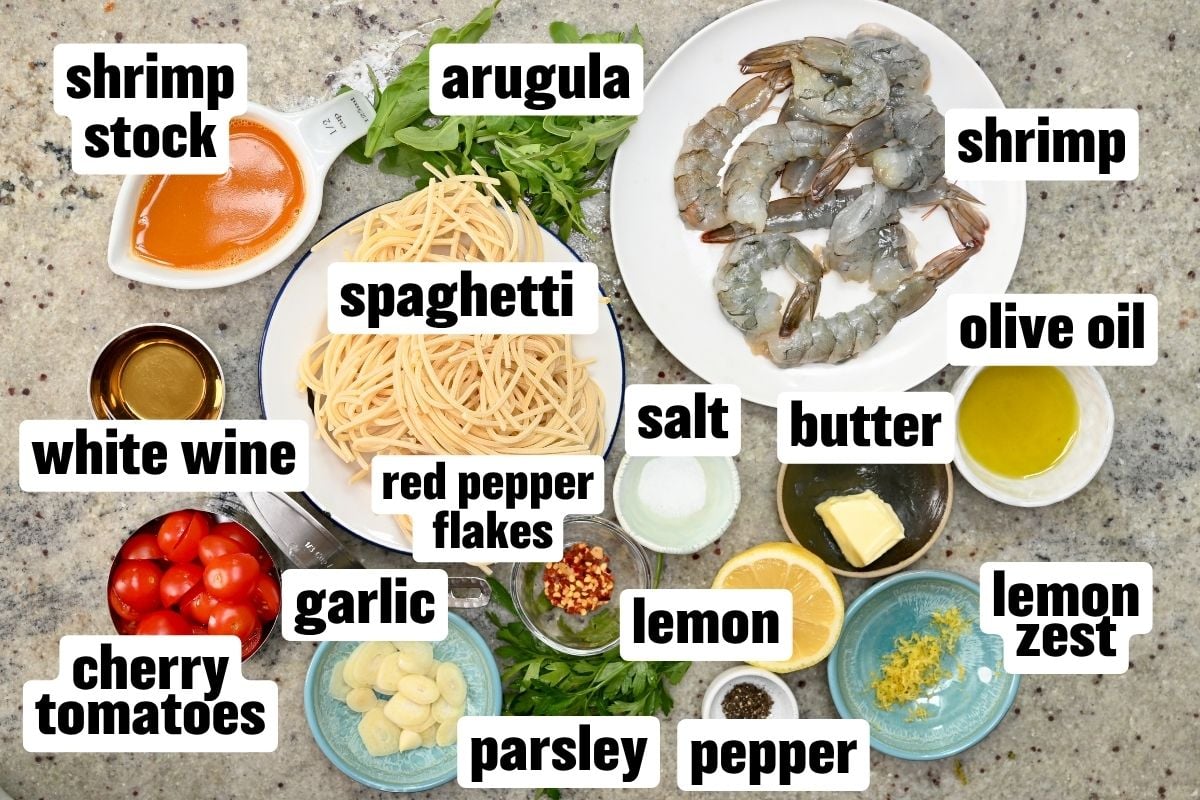
- Jumbo raw shrimp: Whole, head-on shrimp are preferred for the best flavor, but peeled and deveined shrimp work just as well. If using whole shrimp, save the heads and shells to make the homemade stock below.
- Spaghetti or linguine: Either shape works beautifully here. We tested this version with spaghetti, but linguine is a classic choice too.
- Cherry tomatoes: Halved. They only cook for a couple of minutes, so they stay fresh and bright rather than breaking down into a heavy sauce.
- Garlic: Thinly sliced so it softens gently without burning.
- Extra-virgin olive oil and unsalted butter: Used together for searing the shrimp and building the sauce. A little cold butter is also added at the end for a glossy finish.
- Shrimp stock: Homemade is strongly recommended when using whole shrimp. It takes about 15 minutes to make from the heads and shells and adds incredible depth to the sauce. If using peeled and deveined shrimp, you can use store-bought shrimp stock instead.
- Dry white wine: Adds brightness and acidity. For a non-alcoholic version, replace it with additional shrimp stock or low-sodium seafood stock, plus a little extra lemon juice at the end.
- Red pepper flakes: Add a gentle touch of heat. Adjust to your taste.
- Lemon zest and lemon juice: Added at the end for fresh, bright flavor.
- Fresh flat-leaf parsley: Stirred in at the end for freshness and color.
- Seasonings: Salt and freshly ground black pepper, to taste.
- Fresh arugula (optional): Lovely served underneath or alongside the finished pasta.
See printable recipe card below for the full ingredients list and quantities.
How to make shrimp pasta
If using whole shrimp with the heads and shells, start by making the shrimp stock. (see how to peel and devein shrimp).
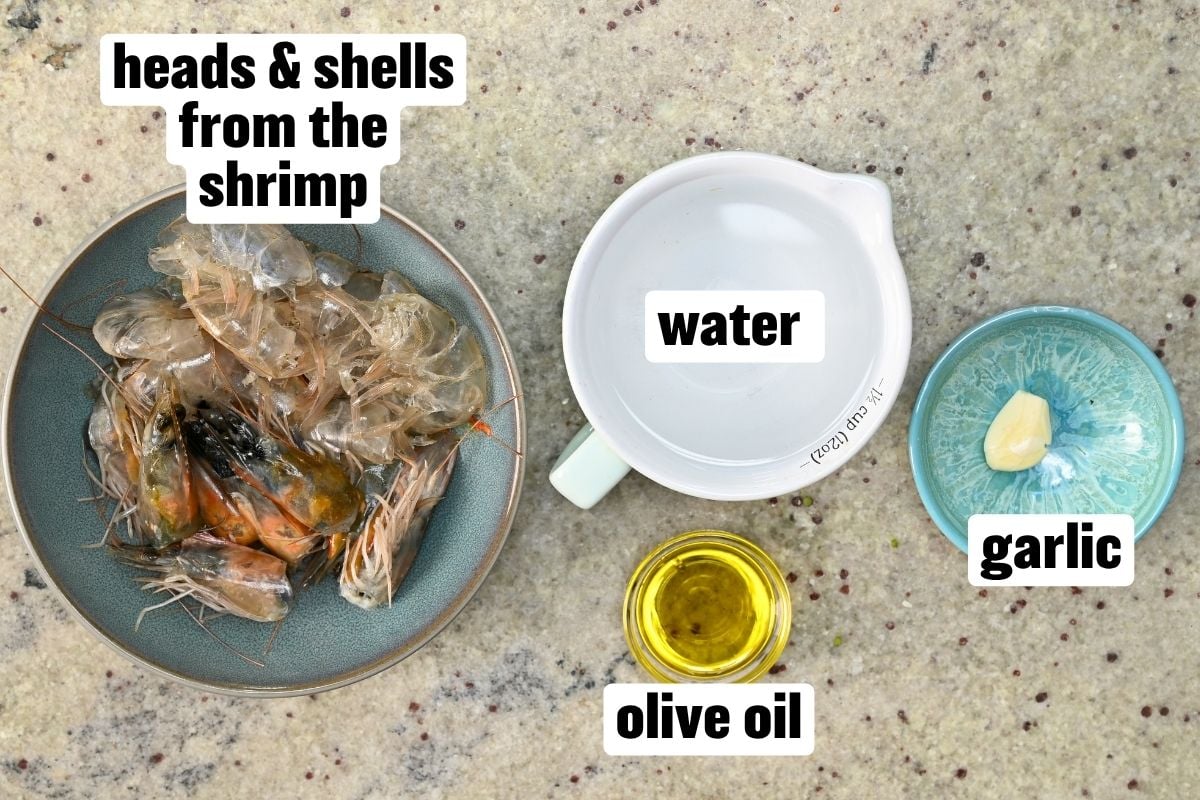
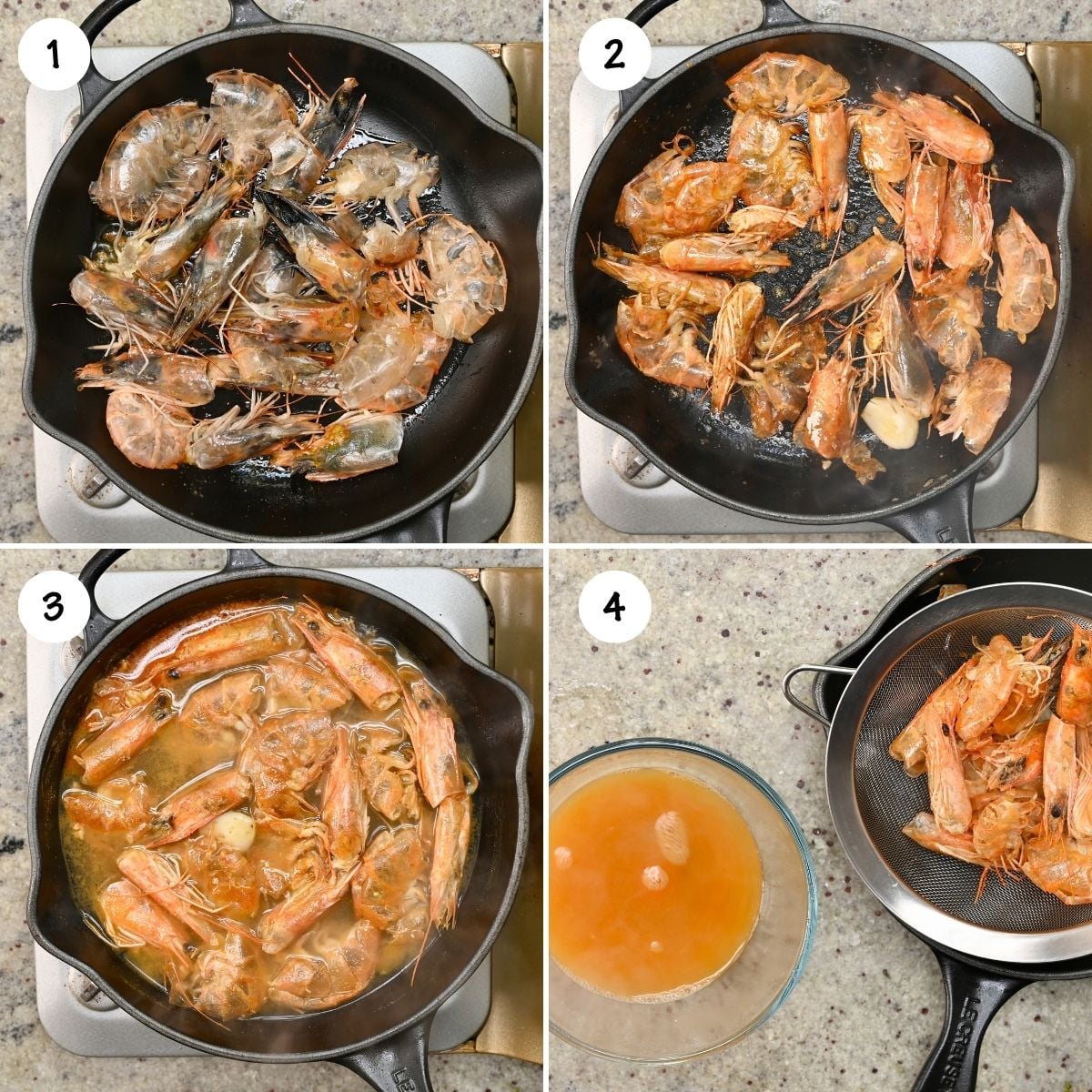
Heat the olive oil in a small saucepan over medium-high heat. Add the shrimp heads and shells and sauté for 2 to 3 minutes, pressing down on the heads with a wooden spoon to release their juices. They should turn orange and become fragrant.
Add a lightly crushed garlic clove and water, bring just to a boil, then lower to a gentle simmer for ten to fifteen minutes. Strain through a fine-mesh sieve, pressing the shells to extract as much liquid as possible. Do not add salt.
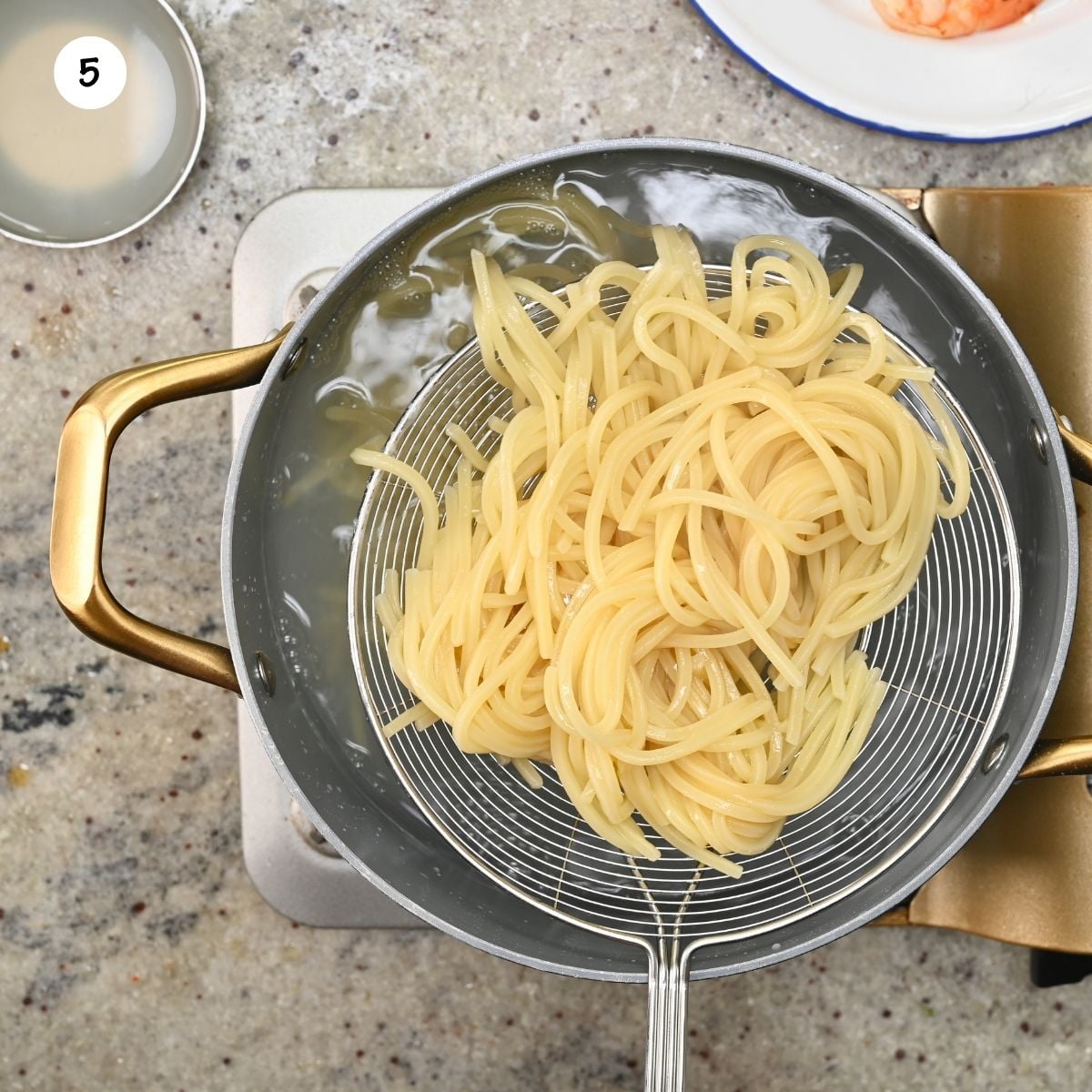
Bring a large pot of water to a boil and salt it generously. Add the spaghetti or linguine and cook the pasta until about two minutes less than the package directions for al dente, since it will finish cooking in the sauce. Before draining, reserve at least one full cup of the pasta cooking water. Drain the pasta but do not rinse it. That starchy surface is essential for building the sauce.
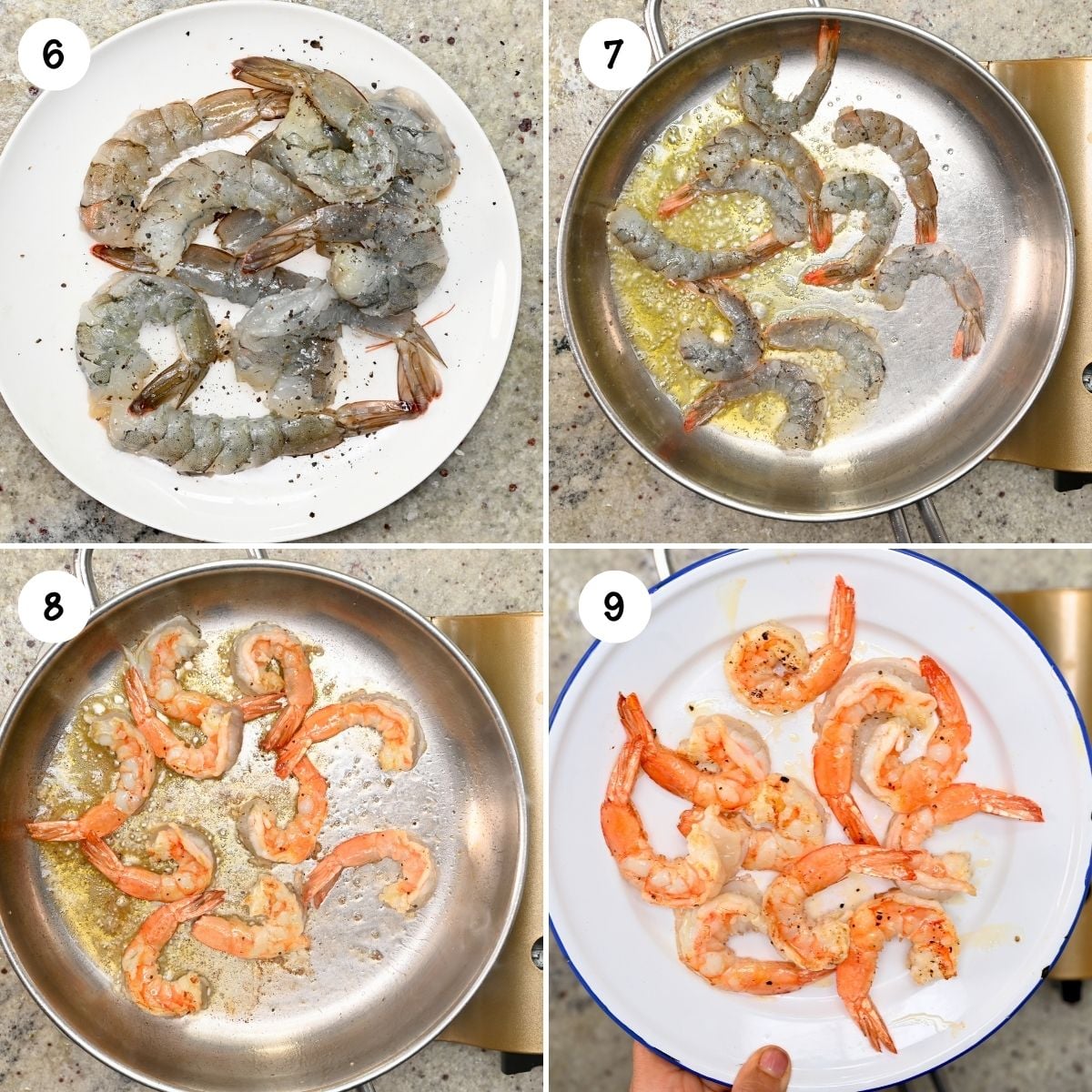
Pat the shrimp very dry and season lightly with salt and black pepper on both sides. Drying them well is important because it helps them sear rather than steam.
Heat a large skillet over medium-high heat and add the olive oil and butter. Once the butter is foaming, arrange the shrimp in a single layer. Cook for 60 to 90 seconds on the first side, then flip and cook for another 30 to 60 seconds. Transfer the shrimp to a plate right away. They should be just shy of fully cooked, as they’ll return to the pan at the end.
Reduce the skillet to medium heat. In the same pan with all the flavorful juices left from the shrimp, add the sliced garlic and a small pinch of red pepper flakes. Cook for just twenty to thirty seconds, stirring constantly. Do not let the garlic brown or burn.
Add the halved cherry tomatoes and a small pinch of salt. Cook for 2 to 3 minutes, just until the tomatoes begin to soften and release some of their juices, while some still hold their shape. The tomatoes should stay fresh and lightly cooked rather than breaking down into a sauce.
Pour in the white wine and increase the heat slightly if needed. Let it bubble for one to two minutes to cook off the alcohol.
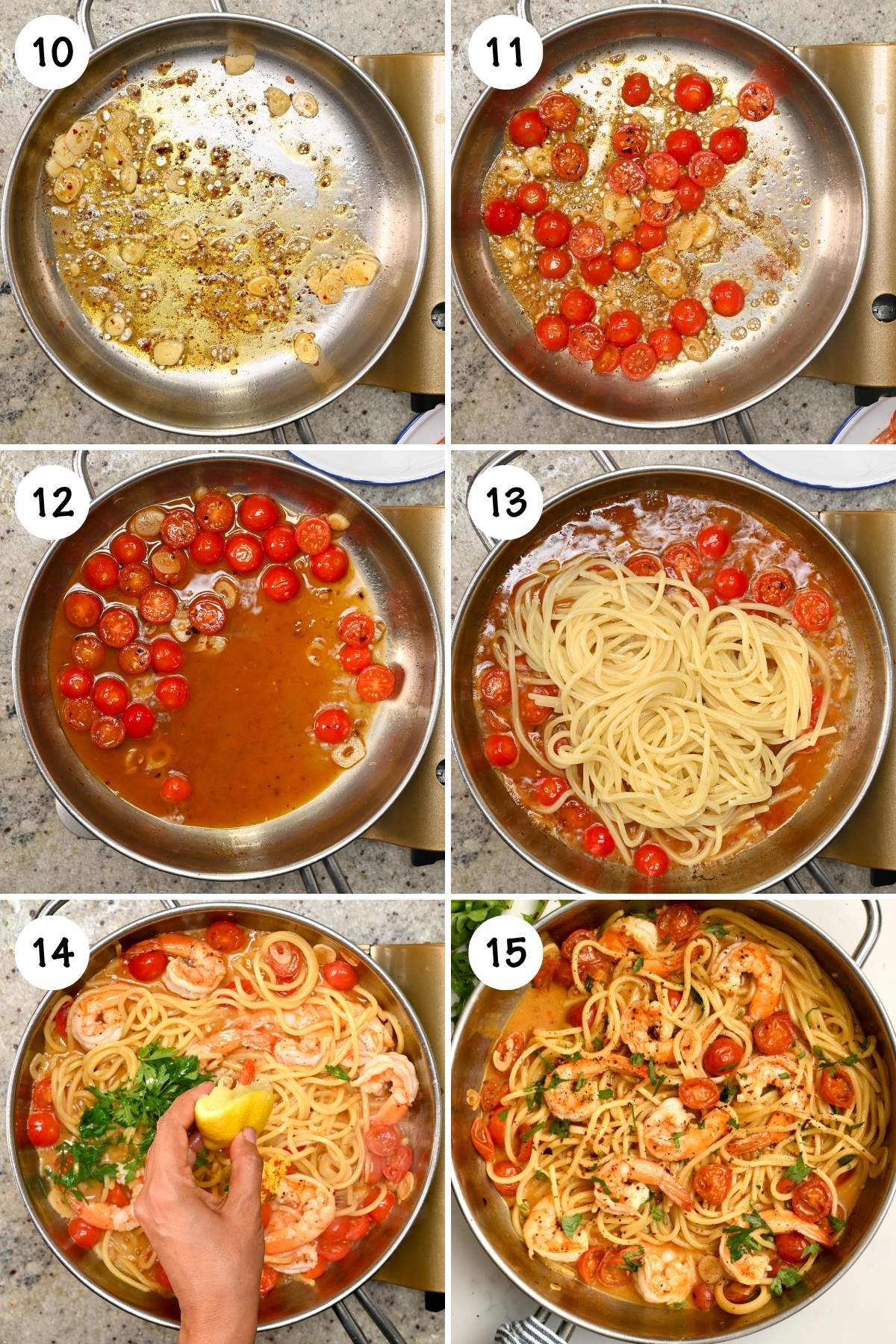
Add the shrimp stock and let it bubble for about one minute. At this stage the sauce should still look quite loose and juicy. That is exactly what you want.
Add the drained pasta directly to the skillet along with 1/4 cup of reserved pasta water. Toss well over medium heat for 1 to 2 minutes, allowing the pasta water to emulsify with the oil, butter, wine, tomato juices, and shrimp stock into a silky, glossy sauce. If the pasta looks dry, add another splash of pasta water or shrimp stock as needed.
Return the seared shrimp to the skillet, including any juices that collected on the plate. Toss for only thirty to sixty seconds, just until warmed through, then turn off the heat.
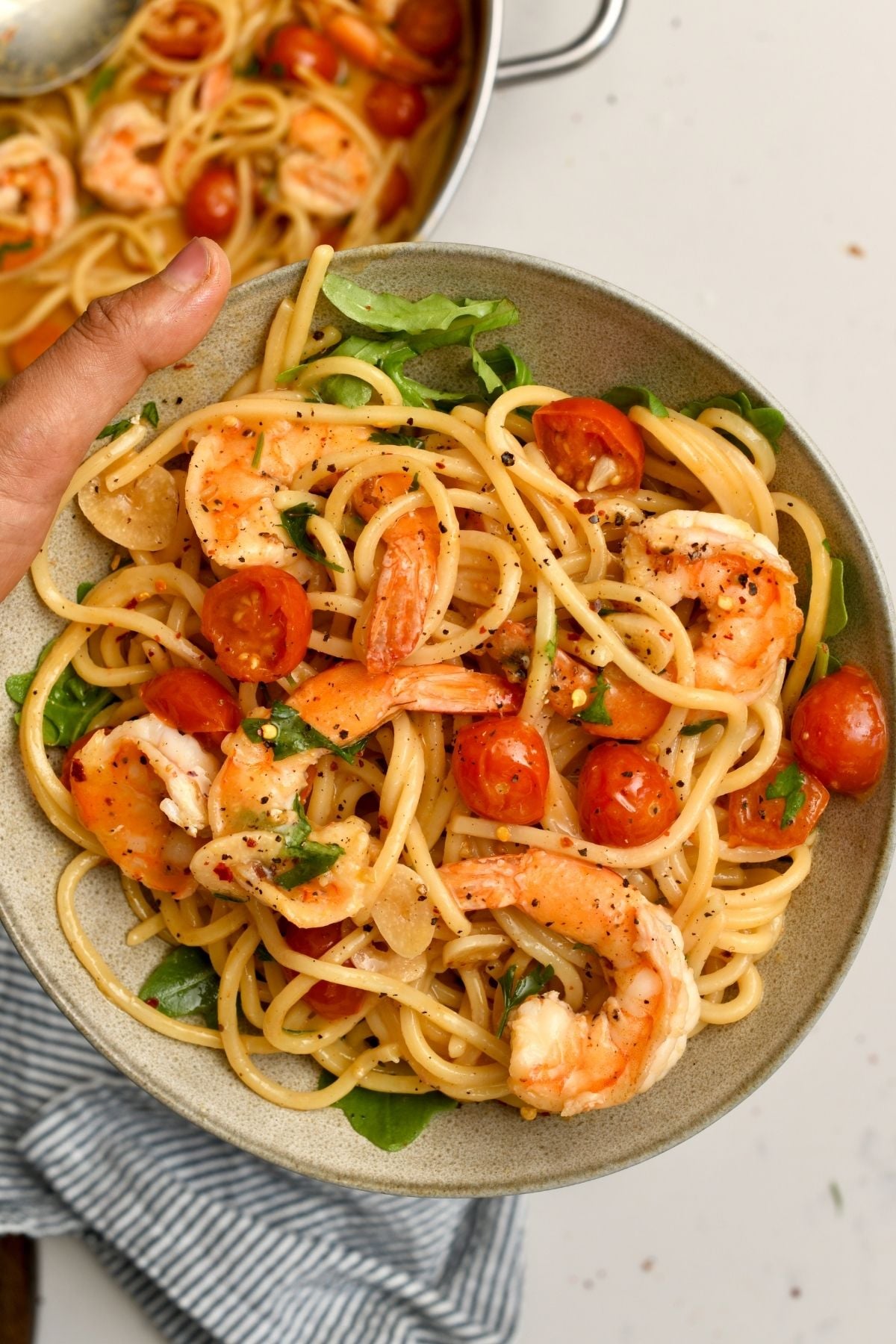
With the heat off, add the chopped parsley, lemon zest, a small squeeze of lemon juice, and the cold finishing butter. Toss until the butter melts into the sauce. Taste and adjust salt, pepper, or lemon as needed. Adding the parsley and lemon off the heat keeps them bright and fresh. Serve immediately, with fresh arugula on the side or on the plate before spooning the shrimp pasta over it, if you like.
Serving suggestions
This shrimp pasta is a complete meal on its own, but a few simple sides make it feel extra special. A piece of warm, crusty garlic bread is perfect for soaking up any extra sauce. A fresh, crunchy salad like a chopped chopped Greek salad adds a bright contrast. Oven roasted asparagus is another lovely pairing that keeps the meal light. Fresh arugula served underneath or alongside the pasta adds a peppery bite without wilting into the dish.
More seafood pasta recipes
Try one of these next.


If you try this shrimp pasta, I would love to hear how it turned out! Please leave a star rating and a comment below. Your feedback means so much and helps other readers find the recipe too.
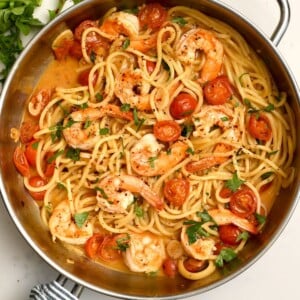
Shrimp Pasta
Equipment
- Large deep skillet with lid
- Fine mesh strainer
- Small saucepan
- Tongs for cooking
Ingredients
For the pasta and shrimp
- 10 jumbo raw shrimp (about 3/4 lb) whole, head-on shrimp are preferred. You can also use peeled and deveined shrimp, with tails left on if preferred.
- 7 ounces spaghetti or linguine
- 10 cherry tomatoes (about 3/4 cup), halved
- 3 garlic cloves thinly sliced
- 1 tablespoon extra-virgin olive oil
- 1 3/4 tablespoons unsalted butter divided
- 1/3 cup dry white wine
- 1/3 cup homemade shrimp stock plus a little extra if needed
- pinch of red pepper flakes adjust to taste
- zest of half lemon
- 1 teaspoon fresh lemon juice adjust to taste
- 1 handful fresh flat-leaf parsley chopped
- salt to taste
- freshly ground black pepper to taste
- fresh arugula to serve (optional)
Optional quick homemade shrimp stock
- heads and shells from the shrimp
- 1 tablespoon olive oil
- 1 garlic clove lightly crushed
- 1 1/2 cups water
Instructions
- If making the optional shrimp stock, heat 1 tablespoon olive oil in a small saucepan over medium-high heat. Add the shrimp heads and shells and sauté for 2 to 3 minutes, stirring and pressing down on the heads with a wooden spoon until they turn orange and become very aromatic. Add the crushed garlic clove and 1 and 1/2 cups water. Bring just to a boil, then lower to a gentle simmer for 10 to 15 minutes, occasionally pressing the heads and shells to extract their juices. Strain through a fine-mesh sieve, pressing the shells to extract as much liquid as possible. Do not salt the stock. Do not simmer for longer than 15 minutes or the stock can become bitter.
- Bring a large pot of water to a boil and salt it generously. Add the spaghetti or linguine and cook until about 2 minutes less than the package directions for al dente, since it will finish cooking in the sauce. Before draining, reserve at least 1 full cup of pasta cooking water. Drain the pasta but do not rinse it.
- Pat the shrimp very dry with paper towels and season lightly with salt and black pepper on both sides. Drying them well helps them sear rather than steam.
- Heat a large skillet over medium-high heat. Add 1 tablespoon olive oil and 1 tablespoon butter. Once the butter is gently foaming, arrange the shrimp in a single layer. Cook for about 60 to 90 seconds on the first side, then flip and cook for 30 to 60 seconds on the second side. Immediately transfer the shrimp to a plate. They should be almost cooked but not completely firm, as they will return to the pan at the end.
- Reduce the skillet to medium heat. In the same pan with the flavorful juices from the shrimp, add the sliced garlic and a small pinch of red pepper flakes. Cook for just 20 to 30 seconds, stirring constantly. Do not let the garlic brown.
- Add the halved cherry tomatoes and a tiny pinch of salt. Cook for 2 to 3 minutes, just until the tomatoes begin to soften and release some juice. Some should still hold their shape.
- Pour in the white wine and increase the heat slightly if needed. Let it bubble for 1 to 2 minutes.
- Add the shrimp stock and let it bubble for about 1 minute. The sauce should still look quite loose and juicy at this stage.
- Add the drained pasta directly to the skillet along with about 1/4 cup reserved pasta water. Toss over medium heat for 1 to 2 minutes until the sauce becomes silky and glossy. If the pasta starts looking dry, add another splash of pasta water or shrimp stock.
- Return the seared shrimp to the skillet, including any juices from the plate. Toss for only 30 to 60 seconds, just until warmed through. Turn off the heat.
- With the heat off, add the chopped parsley, lemon zest, a small squeeze of lemon juice, and the cold finishing butter. Toss until the butter melts into the sauce. Taste and adjust salt, pepper, or lemon as needed. Serve immediately, with fresh arugula alongside if desired.
Notes
- Shrimp stock: optional but strongly recommended if using whole shrimp with heads and shells. It adds remarkable seafood depth. Without it, use low-sodium seafood stock or mild vegetable stock.
- Wine substitution: replace the white wine with an equal amount of additional shrimp stock or low-sodium seafood stock, then add about 1 extra teaspoon of lemon juice at the end. Stock and lemon keeps the sauce savory and bright.
- Do not overcook the shrimp. Sear them briefly, remove them, and return them only at the very end for 30 to 60 seconds.
- Keep the sauce slightly looser than you think it needs to be. The pasta continues absorbing liquid as it sits and after plating.