

This post may contain affiliate links. Please read our disclosure policy.
If you’ve ever wondered how to cook pasta perfectly so it’s not sticky, soggy, or bland — you’re not alone. I’ve tested every “rule” over the years, and this is the method I rely on for pasta that’s perfectly cooked, whether it’s going into sauce, salad, or storage.
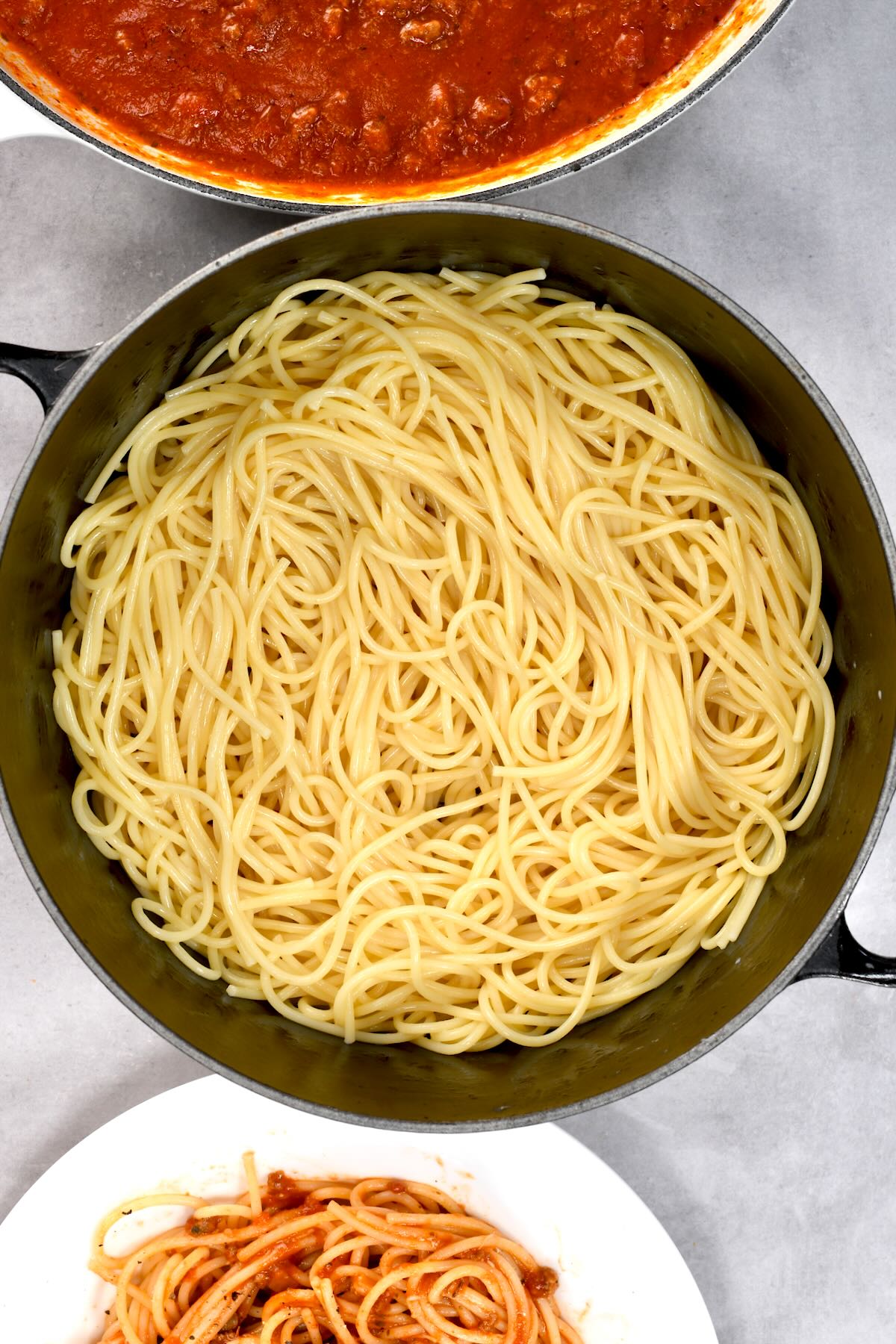
Whether you’re making spaghetti for dinner, mixing up a pasta salad, or prepping ahead for the week, this guide will walk you through exactly what works. If you need ideas for what to serve it with, try one of my favorite sauces: a quick marinara sauce, a creamy avocado pasta sauce, or a fresh homemade pesto. With just a few simple tips, you’ll be able to cook pasta that’s tender, springy, and holds onto sauce just right, without clumping or soggy bits.
What you’ll need
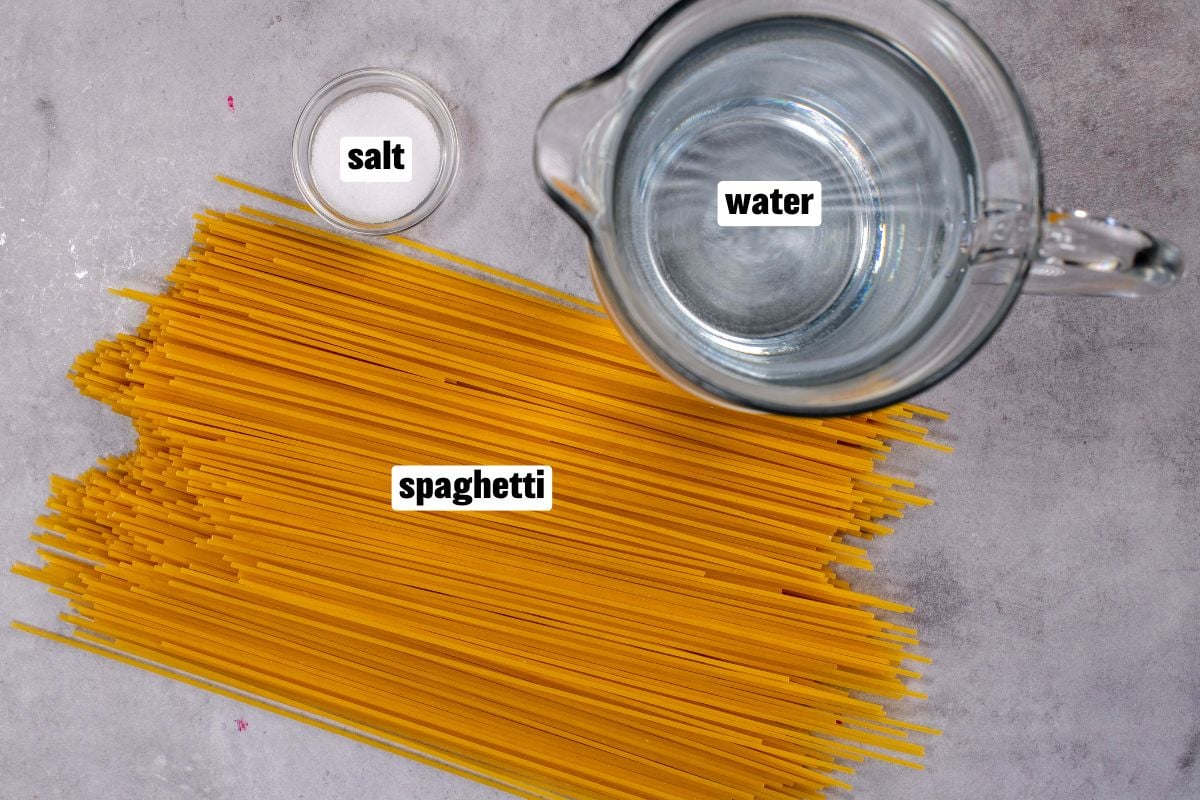
- Spaghetti – I usually use good-quality dried spaghetti. Bronze-cut if possible — it holds sauce better.
- Water – Enough to give the pasta room to move. A deep pot helps here.
- Salt – This is key for flavor. I always salt the water generously.
- Large pot – Something big enough for the pasta to cook evenly without sticking.
- Colander – A sturdy one for draining. I prefer metal over plastic.
- Measuring cup or mug – To scoop out a bit of the pasta water before draining. It’s great for helping sauces cling.
See printable recipe card below for the full ingredients list and quantities.
How to cook pasta
 1
1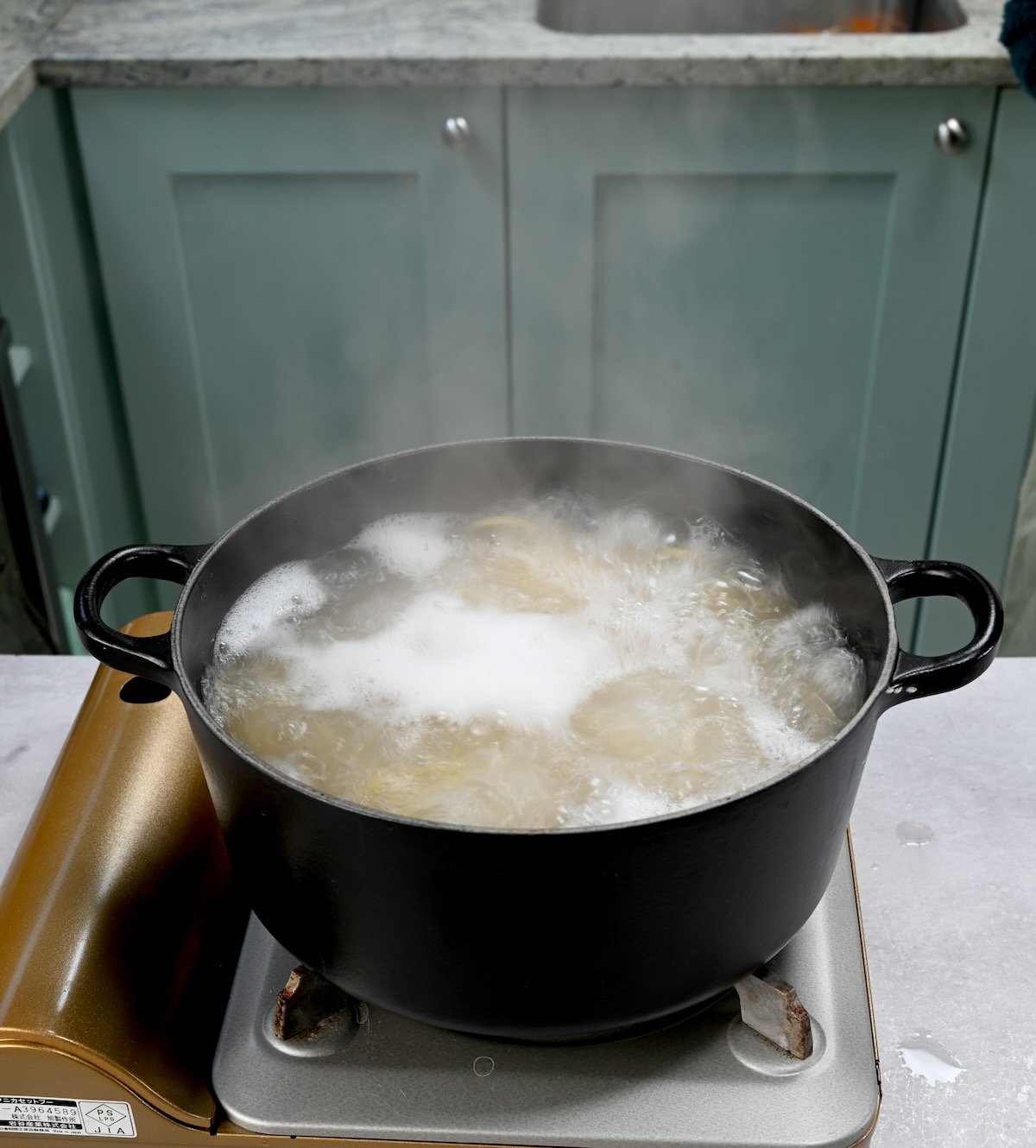 4
4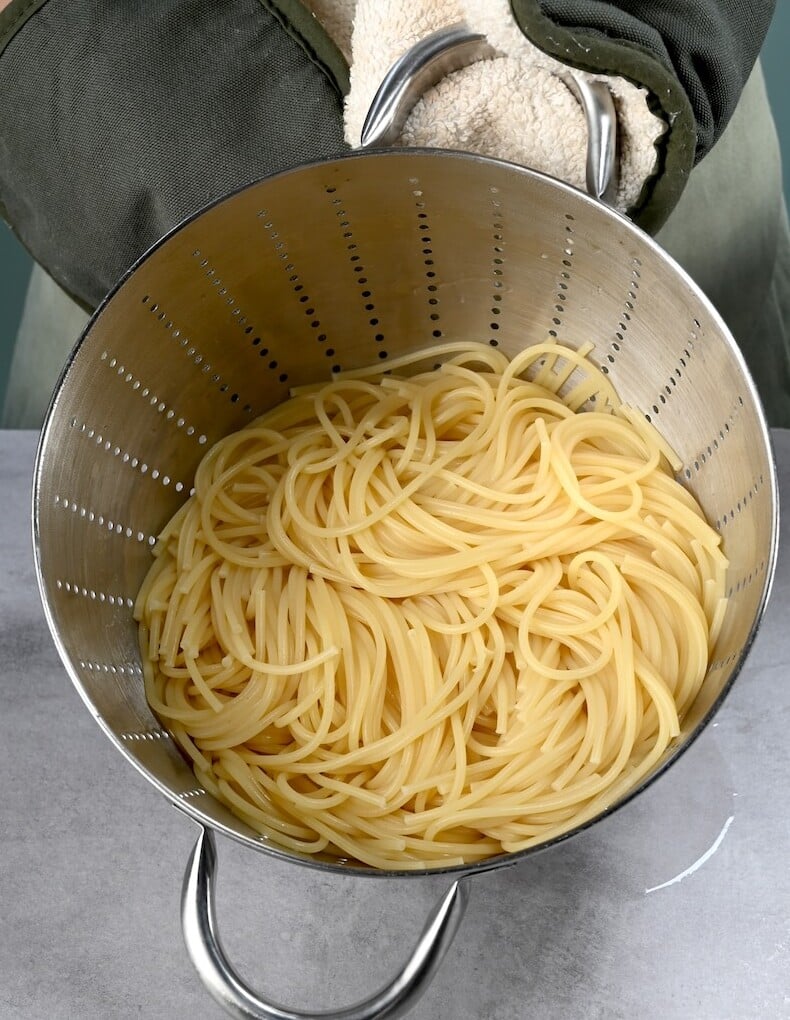 7
7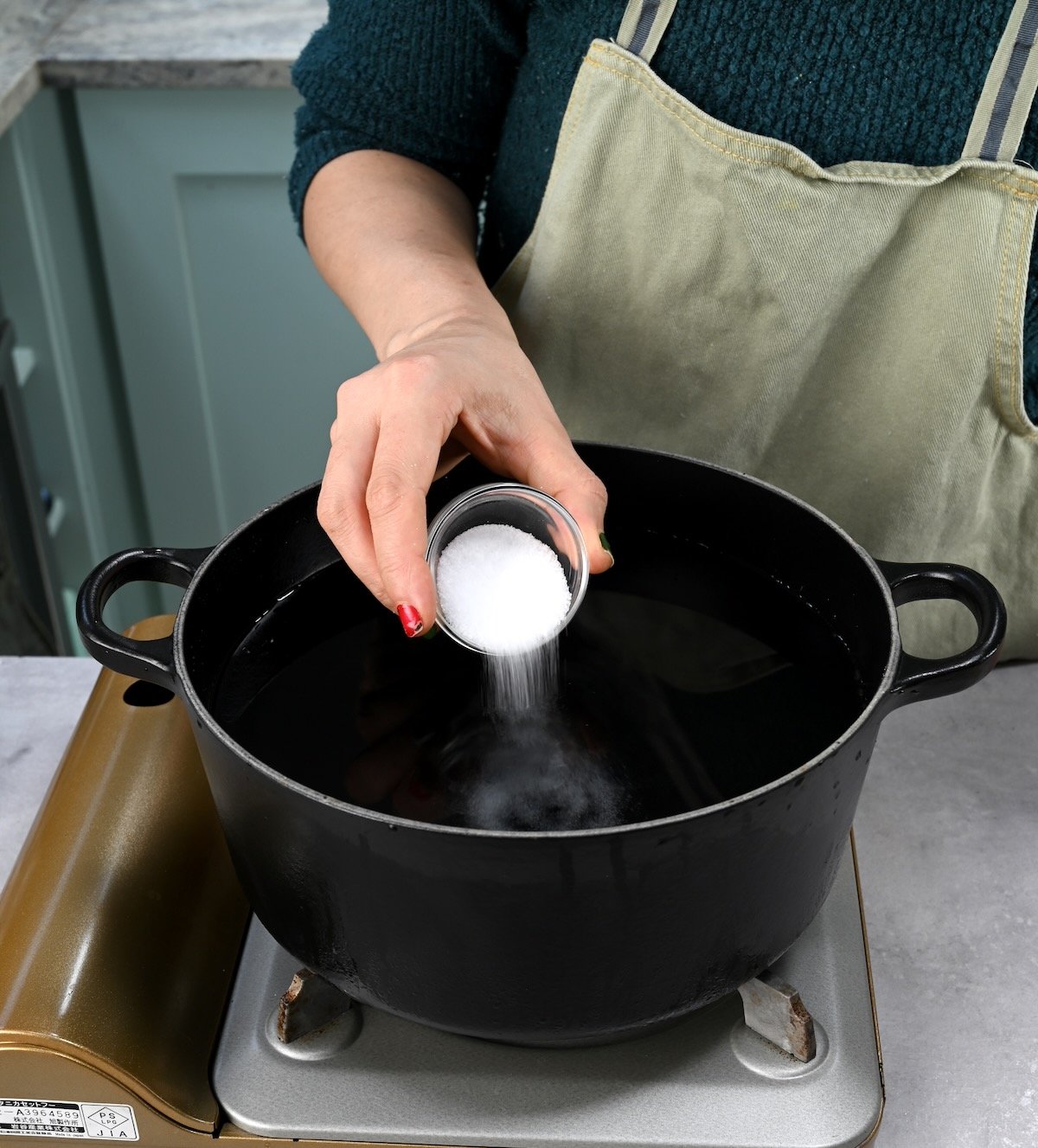 2
2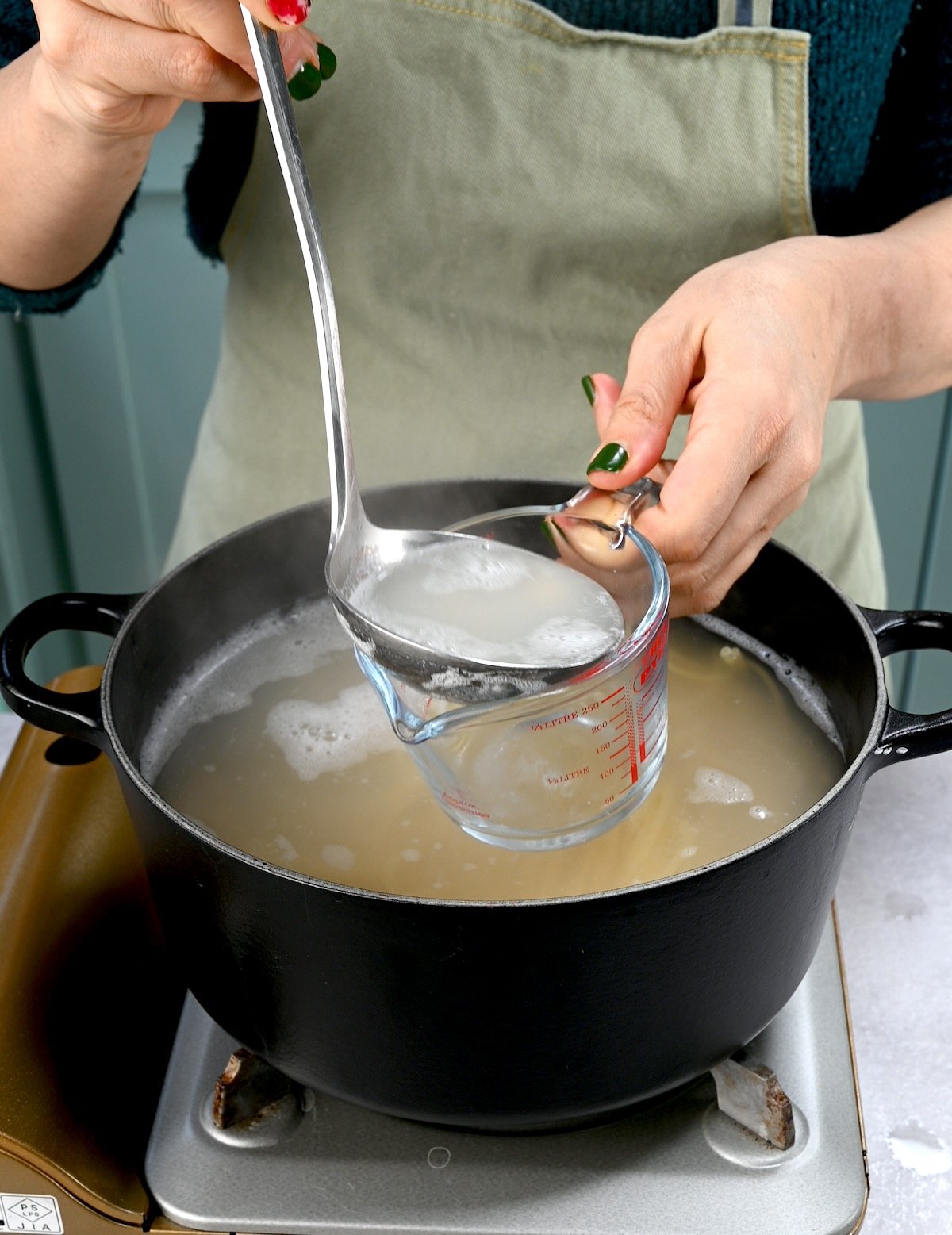 5
5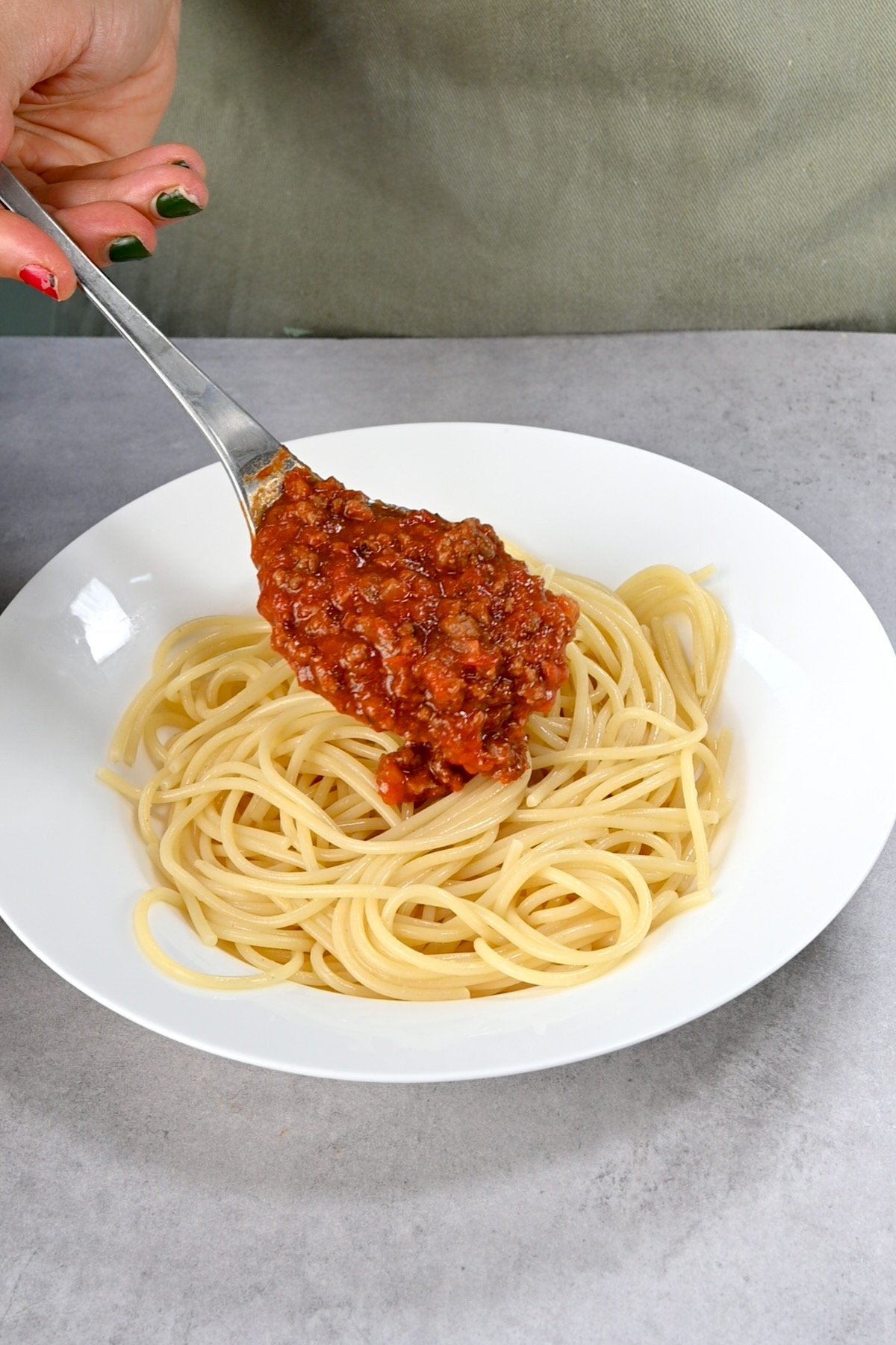 8
8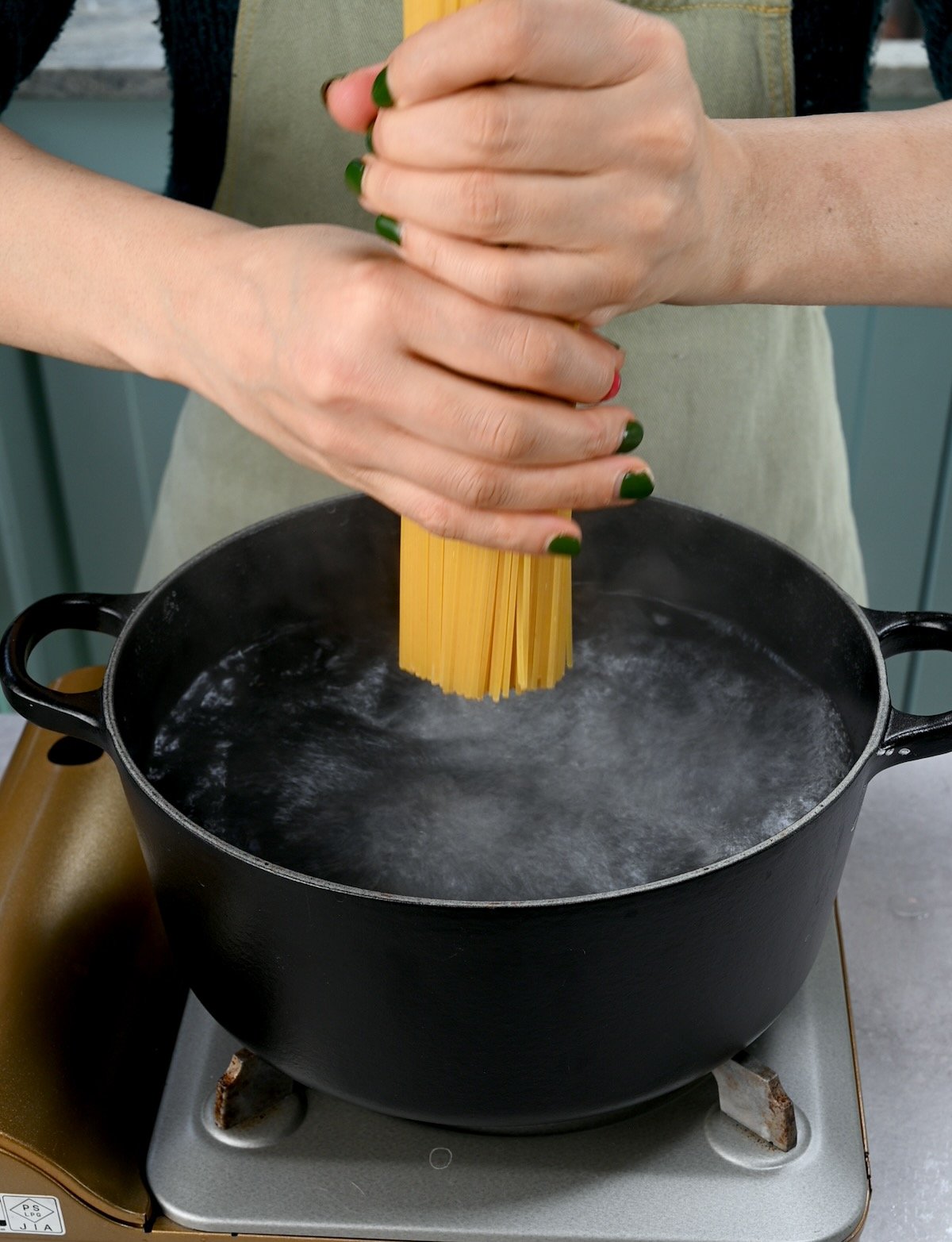 3
3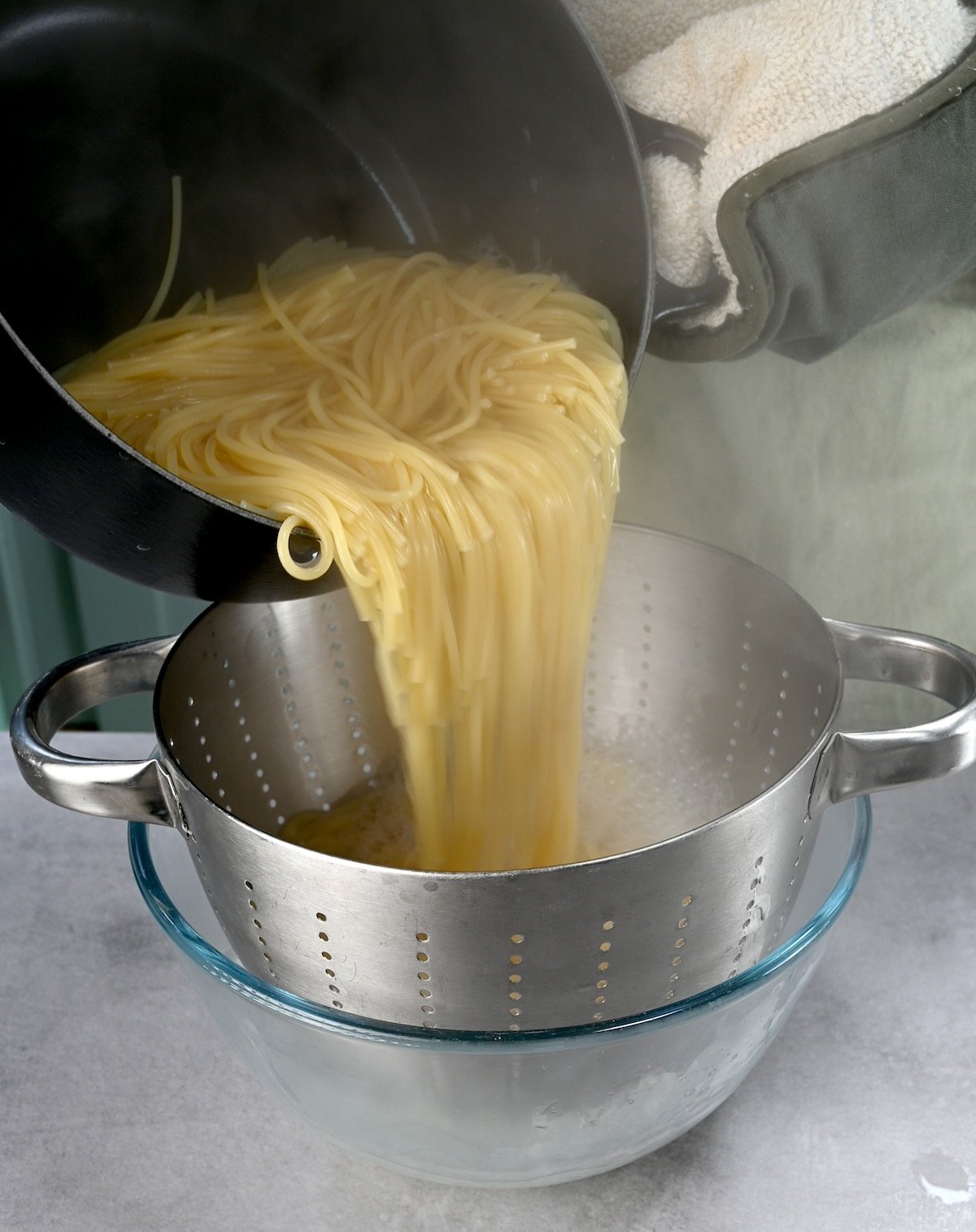 6
6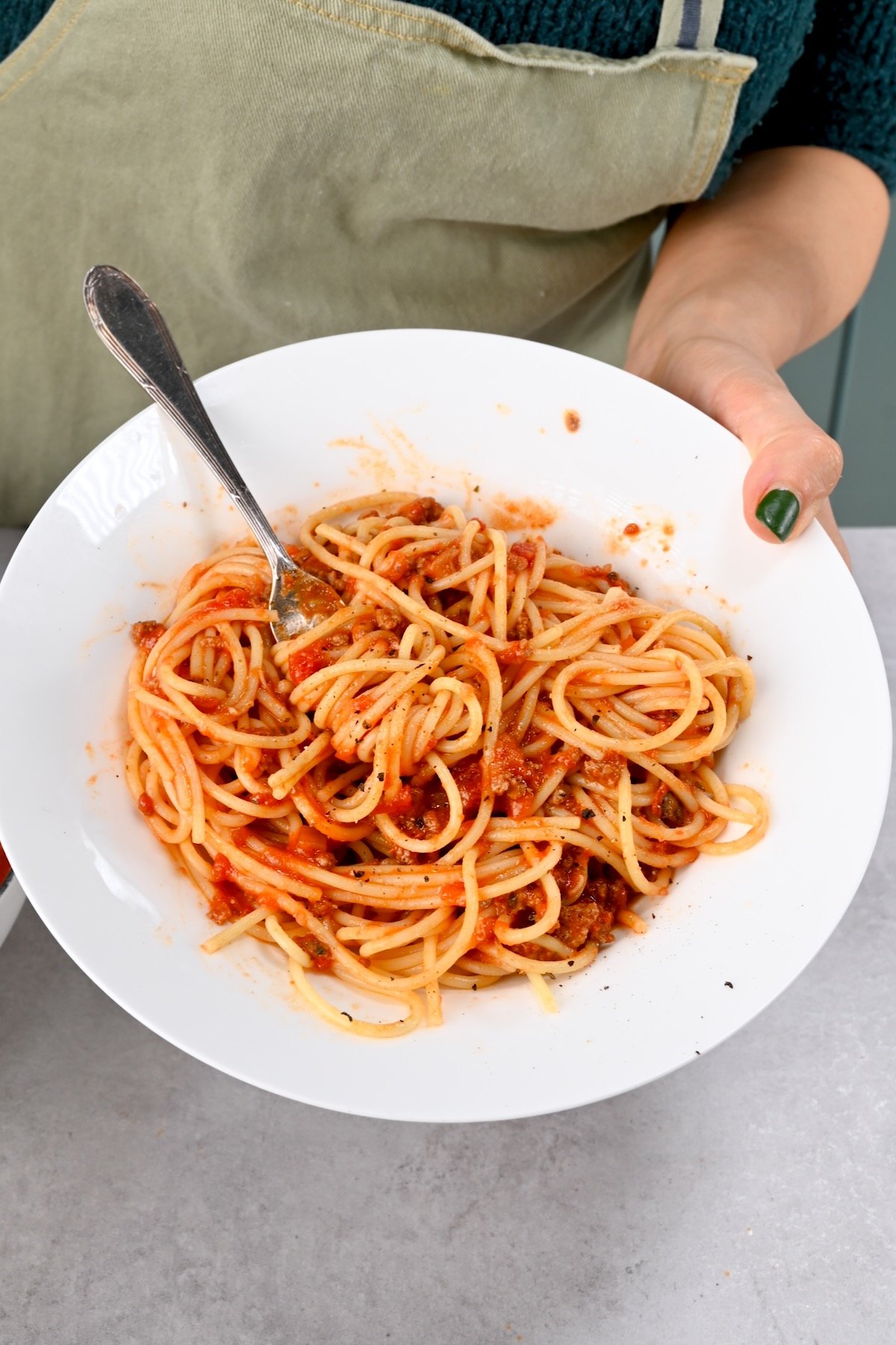 9
91) Cooking pasta for sauce
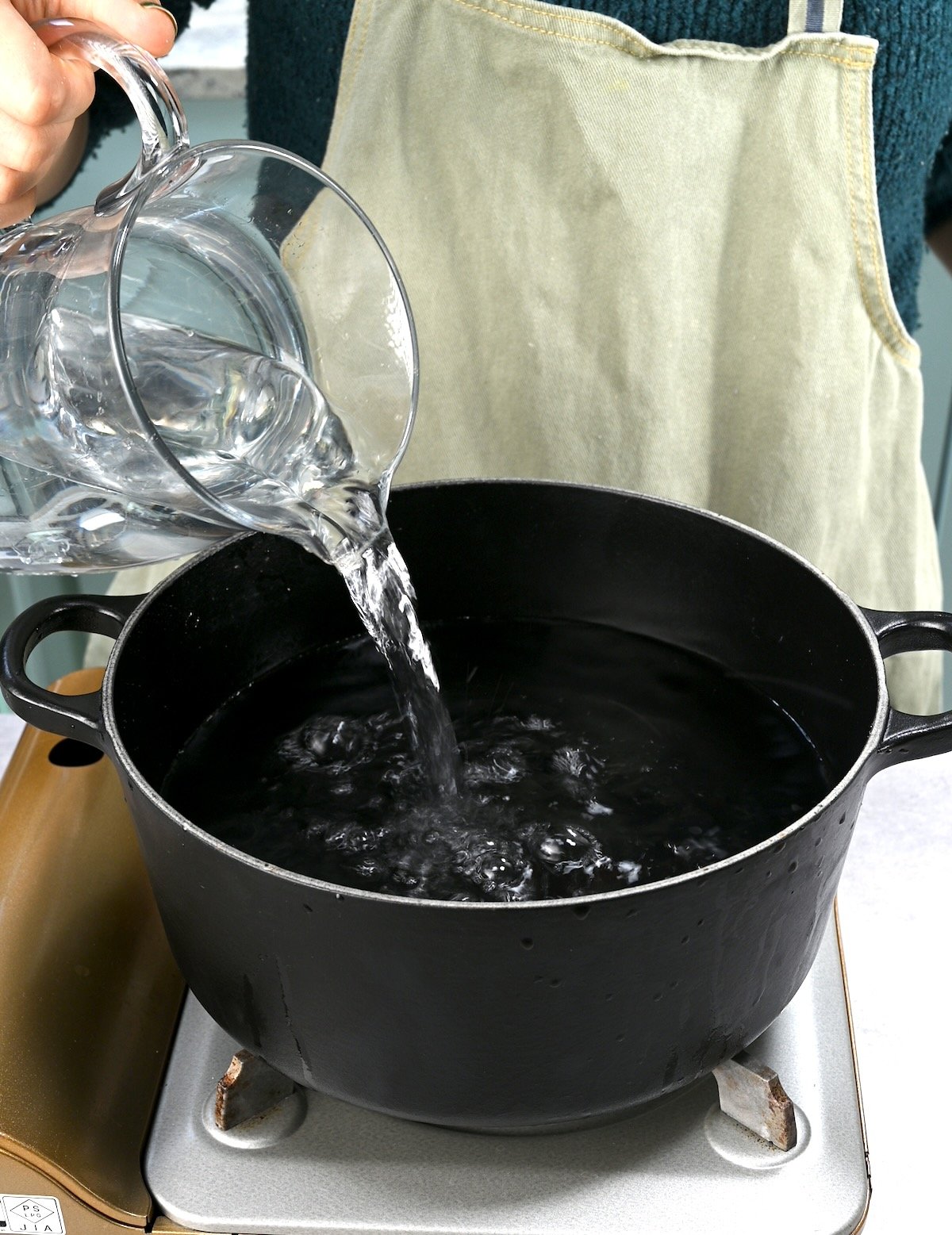
- Fill a large pot with 4 to 6 quarts of water per pound of pasta.
- Bring the water to a full rolling boil before adding salt.
- Add your dried pasta (spaghetti or other) and stir immediately to prevent sticking.
- Reduce heat slightly and cook uncovered, stirring occasionally. Start tasting after a few minutes. The goal? A springy, slightly firm bite — that’s your al dente.
- Just before draining, scoop out a cup of the starchy cooking water. It’s liquid gold for sauce.
- Drain the pasta (but don’t rinse it!) and enjoy it with warm sauce.
2) Cooking pasta for salad
- Follow the same steps as above but cook your pasta fully (not al dente).
- After draining (no rinsing), drizzle lightly with olive oil and toss to coat.
- Spread on a tray to cool, stirring occasionally to prevent clumping.
- Once cooled, transfer to a container and refrigerate until ready to mix with dressing and veggies.
Looking for a quick, crowd-pleasing way to use your cooked pasta? Try my easy pasta salad for a colorful, flavorful, and make-ahead side that’s perfect for picnics, potlucks, or weeknight dinners.

3) Cooking pasta for storage
- Cook until just shy of al dente (1-2 minutes less than usual).
- Drain and toss with a little olive oil to prevent sticking.
- Let cool completely, then store in an airtight container in the fridge for up to 5 days. You can also freeze it in a freezer-safe bag or container for up to 2 months. Let it thaw in the fridge before reheating or adding it to a sauce.
FAQs
The biggest culprit is not enough water or not stirring early on. Pasta needs space to move, especially in the first few minutes. Stir well and use a large pot.
No — rinsing washes away the starch that helps sauce cling to the pasta. Only rinse if you’re making cold pasta salad and even then, a quick olive oil toss is usually better.
A good rule of thumb is 1 tablespoon of kosher salt per quart of water. It should taste pleasantly seasoned, not seawater-salty.
It’s likely overcooked. Start tasting 2 minutes before the box says it’s done, and drain as soon as it hits that al dente texture.
Pasta that sits too long in sauce can become soggy. Combine them just before serving and always reserve some cooking water to adjust the consistency.
Pasta recipes you’ll love
If you’re ready to put these pasta-cooking tips to use, here are a few of my favorite ways to enjoy a bowl (or plate) of pasta:
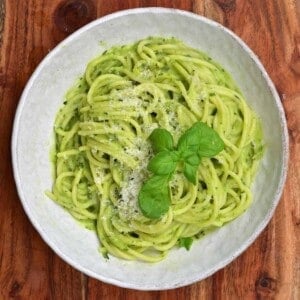
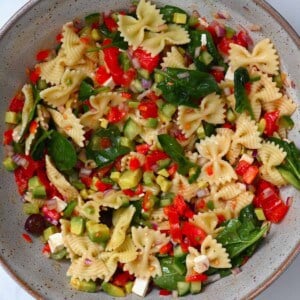
If you found this pasta cooking guide helpful, don’t forget to rate the recipe and leave me a comment below — I’d love to hear how it worked for you!
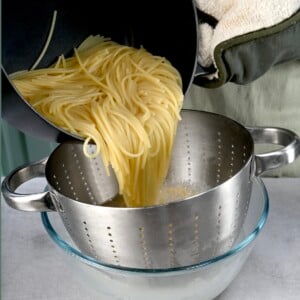
How to Cook Pasta Perfectly
Ingredients
- 1 pound spaghetti dried
- 4 quarts water
- 2 tablespoon salt*
Instructions
- Bring a large pot of water to a full rolling boil.
- Add the salt and stir to dissolve.
- Drop in the pasta and stir immediately to prevent sticking.
- Cook uncovered, stirring occasionally, until just al dente. Start tasting after 5–6 minutes.
- Before draining, reserve about 1 cup of pasta water.
- Drain the pasta — do not rinse.
- Use immediately with sauce, or cool and store depending on your recipe.
Notes
Cook the pasta until fully tender, then drain, toss with a little olive oil, and let it cool completely before adding to your salad. To store or freeze:
Slightly undercook the pasta (al dente), toss with olive oil, and let it cool fully. Store in the fridge for up to 5 days or freeze in a freezer-safe bag or container for up to 2 months. Thaw in the fridge before reheating or adding to sauce.
Nutrition
Nutrition information is automatically calculated, so should only be used as an approximation.









Great tips, thanks for sharing!