

This post may contain affiliate links. If you buy through them, I earn a small commission at no extra cost to you. As an Amazon Associate I earn from qualifying purchases. Read my disclosure policy.
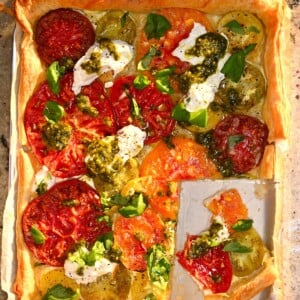
This tomato tart is one of those recipes that looks like it came straight from a bakery window but takes very little effort to put together. A sheet of golden puff pastry, a thin layer of creme fraiche, colorful roasted tomatoes, and then generous dollops of lemon ricotta and bright basil pesto spooned on right after baking. Every bite has that contrast of crispy, creamy, and fresh.
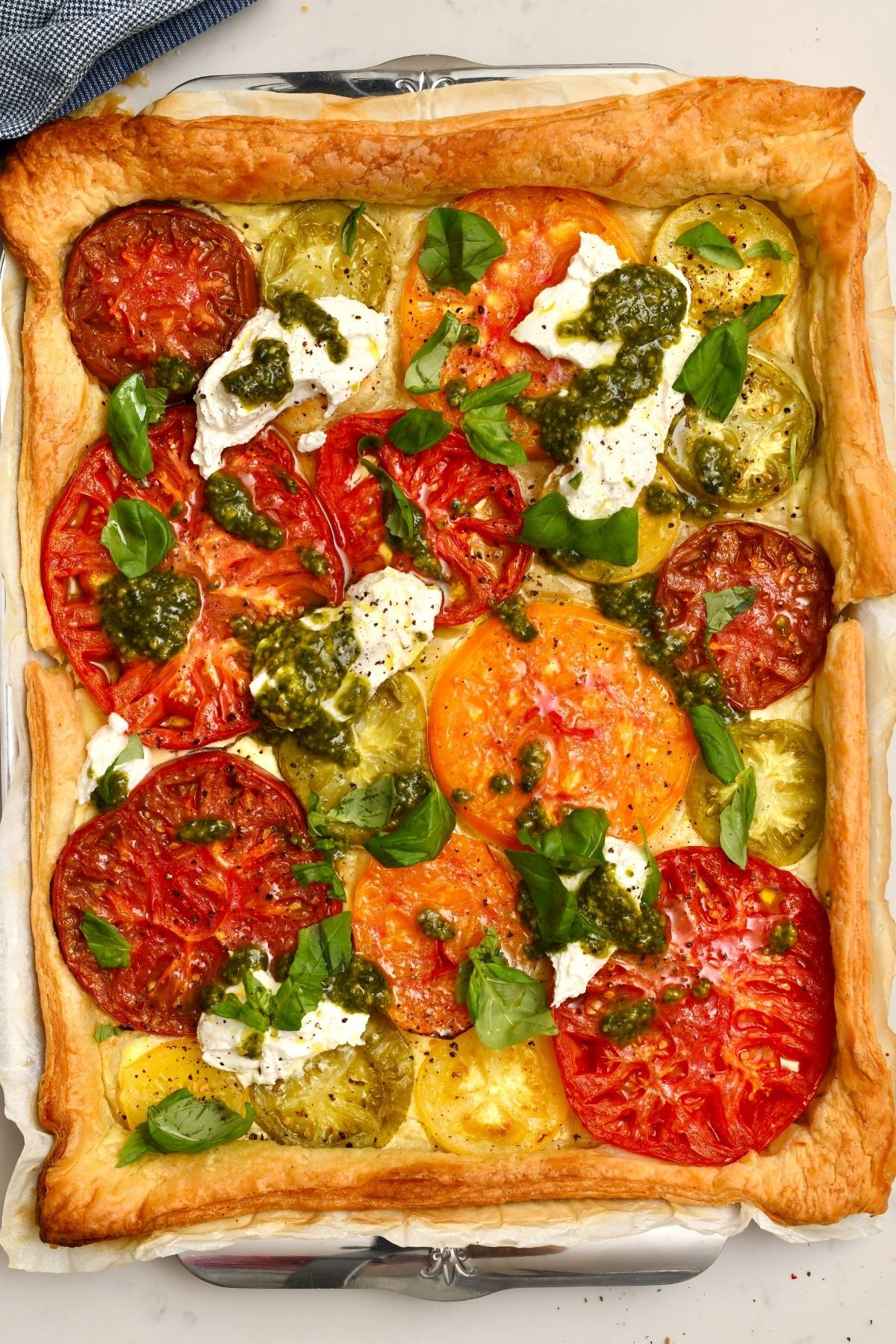
The key is salting and blotting the tomatoes before they go on the pastry, which keeps the base beautifully crisp instead of soggy.
Tomato tart ingredients
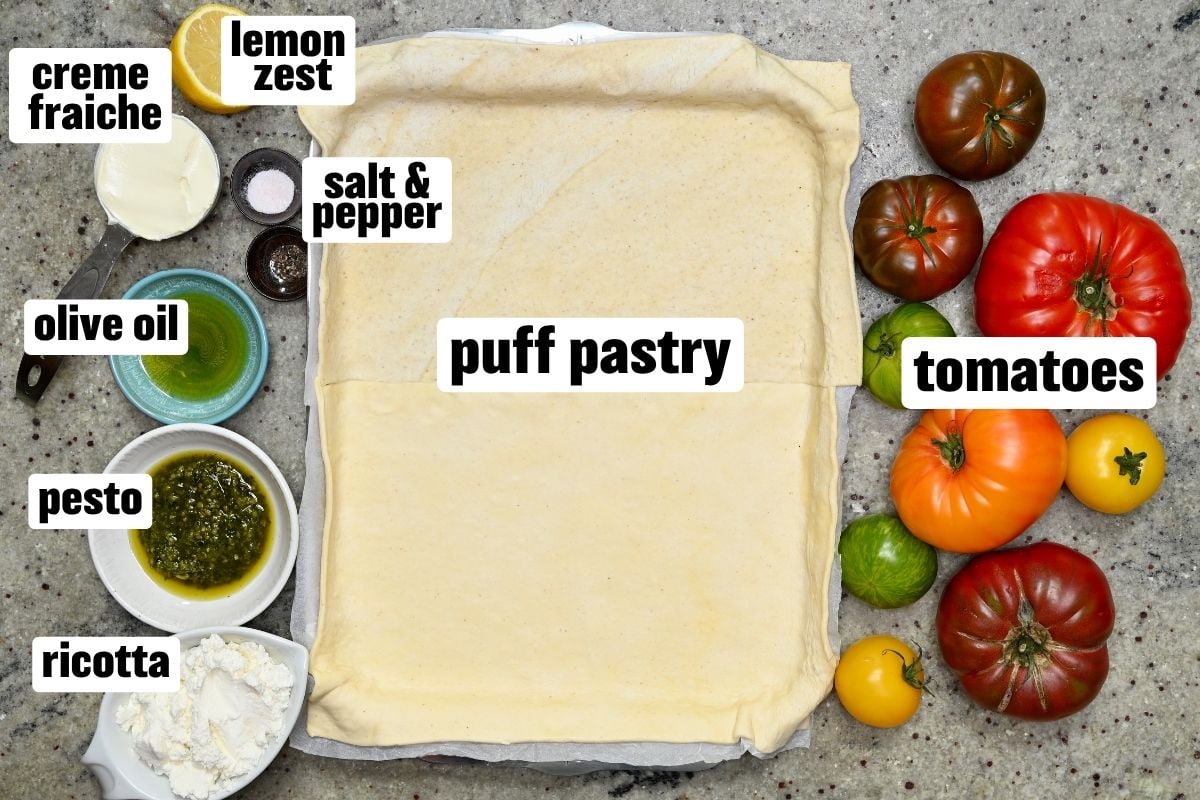
- Puff pastry: one large sheet forms the base. Store-bought, all-butter puff pastry works beautifully here.
- Mixed tomatoes: a colorful variety of tomatoes gives the tart the best visual impact and a range of sweet, tangy flavors. Heirloom, cherry, and vine-ripened all work well.
- Creme fraiche: spread thinly over the pastry before baking, it creates a rich, creamy base beneath the tomatoes. Sour cream can work as a substitute in a pinch, though the flavor is slightly tangier.
- Salt and black pepper: used to season the tomatoes before baking and to finish the tart.
- Extra-virgin olive oil: a drizzle over the tomatoes before baking helps them roast and caramelize.
- Ricotta: dolloped on after baking so it stays fresh and creamy. Whole milk ricotta gives the best texture.
- Lemon zest: mixed into the ricotta for a bright lift that balances the richness.
- Pesto: spooned on after baking to preserve its fresh, vibrant color and flavor. Homemade or store-bought both work.
- Flaky salt: a finishing touch that adds crunch and seasoning to every bite.
See printable recipe card below for the full ingredients list and quantities.
How to make this tomato tart
Preheat the oven to 425 degrees Fahrenheit (or 400 degrees Fahrenheit for a fan/convection oven).
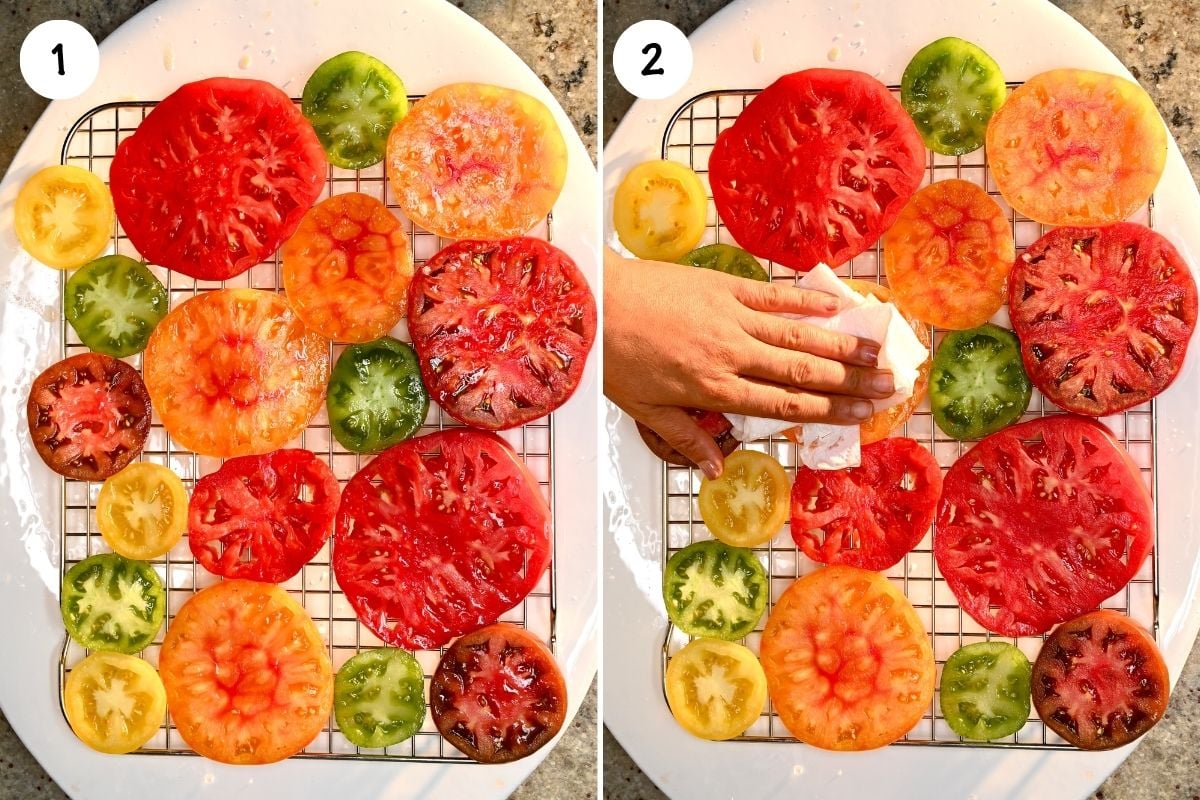
Slice the tomatoes into relatively even slices. Smaller tomatoes can be halved or sliced depending on their size. Arrange them over paper towels or a clean kitchen towel and sprinkle lightly with salt. Leave them for about 10 minutes so the salt draws out excess moisture. Blot them very well before assembling. This step is essential for keeping the pastry crisp.
Place the puff pastry on a parchment-lined baking sheet. Using a sharp knife, lightly score a border around the pastry, about 3/4 inch from the edge, without cutting all the way through. Prick the center area several times with a fork, leaving the border untouched. This encourages the outer edge to puff while the center stays flatter.
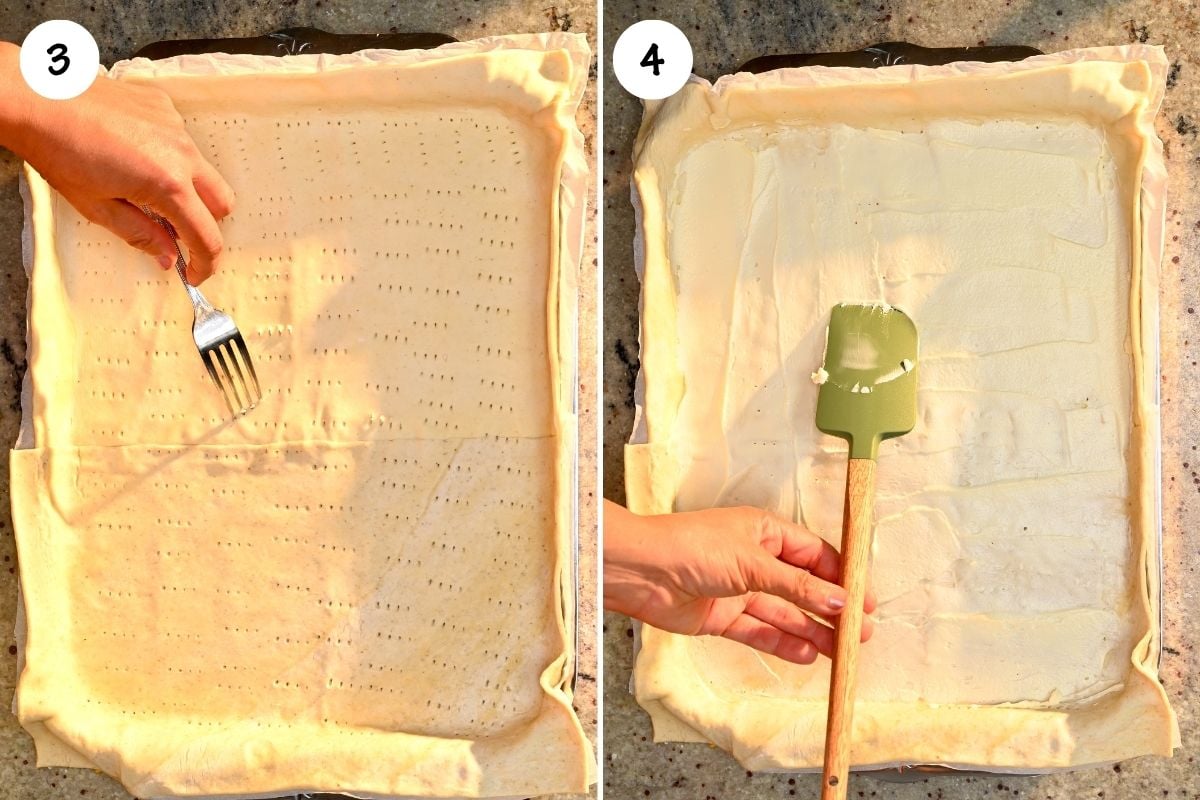
Spread a thin, even layer of creme fraiche over the center of the pastry, staying inside the scored border. Keep this layer thin. It adds richness and creaminess, but too much will weigh down the center.
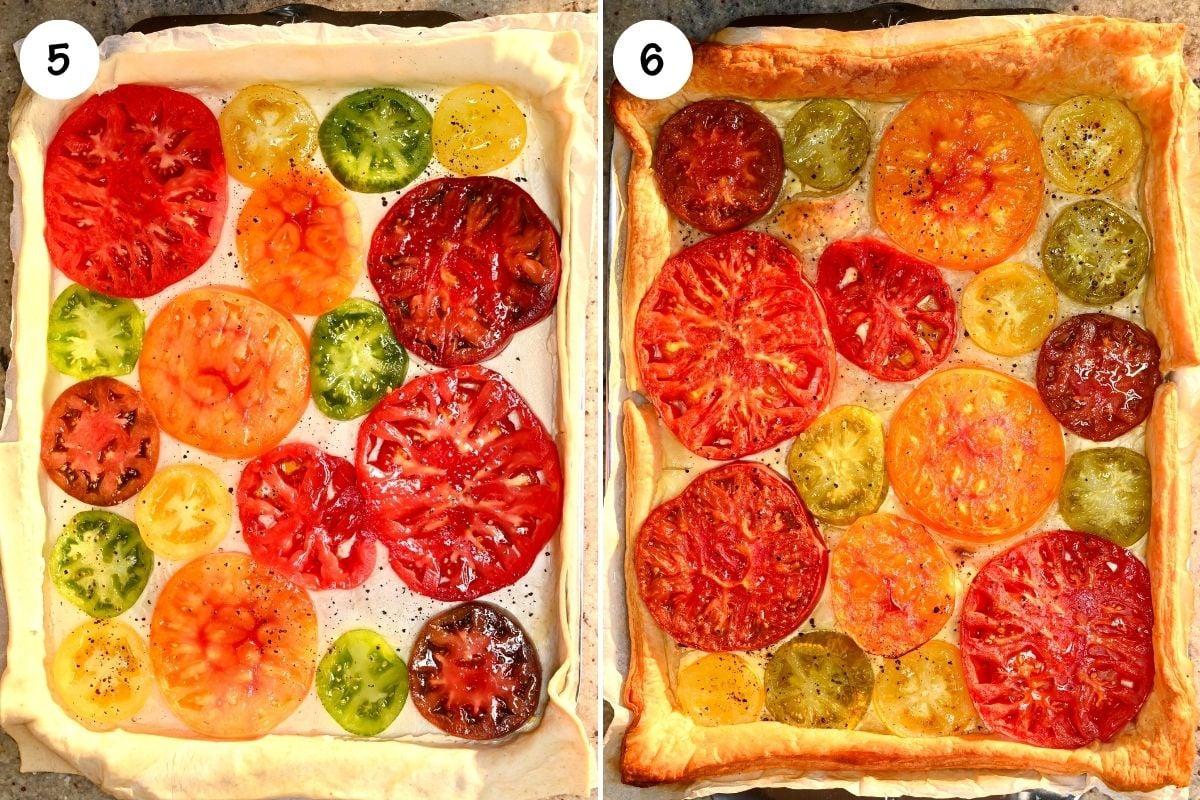
Arrange the dried tomato slices over the creme fraiche in a mostly single layer. Slight overlapping is fine, but avoid piling them heavily. Season with black pepper and drizzle with olive oil.
Bake for approximately 25 to 35 minutes, or until the puff pastry border is deeply golden and crisp and the tomatoes are roasted with caramelized edges. Use the color of the pastry as your main guide. Do not remove it while the pastry still looks pale.
While the tart bakes, combine the ricotta with lemon zest, a small pinch of salt, and a little black pepper. Mix gently until combined.
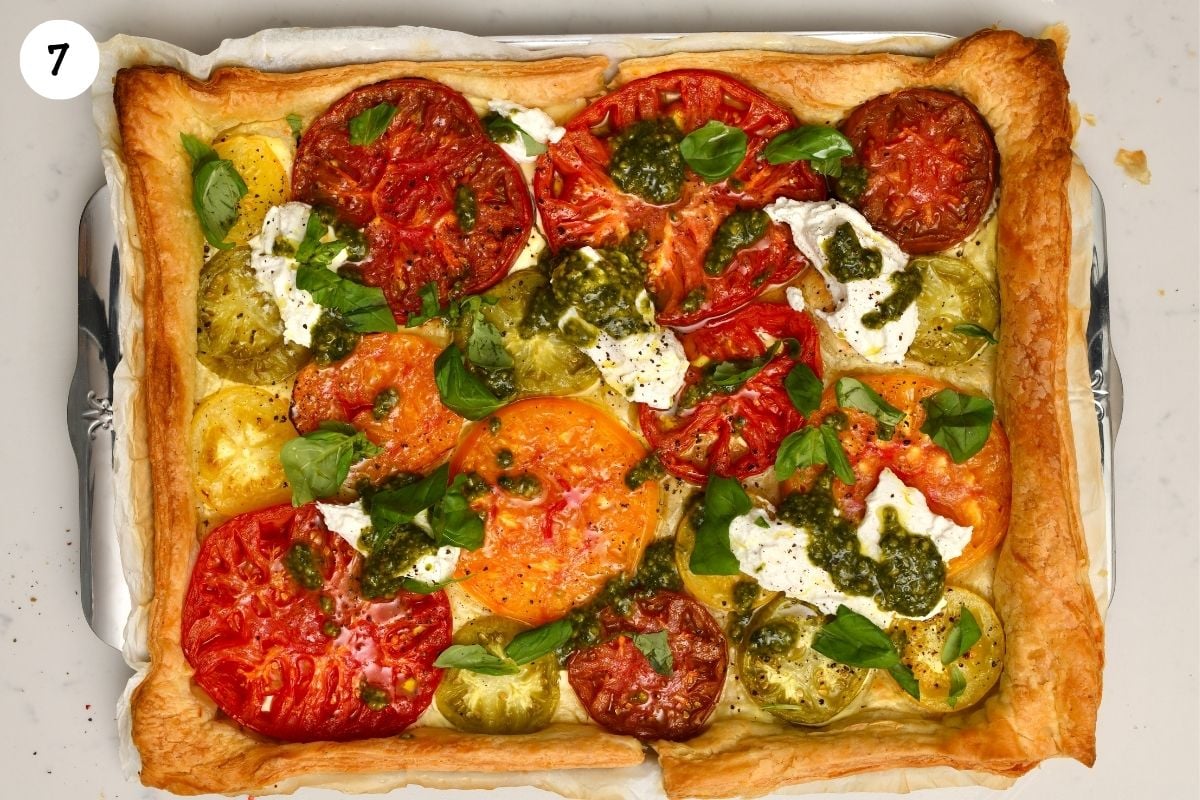
Once baked, remove the tart from the oven and let it rest for about 5 minutes. Add generous, natural-looking dollops of the lemon ricotta over the warm tart, then spoon or drizzle pesto around and between the ricotta. Finish with flaky salt and freshly ground black pepper.
Drying the tomatoes is the most important step for a crisp tart. Salt them, let them sit for 10 minutes, then blot thoroughly with paper towels before arranging on the pastry. Skipping this almost always leads to a soggy base.
Serving suggestions
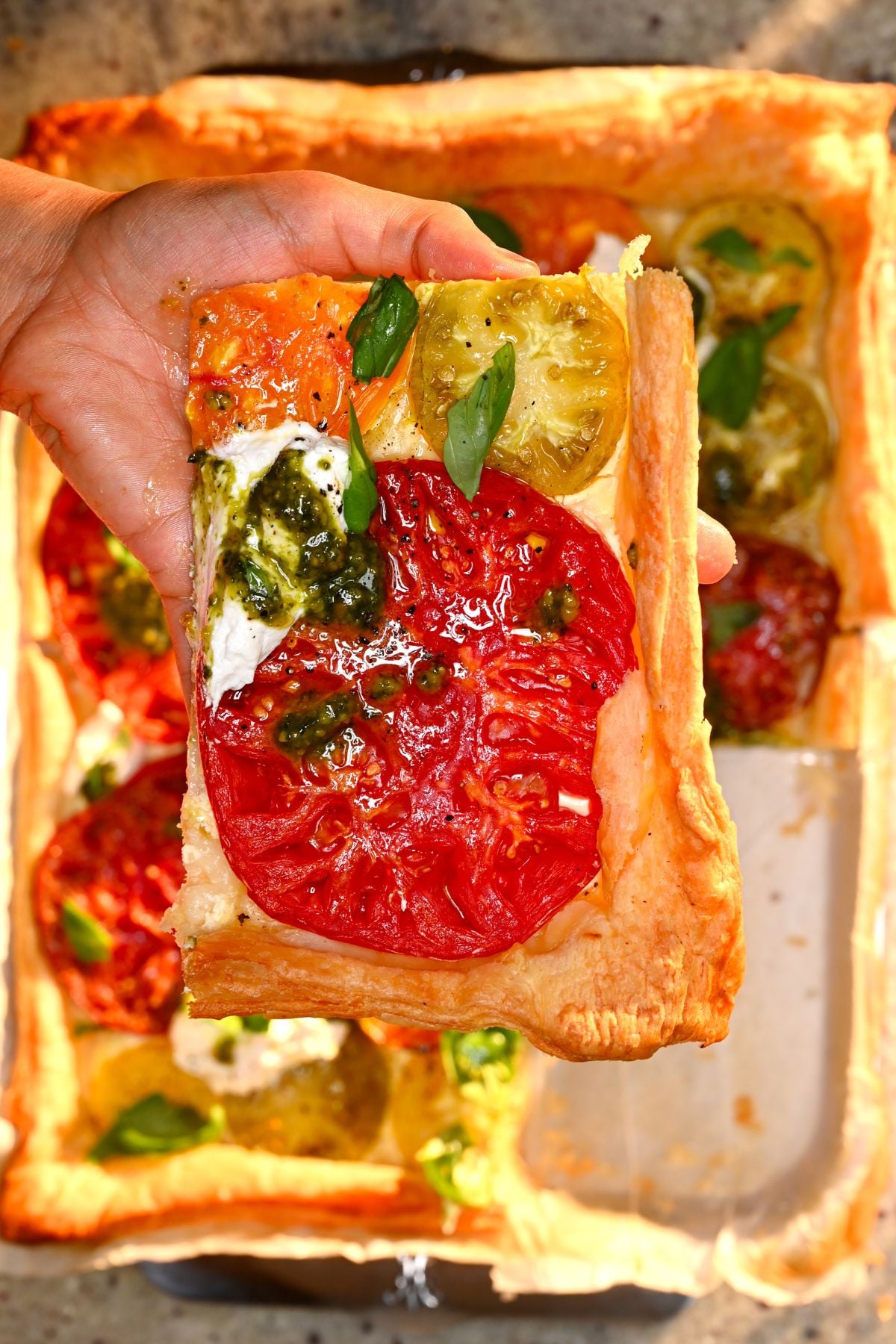
This tart is wonderful on its own as a light lunch or starter, but it pairs especially well with a simple green salad. A peppery simple arugula salad with shaved parmesan is a great match. For a fuller meal, serve it alongside a warm bowl of creamy tomato soup. Slice the tart into squares or rectangles for easy sharing.
FAQs
You can prepare the puff pastry base with creme fraiche and tomatoes, then refrigerate it covered for up to a few hours before baking. Add the ricotta and pesto only after baking so they stay fresh.
The most common reason is not drying the tomatoes well enough before baking. Salting them for 10 minutes and blotting thoroughly makes a big difference. Overloading the tart with too many tomatoes or too much creme fraiche can also cause sogginess.
More tomato recipes to try
Looking for more ways to enjoy fresh tomatoes? Here are a few recipes worth trying next.
I’d love to hear how your tomato tart turns out! Please leave a star rating and a comment below to let me know what you think.
Tomato Tart with Ricotta and Pesto
Equipment
- Baking sheet
- Parchment paper
- Sharp knife
- Cutting board
Ingredients
For the tart
- 1 large sheet puff pastry
- 1/2 cup creme fraiche
- 700 grams mixed tomatoes ideally a colorful variety
- 1/2 teaspoon salt
- 1/4 teaspoon freshly ground black pepper plus more to finish
- 1 tablespoon extra-virgin olive oil
For the topping (added after baking)
- 3/4 cup ricotta
- 1/2 lemon zested
- 1/3 cup pesto
- Flaky salt for finishing
- basil leaves optional, to garnish
Instructions
- Preheat the oven to 425 degrees Fahrenheit (400 degrees Fahrenheit for fan or convection).
- Slice the tomatoes into relatively even slices. Smaller tomatoes can be halved or sliced depending on their size. Arrange the tomatoes over paper towels or a clean kitchen towel and sprinkle them lightly with 1/4 teaspoon salt. Leave them for about 10 minutes to draw out excess moisture. Blot the tomatoes very well before assembling the tart.
- Place the puff pastry on a parchment-lined large baking sheet. Using a sharp knife, lightly score a border around the pastry, approximately 3/4 inch from the edge. Do not cut all the way through. Prick the center area of the pastry several times with a fork, leaving the border untouched. This encourages the outer edge to puff while keeping the center flatter.
- Spread the creme fraiche in a thin, even layer over the center of the pastry, staying inside the scored border. The layer should not be too thick.
- Arrange the dried tomato slices over the creme fraiche in a mostly single layer. Slight overlapping is fine, but avoid piling the tomatoes too heavily. Season with the black pepper and drizzle the tomatoes with the 1 tablespoon olive oil.
- Bake for approximately 25 to 35 minutes, or until the puff pastry border is deeply golden and crisp and the tomatoes are roasted and beginning to caramelize around the edges. The exact time may vary depending on the thickness of the pastry and how juicy the tomatoes are. Use the color of the pastry as the main guide.
- While the tart is baking, combine the ricotta with the lemon zest, a small pinch of salt, and a little freshly ground black pepper. Mix gently until combined.
- Once baked, remove the tart from the oven and allow it to rest for about 5 minutes. Add generous, natural-looking dollops of the lemon ricotta over the warm tart. Spoon or drizzle the pesto around and between the ricotta. Finish with flaky salt and freshly ground black pepper.
Video
Notes
- Drying the tomatoes is essential. Salting and blotting them well prevents the puff pastry from becoming soggy.
- Keep the creme fraiche layer thin. Too much will make the center heavy.
Arrange tomatoes in a single layer. Slight overlapping is fine, but avoid stacking them. - The ricotta and pesto go on after baking to keep them fresh and vibrant.
Bake until the pastry is deeply golden. Pale pastry means a softer, less crisp base. - Storage: Store leftover tart in an airtight container in the refrigerator for up to 2 days. For the best texture, store it without the ricotta and pesto and add them fresh when serving. Freezing is not recommended. To reheat, warm in a 350°F (175°C) oven for 8 to 10 minutes to re-crisp the pastry, then add the ricotta and pesto.