

This post may contain affiliate links. If you buy through them, I earn a small commission at no extra cost to you. As an Amazon Associate I earn from qualifying purchases. Read my disclosure policy.
If you have a grapevine producing more fruit than it can ripen, or you thin your vines each summer, those small sour grapes are a gift waiting to happen. Homemade verjuice transforms them into an intensely tart, fresh-tasting juice that adds bright acidity to food without the sharp punch of vinegar or the distinct flavor of lemon.
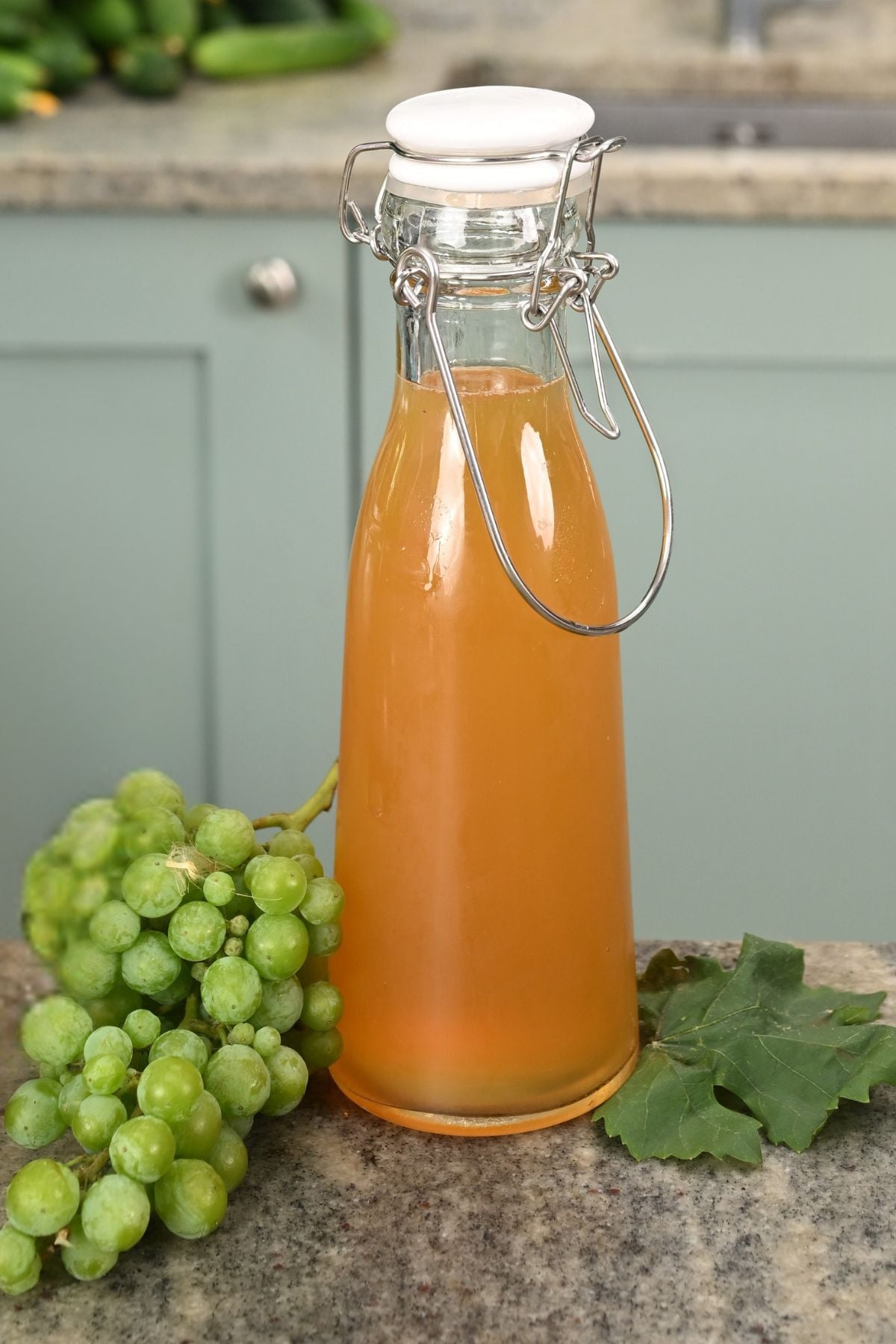
The process is simple: crush, strain overnight, and bottle.
Verjuice is a traditional condiment across Middle Eastern and European kitchens, used in everything from stuffed grape leaves to bright salads like Shirazi salad.
What you’ll need
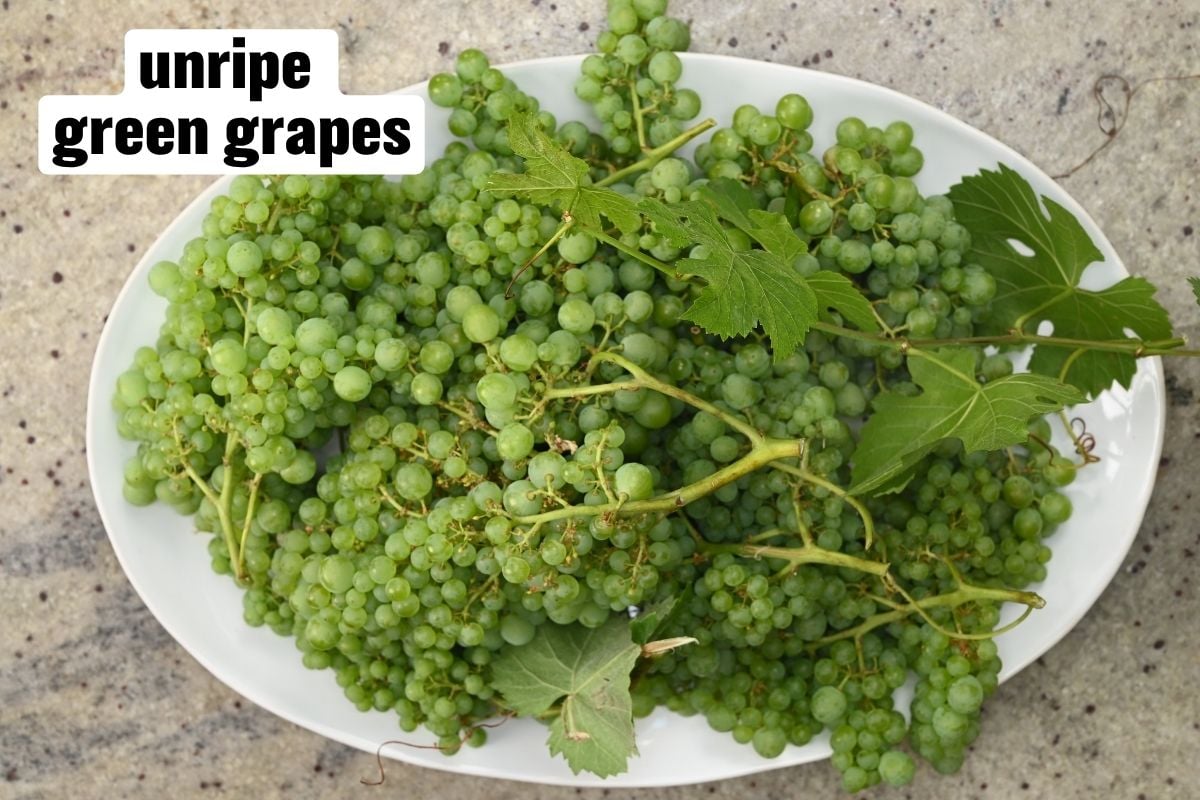
Unripe green grapes: Choose very firm, intensely sour grapes that have not started to soften or sweeten. Grapes removed during vine thinning are ideal. Any grape variety works, though the acidity, color, and yield will vary depending on the variety and how unripe they are.
See printable recipe card below for the exact quantity.
How to make verjuice
Start by removing the grapes from their stems, discarding any damaged or spoiled ones. Wash them thoroughly and drain well.
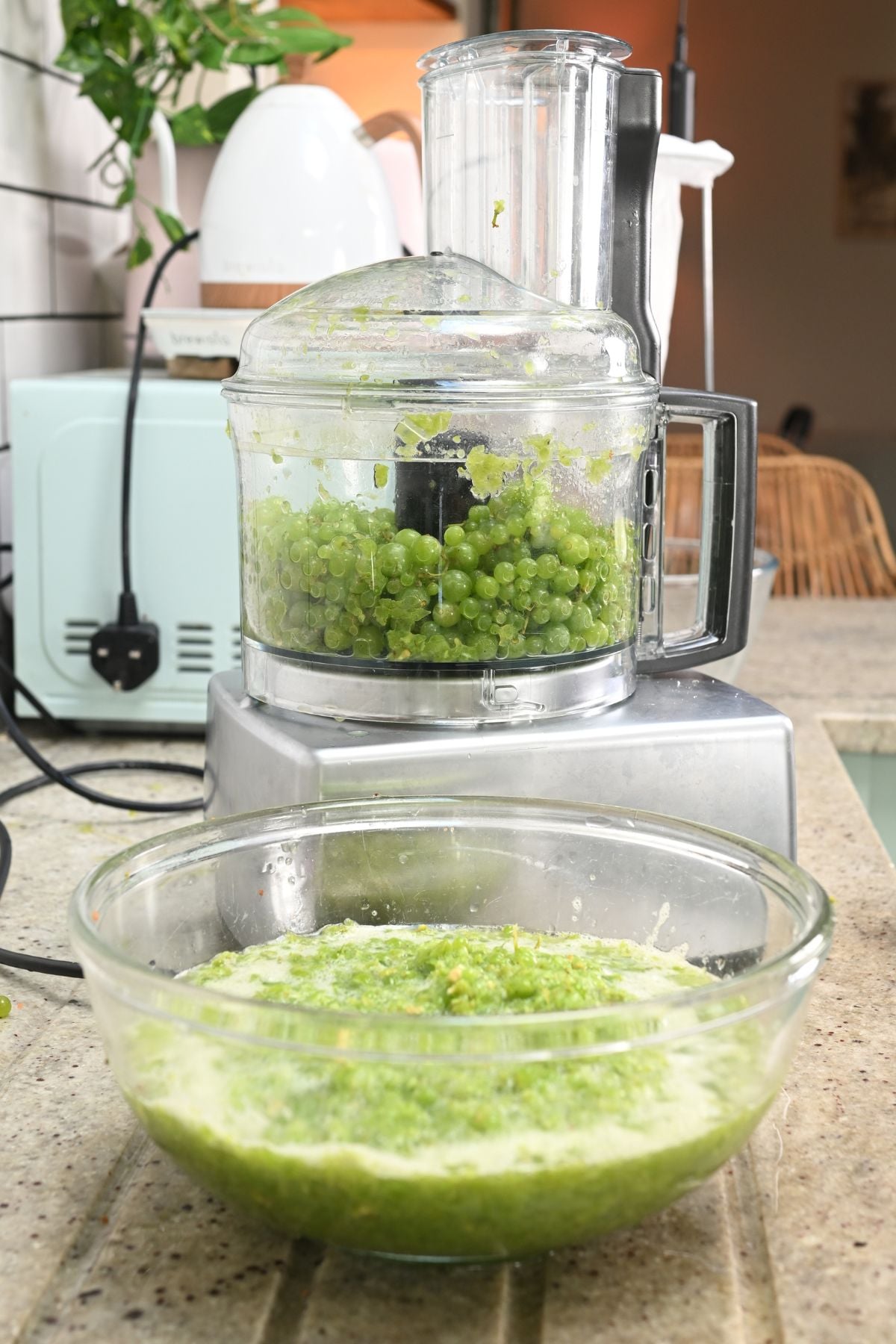
Working in batches, add the grapes to a food processor. Use the pulse setting to crush them and release their juice. You want the grapes broken open and juicy, but avoid processing them into a smooth puree. Pulverizing the seeds can add bitterness, so short pulses are key.
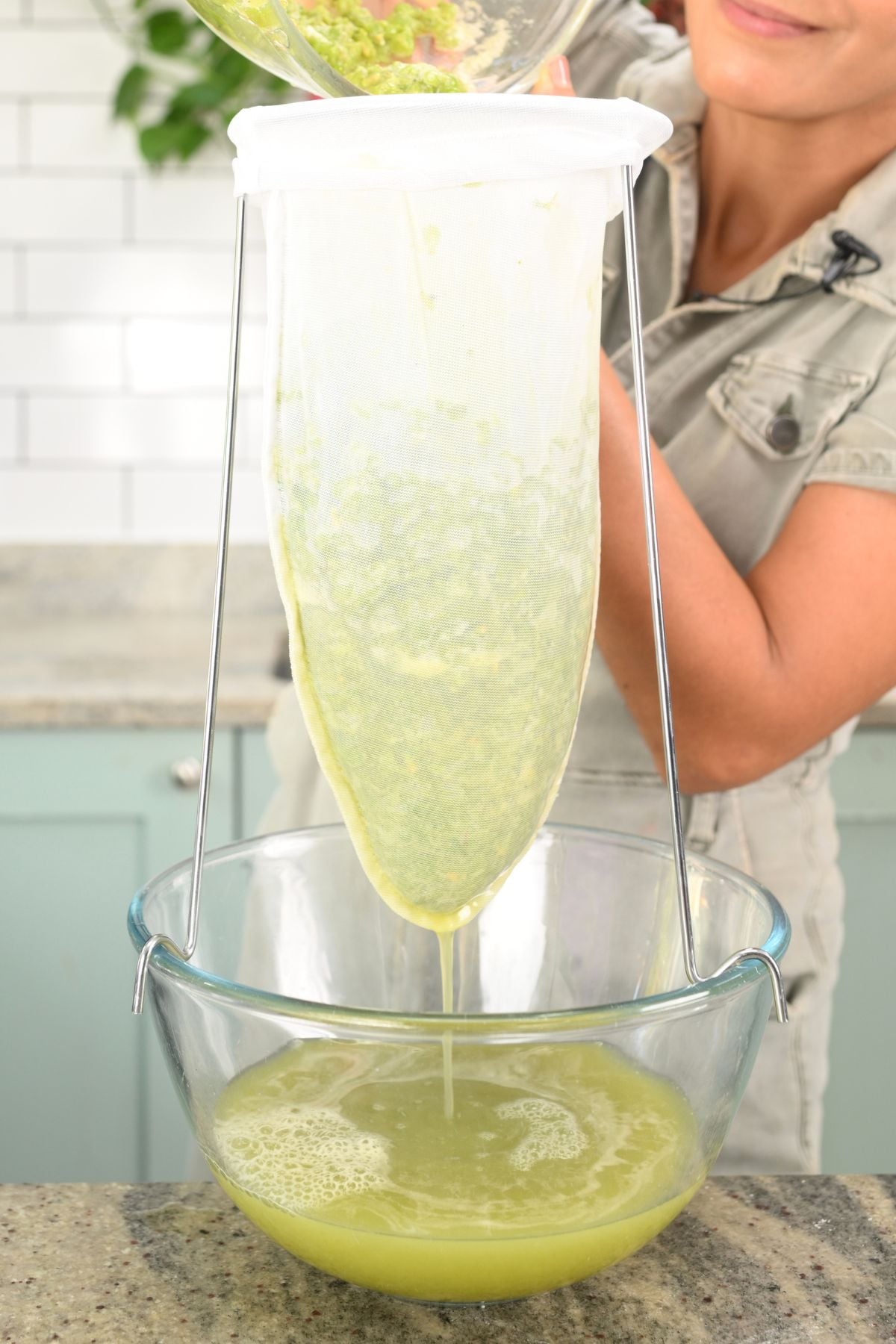
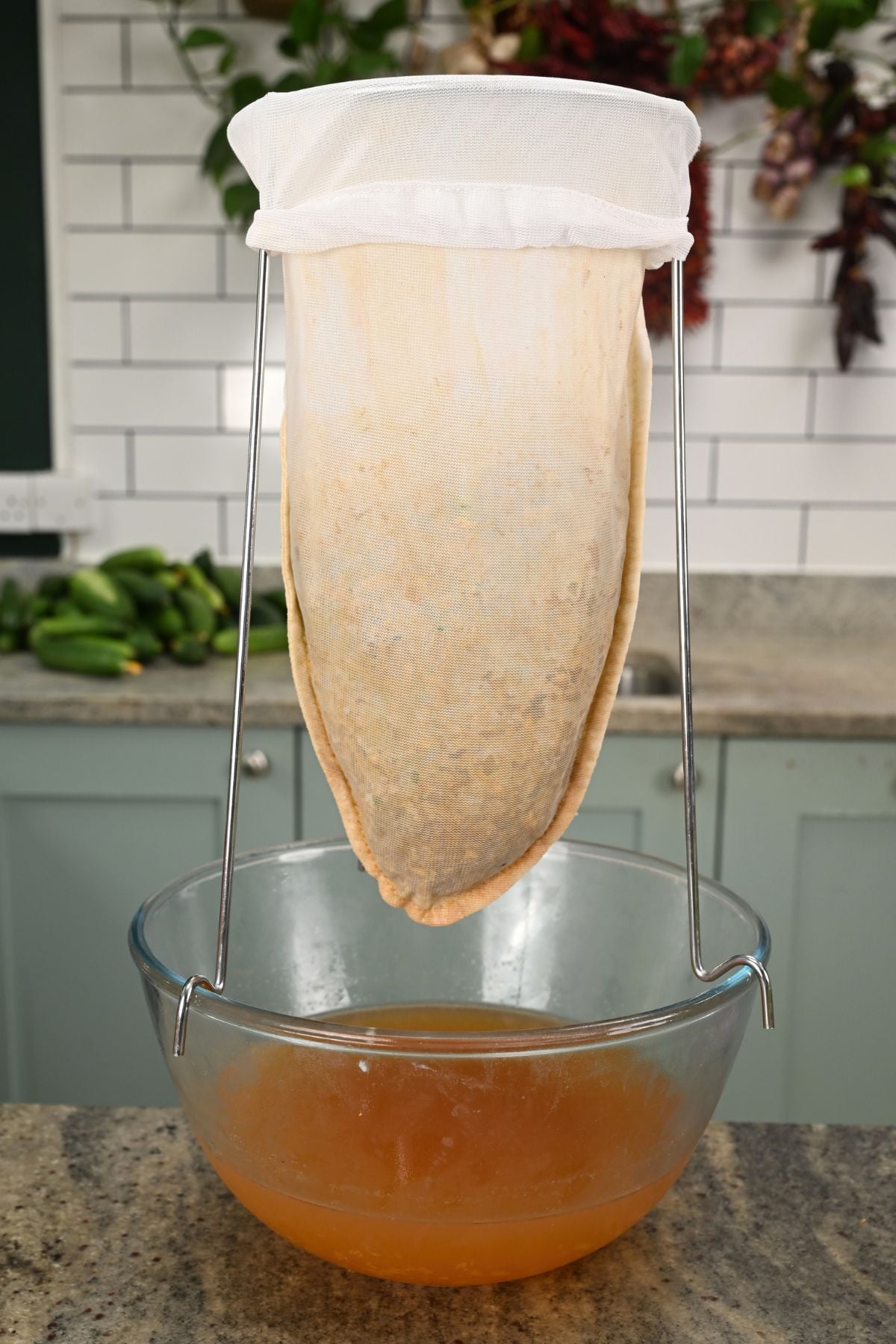
Transfer the crushed grapes and all of their juice into a jelly bag set over a large bowl. Place the bowl in the refrigerator and let it strain overnight. This hands-off step does most of the work for you and produces a clean, well-strained juice.
The following day, discard the grape solids. Transfer the strained verjuice to a clean bottle or jar and refrigerate until ready to use.
Tips & what to expect
1. Don’t over-process the grapes
Pulse the food processor in short bursts rather than running it continuously. This crushes the grapes without grinding the seeds, which can make the juice bitter.
2. Every batch will be a little different
Every batch of homemade verjuice will taste slightly different. The grape variety, how unripe the grapes are, and even the weather that season all affect the acidity, flavor, and yield.
3. How much verjuice will you get?
Around 4 kg (8.8 lb) of unripe grapes will yield roughly 1 liter of verjuice, but your results may vary.
4. The juice will darken
The juice will not stay green. Once the grapes are crushed, enzymatic browning turns the liquid brown or amber. I tested adding citric acid at the crushing stage to try to limit this, and it made absolutely no noticeable difference. The color change is purely cosmetic and does not affect the flavor at all, so do not assume your verjuice has failed if it darkens.
How to use verjuice
Verjuice works anywhere you want bright acidity without the distinctive flavor of vinegar or lemon. It is especially good as the acid in salad dressings, where it adds tartness while letting other flavors come through cleanly.
Try it whisked with olive oil and a pinch of salt over a simple Shirazi salad. Use it to deglaze a pan after searing chicken or fish for a light, wine-friendly sauce. Splash it into soups, stews, or grain bowls the way you would use a squeeze of lemon. It also makes a lovely addition to marinades for meat or vegetables. For a refreshing drink, stir a small amount into sparkling water with ice.
Storage
Fridge: Store in an airtight bottle or jar for up to 1 week.
Freezer: Freeze for up to 3 months. For easy use, freeze in small portions or ice cube trays so you can thaw only what you need.
Some sediment may settle at the bottom during storage. This is normal. Give it a gentle shake before using.
FAQs
Yes. Any variety of unripe grape works. The color of the finished juice will differ, and the acidity and flavor will vary depending on the grape variety and how unripe it is.
No. Verjuice is simply the pressed juice of unripe grapes with no fermentation involved. It is tart and acidic but milder and gentler than vinegar, which is why it works so well in dishes where you want acidity without that sharp vinegar bite.
A juicer will extract juice, but it tends to pulverize the seeds, which can add bitterness. A food processor on the pulse setting gives you more control and avoids crushing the seeds.
More Homemade Staples
If you enjoy making pantry staples from scratch, you might also like these recipes.
If you give this verjuice a try, I would love to hear how you use it. Leave a star rating and a comment below to share your experience!
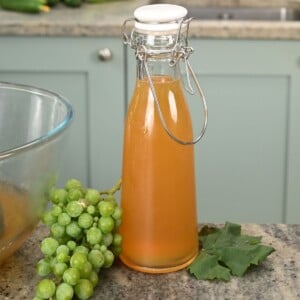
Homemade Verjuice (Sour Grape Juice)
Equipment
- Airtight container
Ingredients
Verjuice
- 4 kg unripe green grapes (about 9 lb)
Instructions
- Remove the grapes from the stems, discarding any damaged or spoiled grapes. Wash thoroughly and drain well.
- Working in batches, place the grapes in a food processor.
- Use the pulse setting to crush the grapes and release their juice. Do not process into a smooth puree or pulverize the seeds, as this can add bitterness.
- Transfer the crushed grapes and their juices to a jelly bag set over a large bowl.
- Refrigerate and allow to strain overnight.
- The following day, discard the grape solids and transfer the strained verjuice to a clean bottle or jar.
- Refrigerate until ready to use.
Notes
- Yield approximately 1 liter (about 4 1/4 cups), though this varies depending on grape variety and ripeness.
- Use very firm, intensely sour, unripe grapes for the best results. Grapes that have started to soften or sweeten will produce a less tart verjuice.
- Every batch will taste slightly different depending on grape variety, ripeness, and growing conditions.
- The juice will turn brown or amber from enzymatic browning once the grapes are crushed. This is normal and does not affect the flavor.
- For longer storage, freeze in small portions or ice cube trays for up to 3 months.