

This post may contain affiliate links. If you buy through them, I earn a small commission at no extra cost to you. As an Amazon Associate I earn from qualifying purchases. Read my disclosure policy.
This fire cider is one of those recipes I keep coming back to, especially when the cooler months roll around and I want something warming, sharp, and full of flavor. It is a traditional spicy vinegar tonic made by infusing raw apple cider vinegar with fresh horseradish, ginger, turmeric, garlic, citrus, jalapeños, and a handful of fragrant herbs and whole spices.
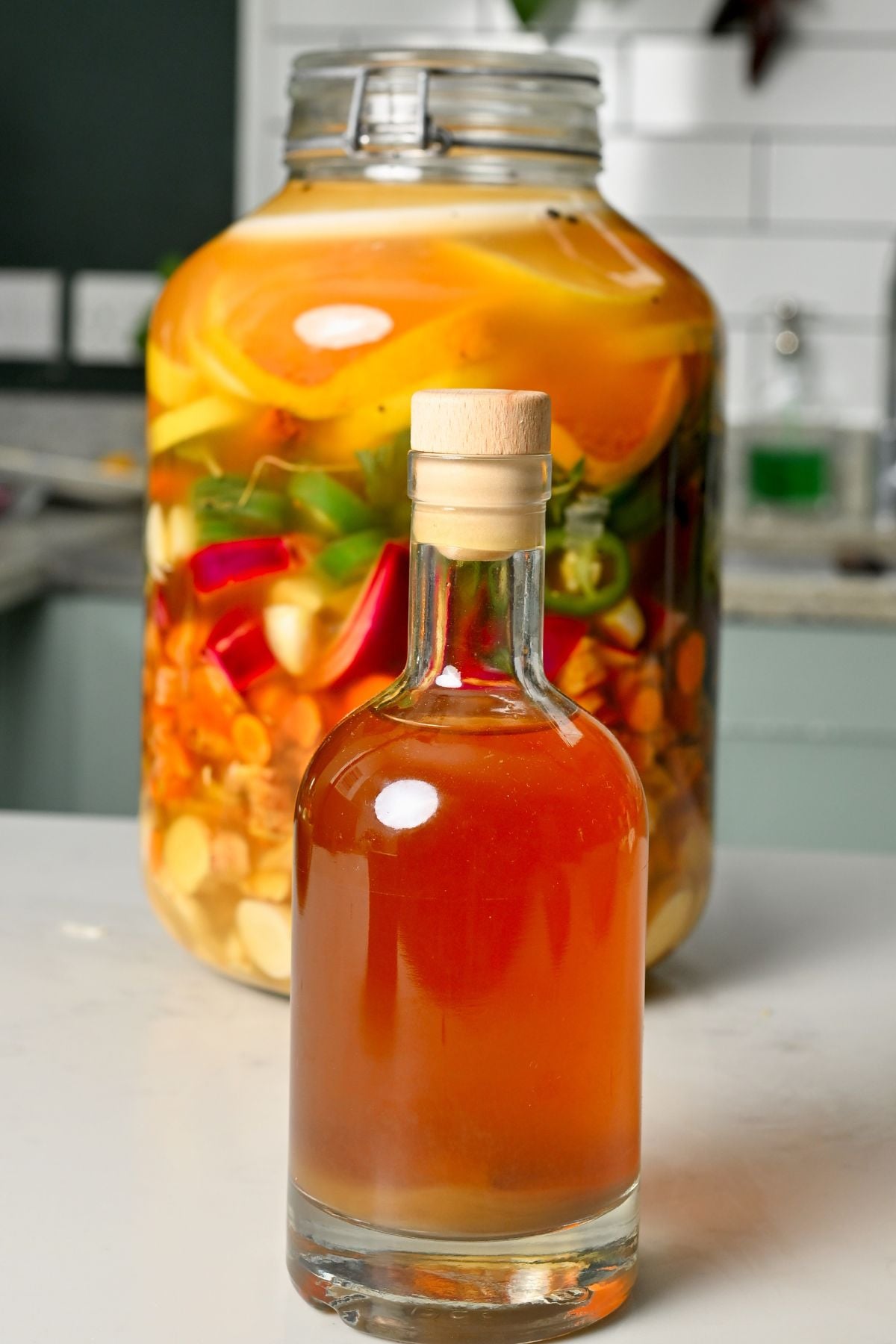
After a few weeks of sitting in a cool, dark spot, the vinegar pulls all of those bold flavors together into a punchy, aromatic tonic that you sweeten with raw honey to taste.
The process is simple: layer everything into a large glass jar, cover with apple cider vinegar, and let time do the work.
If you enjoy making your own tonics and infusions at home, you might also love these lemon ginger and cayenne shots, turmeric ginger energy shots, or this turmeric tincture.
Table of Contents
Fire cider ingredients
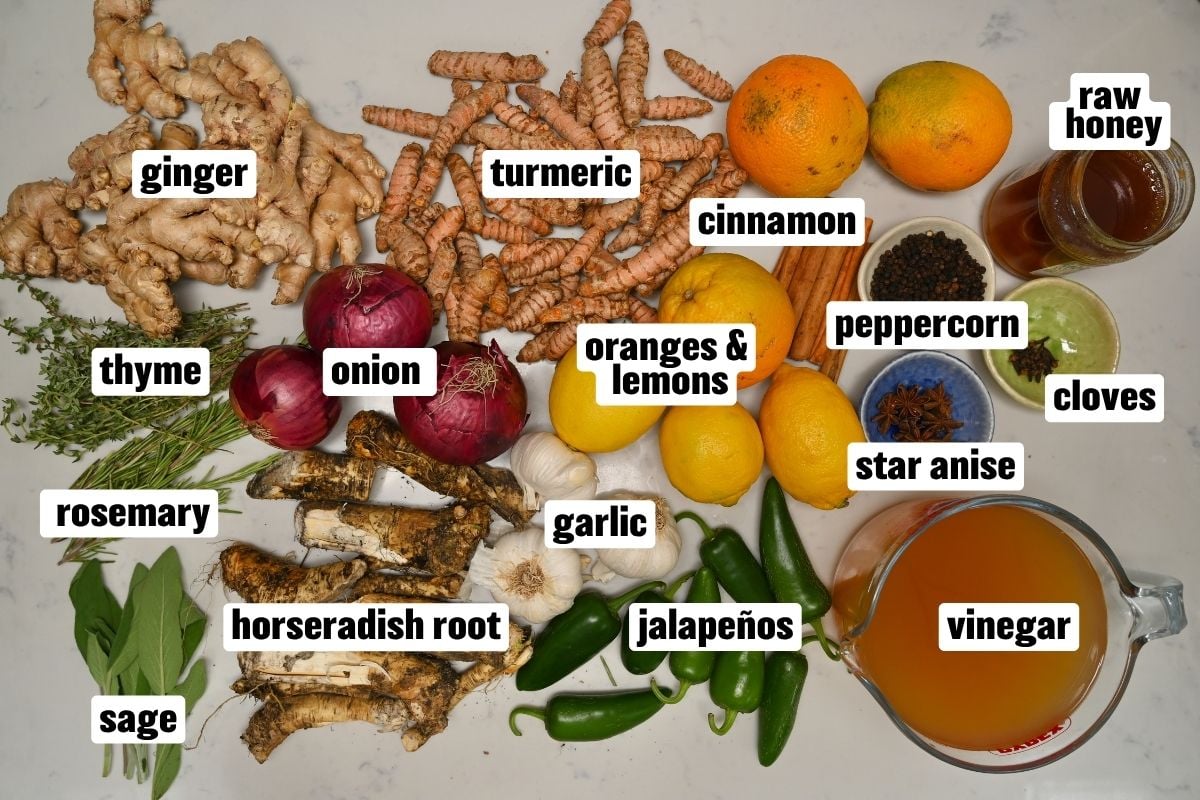
- Fresh horseradish root: the signature sharp, pungent ingredient in fire cider. Peel it before slicing. If fresh horseradish is hard to find, use extra fresh ginger for a milder version, or a small amount of prepared plain horseradish (no cream or added flavorings). Fresh horseradish is still the best choice for the classic flavor.
- Fresh ginger: scrub it well and leave the skin on. Slice thinly so the vinegar can draw out all the warmth and spice.
- Fresh turmeric: also left unpeeled after a good scrub. It adds earthy depth and a gorgeous golden color.
- Red onions: peeled and cut into wedges. They mellow beautifully during the infusion.
- Whole garlic bulbs: cut crosswise in half so the cloves are exposed, with the tighter inner skin left in place.
- Jalapeños: sliced into rounds with seeds left in for full heat. Adjust the quantity if you prefer a milder or spicier tonic.
- Oranges and lemons: sliced into rounds with the peel on for extra oils and flavor. Remove any obvious lemon seeds before adding.
- Fresh rosemary, thyme, and sage: left whole. These herbs bring aromatic, slightly resinous notes.
- Cinnamon sticks, whole black peppercorns, whole cloves, and star anise: warming whole spices that round out the tonic with depth and gentle sweetness.
- Raw, unfiltered apple cider vinegar: the base of the entire tonic. Use enough to completely cover all the ingredients.
- Raw honey: stirred in only after the cider has been strained. It balances the heat and acidity beautifully.
See printable recipe card below for the full ingredients list and quantities.
How to make fire cider
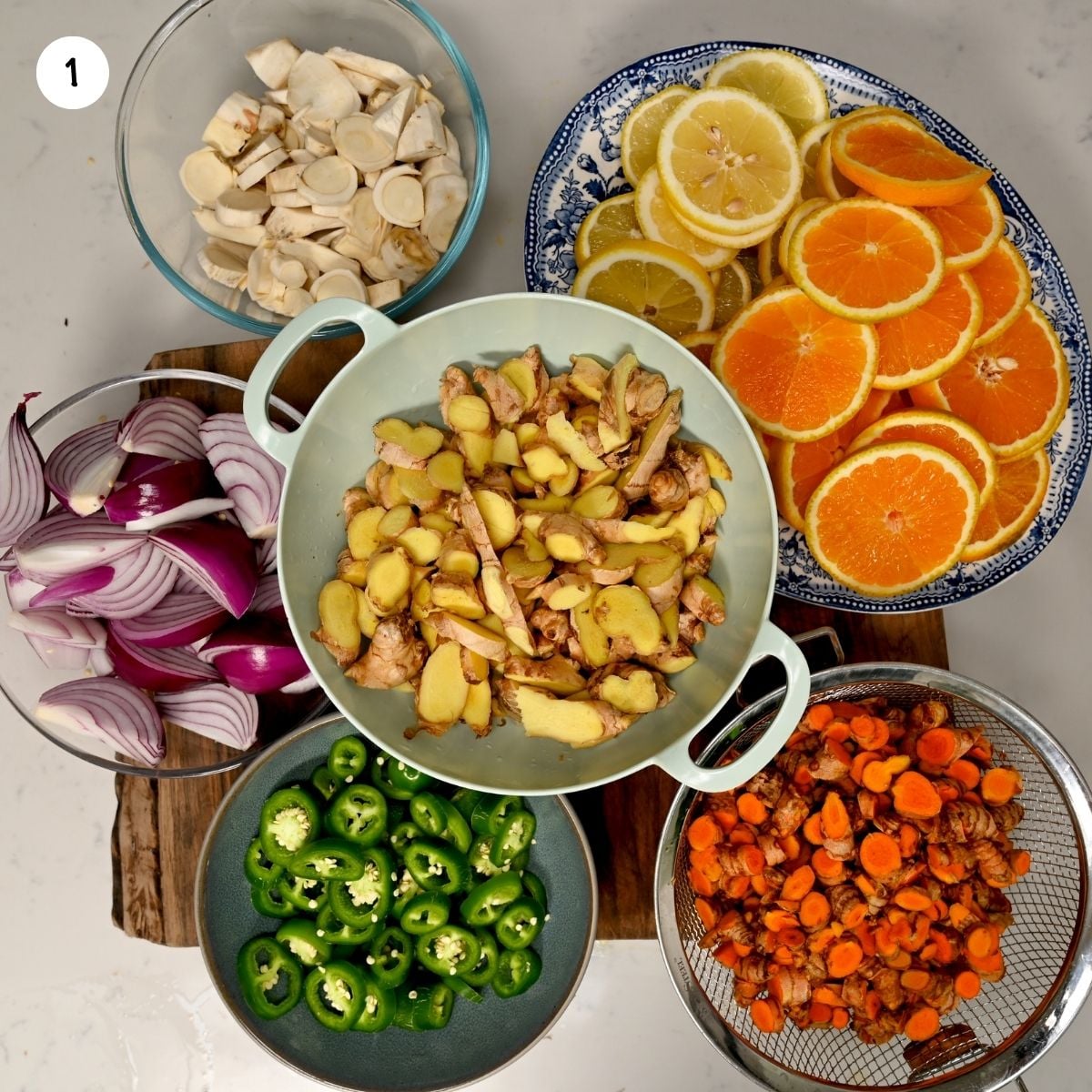
Start by washing the horseradish, ginger, turmeric, oranges, and lemons thoroughly. Peel the horseradish and slice it into thin rounds or half-moons. Scrub the ginger and turmeric well, leave the skins on, and slice both thinly.
Peel the red onions and cut them into wedges. Remove the loose outer papery skin from each garlic bulb, leave the tighter inner skin in place, then cut each bulb in half crosswise so the cloves are exposed. Slice the jalapeños into rounds, keeping the seeds in.
Slice the oranges and lemons into rounds with the peel on. Pick out any obvious lemon seeds.
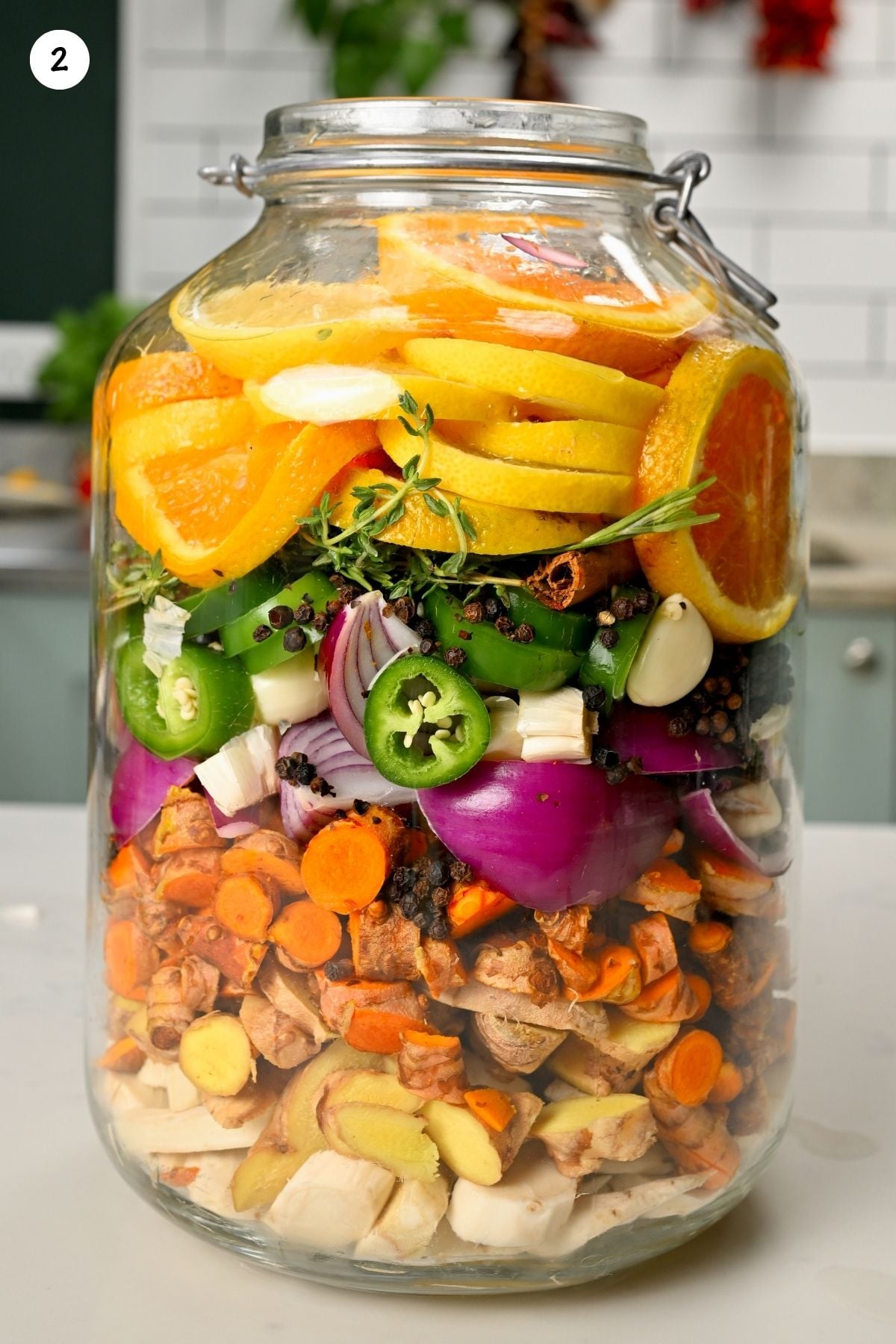
Add the prepared ingredients to a clean large glass jar in this order: horseradish, ginger, turmeric, onions, garlic, jalapeños, black peppercorns, cloves, star anise, cinnamon sticks, rosemary, thyme, sage, then the orange and lemon slices on top.
Slowly pour in enough raw apple cider vinegar to completely cover all the ingredients. Press everything down gently to release any trapped air pockets. Place a clean fermentation weight on top so the ingredients stay below the vinegar. Leave a little headspace at the top of the jar.
Close the jar securely. If using a metal lid, place a piece of parchment paper between the lid and the jar to prevent prolonged contact between the vinegar and the metal.
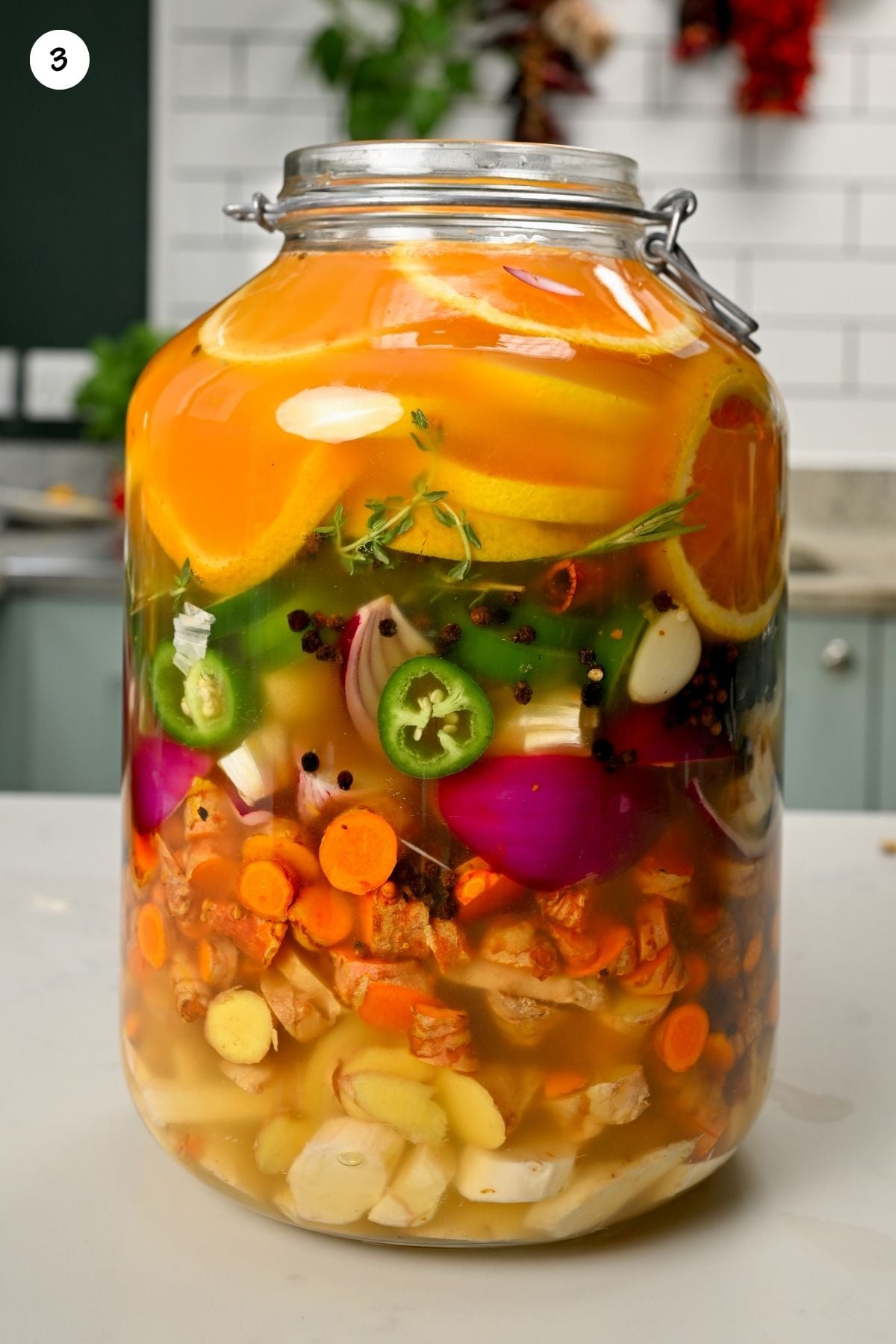
Store the jar in a cool, dark place for 3 to 4 weeks. Check it regularly to make sure the ingredients stay submerged, and gently shake or swirl the jar every day or two. If the lid ever feels very tight or pressure seems to be building, briefly open it to release the pressure, then close it again.
After 3 to 4 weeks, strain the fire cider through a fine-mesh strainer or cheesecloth into a large bowl, pressing the solids well to extract as much liquid as possible. Stir in raw honey to taste only after straining. Transfer the finished fire cider to clean bottles or jars and refrigerate.
Tips for the best fire cider
- Keep everything submerged below the vinegar at all times. Use a fermentation weight if needed. Any fruit, herbs, or vegetables sitting above the vinegar can spoil and ruin the batch.
- When handling fresh horseradish, work in a well-ventilated area and consider wearing gloves. The fumes can be strong and may irritate your eyes and skin.
- Do not add the honey at the beginning. Add it only after the fire cider has finished infusing and has been strained, so the vinegar can work on the raw ingredients without interference.
How to use fire cider
The most common way to enjoy fire cider is to take 1 to 2 tablespoons straight, or dilute it with a little water if the flavor is too intense. It is best taken with or after a meal, as it can be strong on an empty stomach. You can also use fire cider as a salad dressing base by whisking it with olive oil and a touch of honey. Splash it into soups, stir-fries, or marinades for a tangy kick. It also works well added to warm water with a spoonful of honey for a soothing drink.
FAQs
A common approach is 1 to 2 tablespoons per day. It is best taken with a meal rather than on an empty stomach, as the acidity and spice can be strong.
Fresh herbs give the best flavor and aroma, but dried herbs can be used if fresh are unavailable. Use roughly half the amount by weight compared to fresh.
Once the fire cider has been strained and sweetened with honey, keep it refrigerated. The cold temperature helps maintain the best flavor and quality over time.
More wellness recipes
If you enjoy making homemade tonics and fermented infusions, try these next.

If you make this fire cider, I would love to hear how it turned out! Please leave a star rating and a comment below to share your experience.
Homemade Fire Cider
Equipment
- Fine mesh strainer
- Cheesecloth (Muslin cloth)
- Airtight jar
- Sharp knife
- Cutting board
- Parchment paper
Ingredients
Roots and Aromatics
- 400 grams fresh horseradish root peeled and sliced into thin rounds or half-moons
- 400 grams fresh ginger scrubbed well, skin left on, sliced thinly
- 400 grams fresh turmeric scrubbed well, skin left on, sliced thinly
- 3 medium red onions peeled and cut into wedges
- 3 whole garlic bulbs loose papery skin removed, cut in half crosswise
Peppers and Citrus
- 7 jalapeños sliced into rounds with seeds (adjust to taste)
- 3 oranges sliced into rounds with peel on
- 3 lemons sliced into rounds with peel on, obvious seeds removed
Fresh Herbs
- 7 sprigs rosemary
- 11 sprigs fresh thyme
- 7 fresh sage leaves
Whole Spices
- 4 cinnamon sticks
- 3 tablespoons whole black peppercorns
- 13 whole cloves
- 3 whole star anise
Liquid and Sweetener
- Raw, unfiltered apple cider vinegar enough to completely cover all ingredients
- Raw honey to taste (added only after straining)
Instructions
- Wash the horseradish, ginger, turmeric, oranges, and lemons thoroughly. Peel the horseradish and slice it into thin rounds or half-moons. Scrub the ginger well, leave the skin on, and slice it thinly. Scrub the turmeric well, leave the skin on, and slice it thinly.
- Peel the red onions and cut them into wedges. Remove the loose outer papery skin from the garlic bulbs, leave the tighter inner skin in place, then cut each whole garlic bulb in half crosswise so the cloves are exposed.
- Slice the jalapeños into rounds, leaving the seeds in. Slice the oranges and lemons into rounds, keeping the peel on. Remove any obvious lemon seeds.
- Leave the rosemary and thyme sprigs whole. Leave the sage leaves whole.
- Add the ingredients to a clean 8-liter glass jar in this order: horseradish, ginger, turmeric, onions, garlic, jalapeños, black peppercorns, cloves, star anise, cinnamon sticks, rosemary, thyme, sage, then the orange and lemon slices.
- Slowly pour in enough raw apple cider vinegar to completely cover all the ingredients. Press the ingredients down gently to release any trapped air pockets.
- Place a clean fermentation weight on top so the ingredients remain below the vinegar. Make sure everything is submerged and leave a little headspace at the top of the jar.
- Close the jar securely with the lid. If using a metal lid, place a piece of parchment paper between the lid and the jar to prevent prolonged contact between the vinegar and the metal.
- Store in a cool, dark place for 3 to 4 weeks. Check the jar regularly to make sure the ingredients stay submerged. Gently shake or swirl the jar every day or two. If the lid becomes very tight or pressure seems to be building, briefly open it to release the pressure, then close it again.
- After 3 to 4 weeks, strain the fire cider through a fine-mesh strainer or cheesecloth into a large bowl, pressing the solids well to extract as much liquid as possible.
- Stir in raw honey to taste only after the cider has been strained. Transfer to clean bottles or jars and refrigerate.
Notes
- Horseradish substitute: If fresh horseradish is hard to find, use extra fresh ginger for a milder version, or a small amount of prepared plain horseradish with no cream or added flavorings. Fresh horseradish is still the best choice for the classic sharp flavor.
- Keep everything submerged below the vinegar at all times. Use a fermentation weight if needed. Anything sitting above the vinegar can spoil.
- Do not add the honey at the beginning. It goes in only after the fire cider has finished infusing and has been strained.
- If using a metal lid, place parchment paper or another food-safe barrier between the vinegar and the metal to prevent prolonged contact.
- The yield will vary depending on the size of your produce and how much vinegar you use. Expect roughly 1.5 to 2 quarts of strained fire cider from this batch.
- Once strained and sweetened, store the finished fire cider in the refrigerator for up to 6 months.