

This post may contain affiliate links. Please read our disclosure policy.
How to make powdered milk at home from fresh milk – using just a large saucepan and fresh milk.
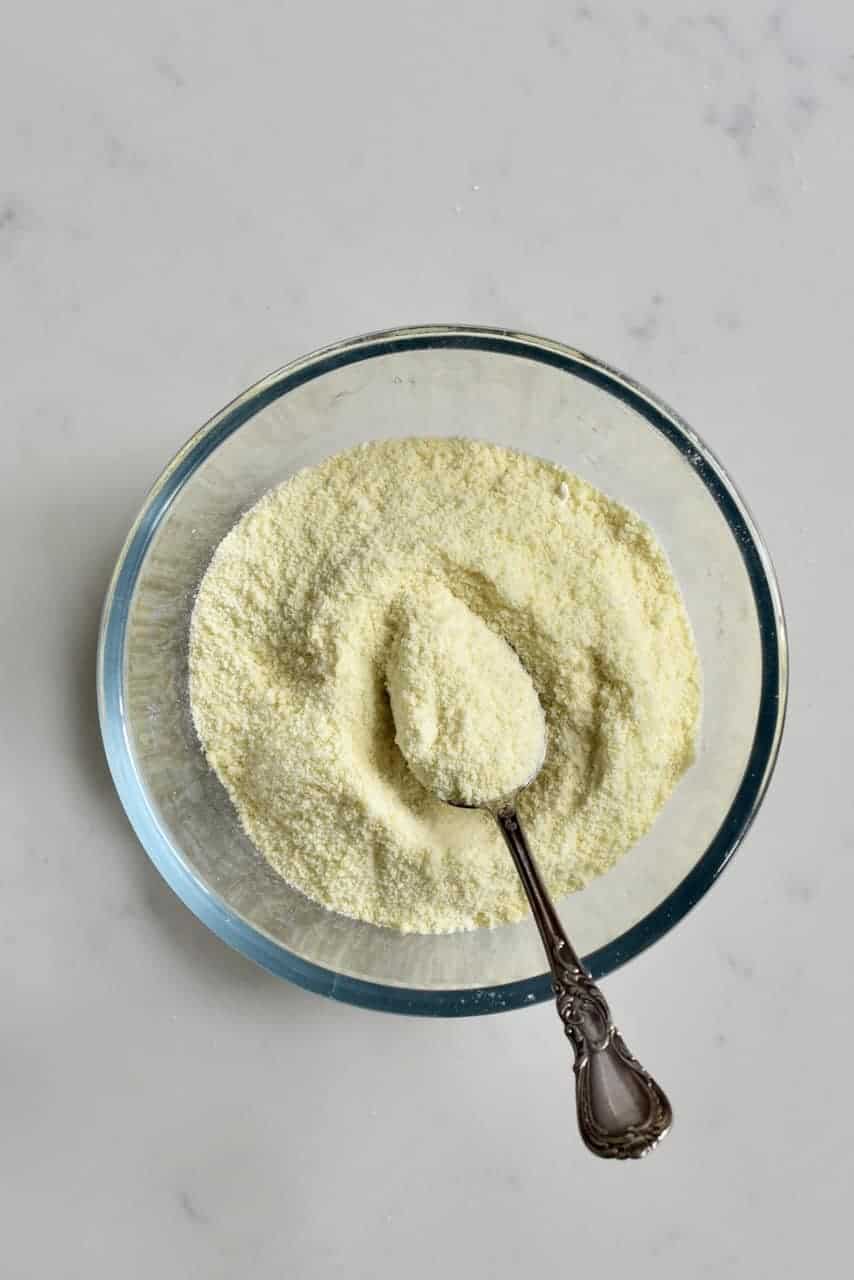
Making homemade powdered milk is not only a simple process, but it can also extend the life of milk nearing its use-by date by months (if not years), as well as keep your dairy supply going for longer. So if you find yourself in the situation where you have lots of milk and no way to possibly use it before it sours, then making milk powder can be a great way to reduce waste and prolong your dairy.
I recently did this DIY for homemade Coconut Condensed Milk and was curious about what would happen if I just continued to leave milk on the heat after it’s reached ‘condensed’ levels – the answer is a thick milk paste that can be turned into milk powder.
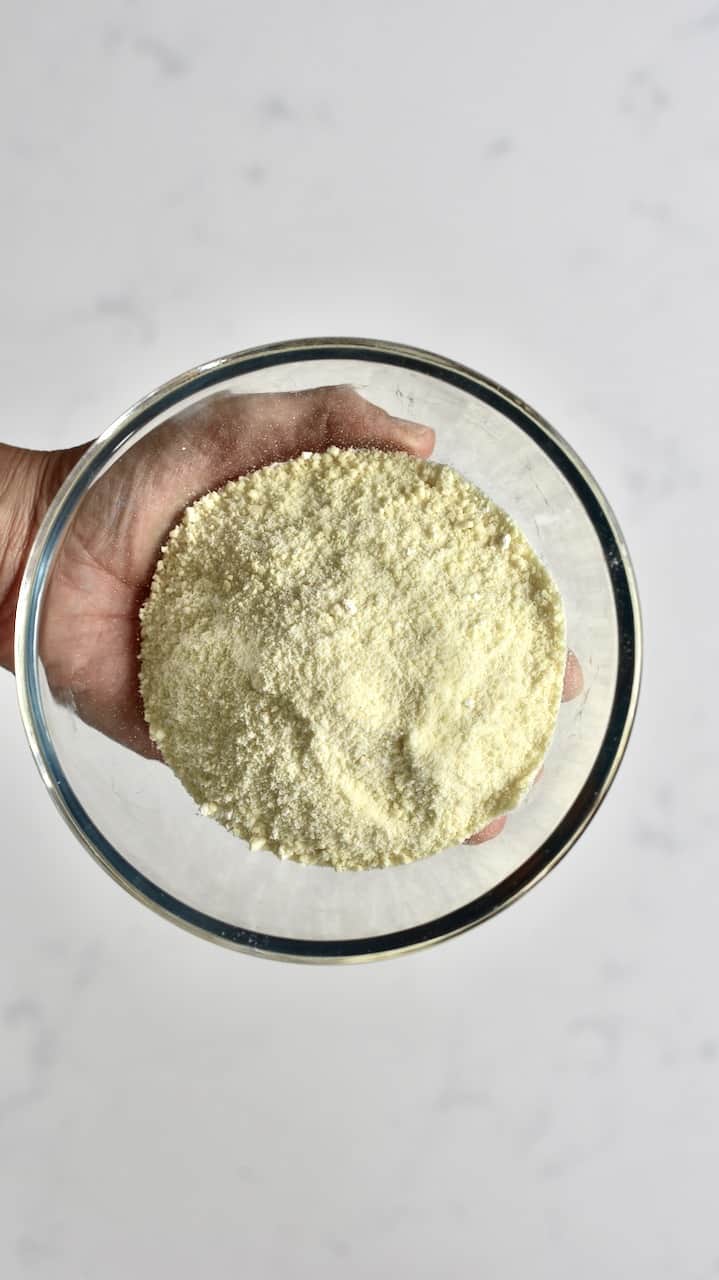
I don’t drink a lot of dairy milk, however, for the times that I do – I will sometimes struggle to finish the entire bottle of store-bought milk within the short shelf-life. By making your own powdered milk, you can reduce waste, use the milk at a later date and keep it on hand for emergencies in long-term storage.
Now, I know that in the interest of being completely honest, milk powder doesn’t taste as good as fresh regular milk. I don’t think many people expect it to be, to be honest. However, there are some tips to also combat that worry too, which I’ve included below!
Want to save this recipe?
What is milk powder?
Perhaps not surprisingly, powdered milk is exactly what it sounds like. Milk that has been turned into a dried milk powder through an evaporation process. This is done by removing all of the liquid from the milk until just solids remain – which can be made into a powder.
There are multiple types of milk power products you can get – including whole milk (full fat) and skimmed. You can also get a number of other powdered dairy products such as whey and buttermilk.
As I’ve said above, this is done to preserve it and reduce bulk. Plus, milk powder doesn’t even need to be refrigerated.
Plus, perhaps the most interesting thing that I have found out – making homemade milk powder doesn’t deplete the nutrition of the milk. Through the slow process of heating, the minerals and vitamins remain intact. In fact, the only thing you do lose is water content and extra moisture.
Plus, this natural product requires no additional preservatives, so can be kept chemical-free.
A few Notes on making homemade powdered milk
- While any milk can be used for drying (skim milk, full fat, etc.), it should always be a pasteurized milk, due to the reduced bacteria content. So I wouldn’t suggest using raw milk.
- Skimmed milk will generally have a longer shelf life, due to the lower fat content.
- There are multiple methods for making milk powder at home. The two easiest methods include using a dehydrator and the method I use below. I’ll include a note in the recipe card below about the dehydrator method.
- The key to this DIY is making sure all of the moisture is completely removed – to stop mould from being able to grow (as it needs moisture). On top of that, make sure the container you store it in is also completely dry and airtight. Some people actually vacuum seal it, to further extend the shelf life.
How to Reconstitute the Milk Powder
Since this is a DIY I previously didn’t know too much about, I’m no expert in the art of reconstituting milk powder. With that in mind, I decided to turn to supermarket versions, to see what they suggest.
And that is where confusion sets it. In the end, after LOTS of research, I discovered three main methods:
– 1:2 ratio of milk powder to cold water
– 3 tBsp of milk powder to one cup of water
– and 1 tBsp of powdered milk per one cup of water
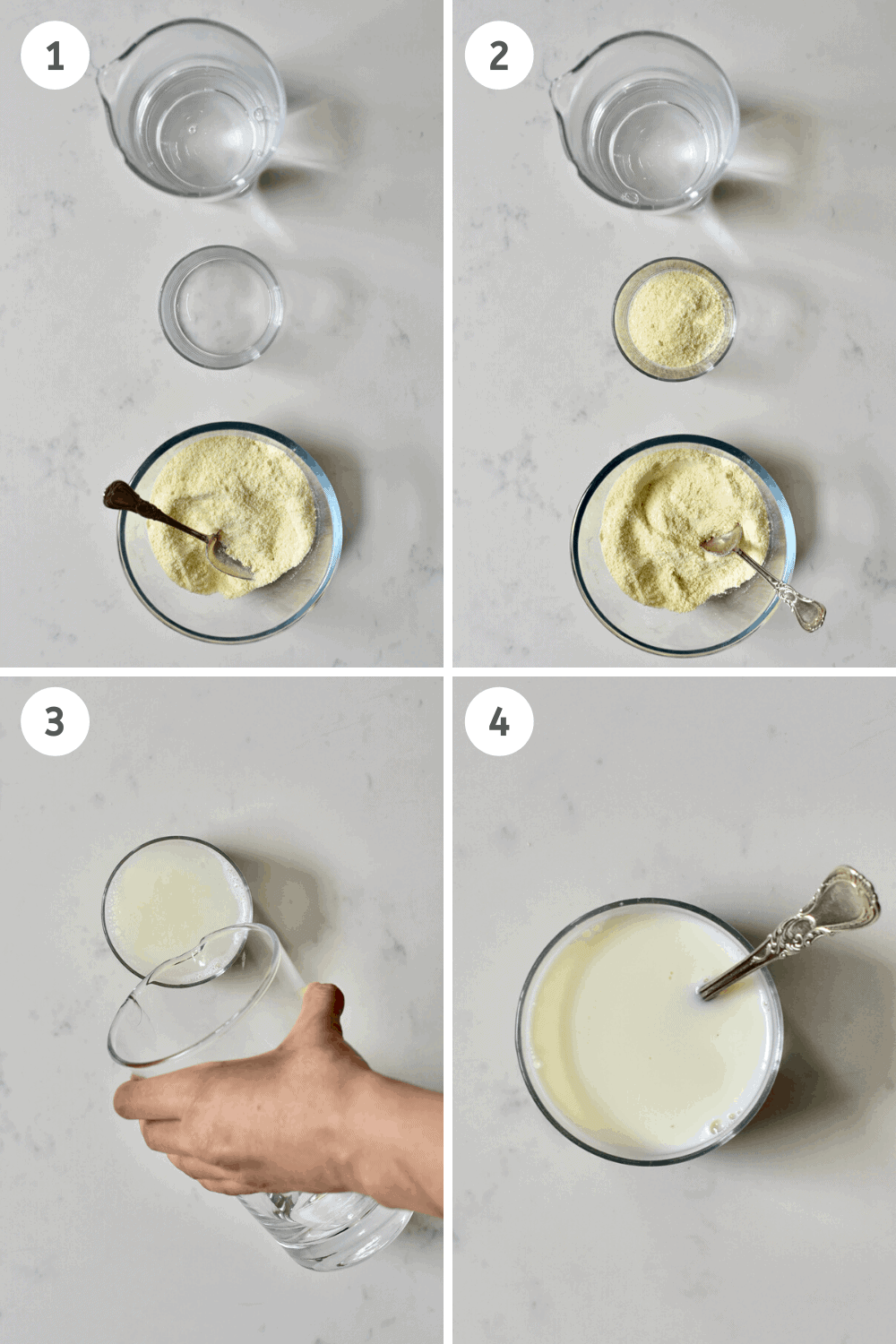
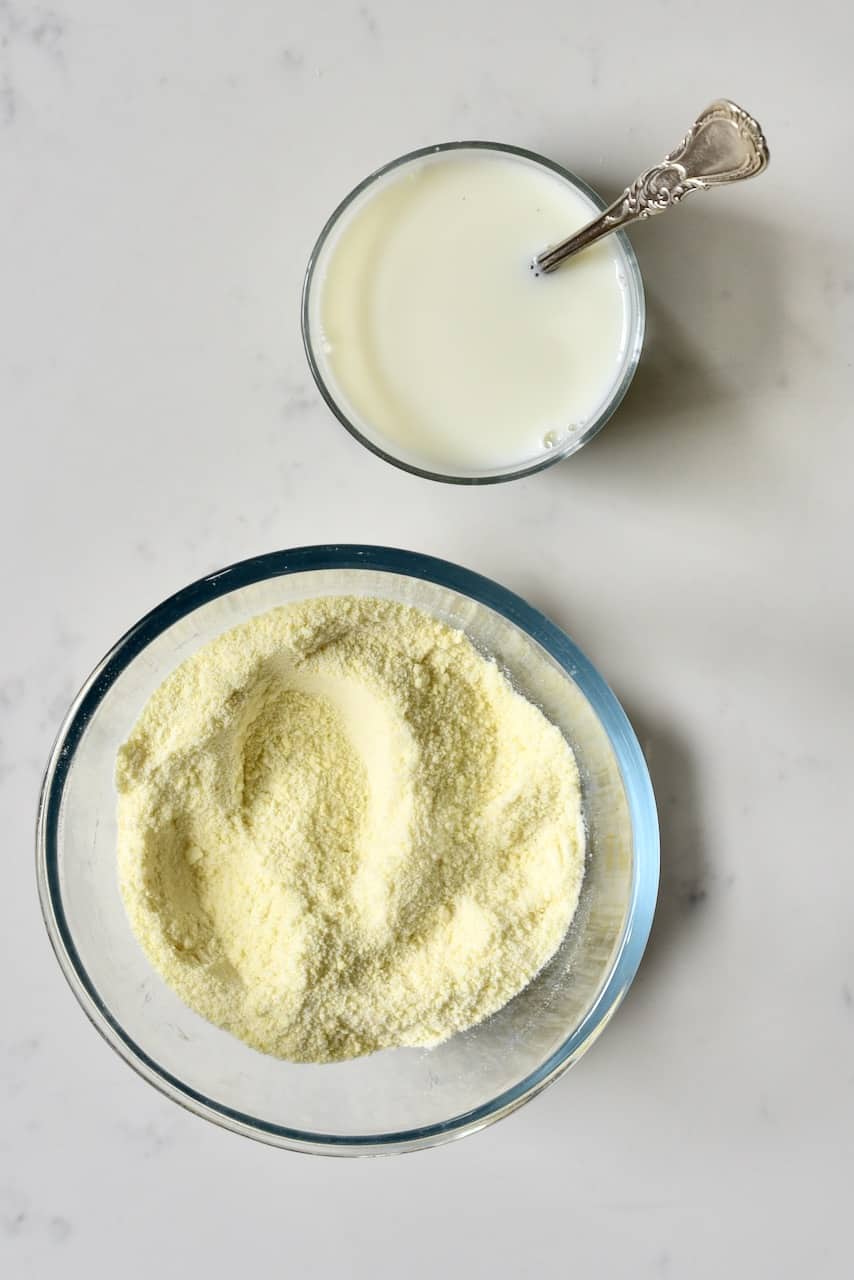
With the whole idea of this DIY being to make a product last longer, I decided to go with 1 tBsp of powder per glass of water and then increase the amount if needed, but I found that I didn’t have to. I’d say that you should do the same – start with 1 tBsp and increase, if needed.
I have learned a few tips on making the most of your reconstituted milk too. For example:
- You can add a little bit of homemade vanilla extract into the milk – it’s delicious! Although obviously best for if you’re dedicating that ‘batch’ to sweet purposes.
- For a super ‘cheat’ at making your milk taste better, you can actually mix it in with a 1:1 ratio with milk you already have in your fridge. If the milk from the fridge was full fat then your resulting mixture will be equivalent to 2%. However, this helps your milk go further while also keeping it tasting creamy and rich.
How to make milk powder
Homemade Powdered Milk is very easy to make. In fact, there are a few different methods to make the milk powder including on a hob, in a dehydrator tray, and my preferred method – in the oven.
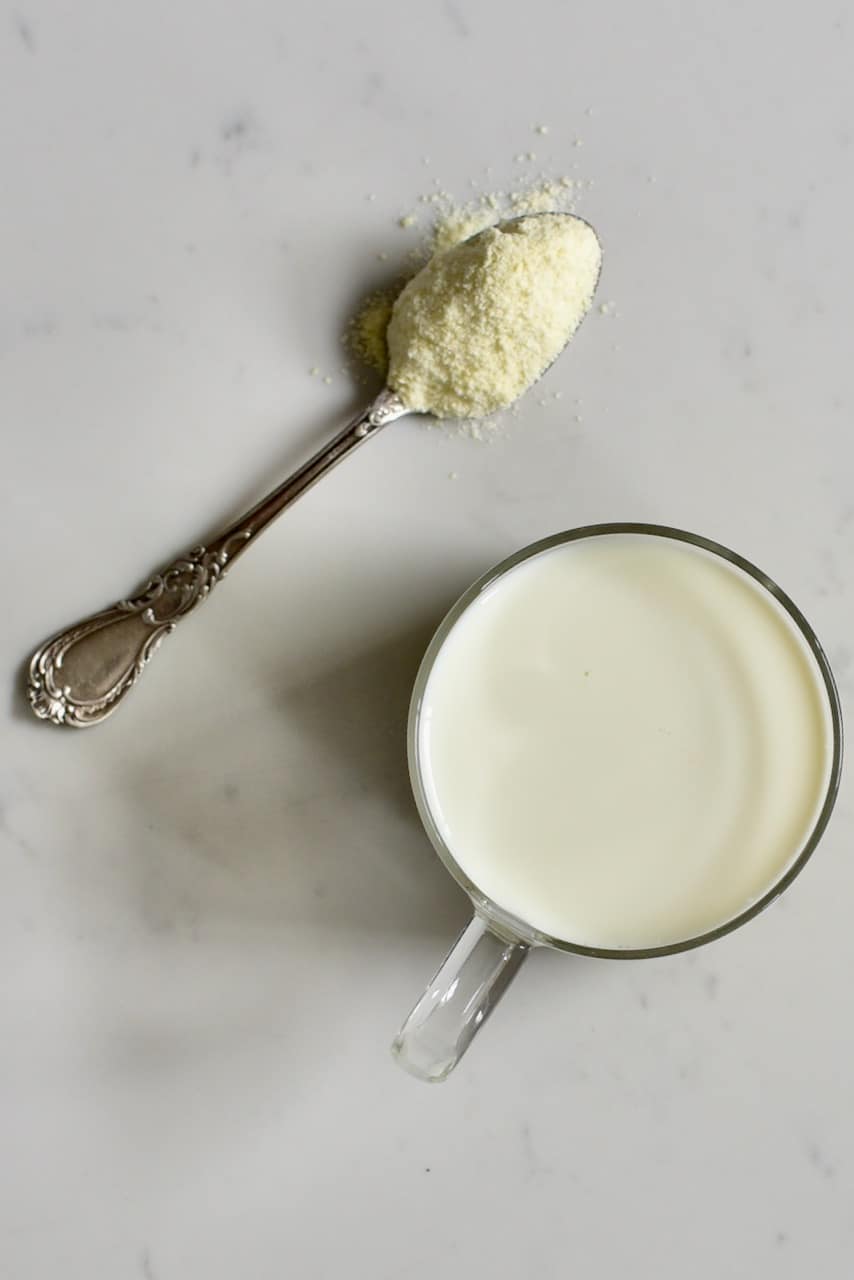
Needed
1 liter full-fat fresh milk yields about 150g of powdered milk.
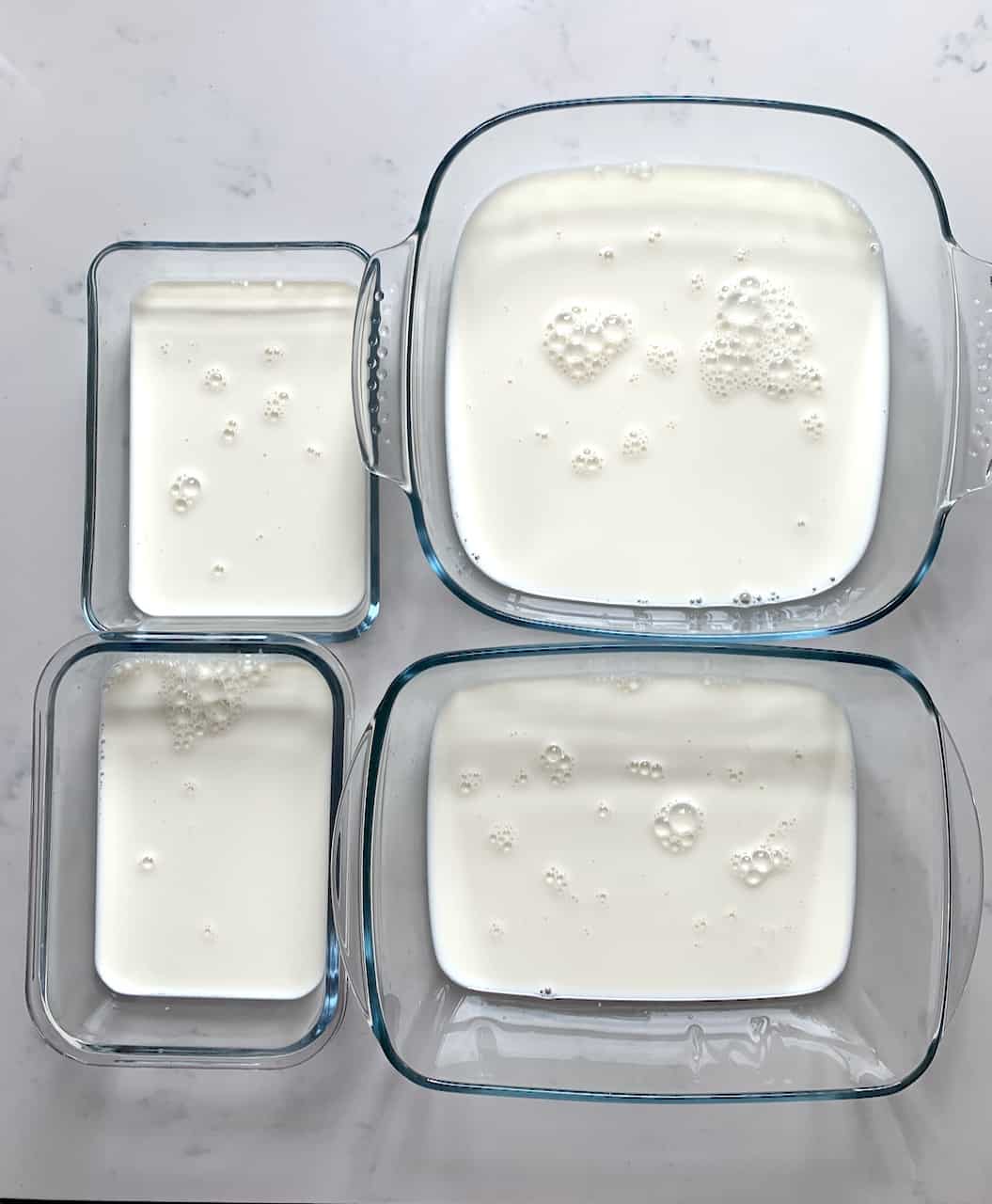
You’ll also need a variety of oven-safe dishes. The larger the surface area then the faster the water will evaporate from the milk
Steps
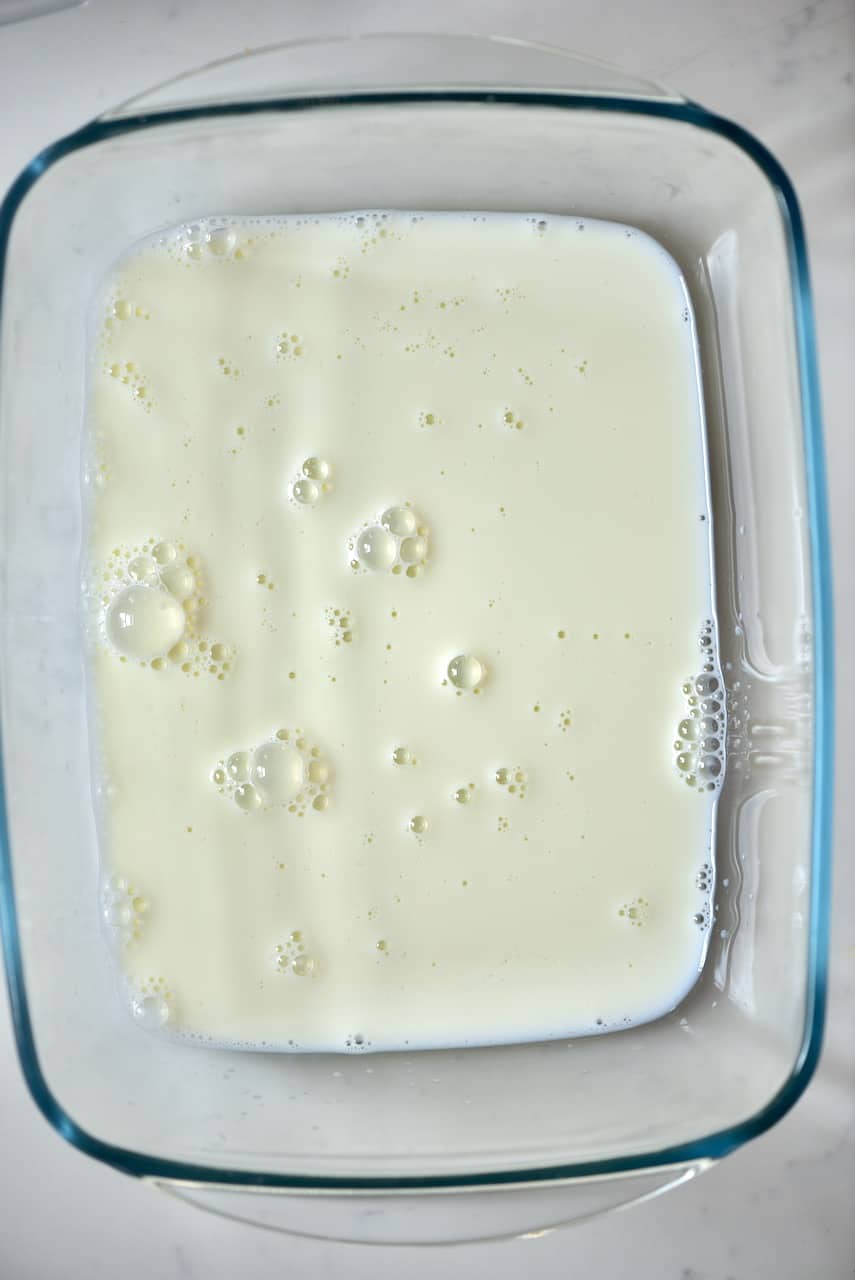
Pour room temperature milk into a big oven-safe dish. It’s best to keep the milk at shallow levels, to dry out quickly. I tend to keep it at a maximum of an inch.
Depending on the size of your oven and/or dish, you can pour the milk into several dishes.
Note* If you want to use a dehydrator then you follow a similar method, pouring milk onto the dehydrator trays (or place a large dish in the dehydrator) and dehydrate at very low temperature over a long period of time. I found good results at 57ºC for around 8 hours, stirring occasionally. However, it can take up to 12 hours depending on how much milk you pour on each tray.
Next, place the dishes into your oven at its lowest temperature. If it can go as low as 50-60ºC, then that’s ideal. Otherwise, select the lowest temperature that you can, using the fan-assisted option.
If you don’t have a fan option then leave the oven cracked open slightly, to let the evaporating liquid out so the milk dries quicker.
As the water evaporates, the milk will become pastier and pastier until finally, it becomes a thick paste. Make sure the milk paste doesn’t turn brown while drying – that’s a sign that the temperature is too high.
Stir from time to time – this allows the water to evaporate evenly, especially when the milk starts turning to a paste.
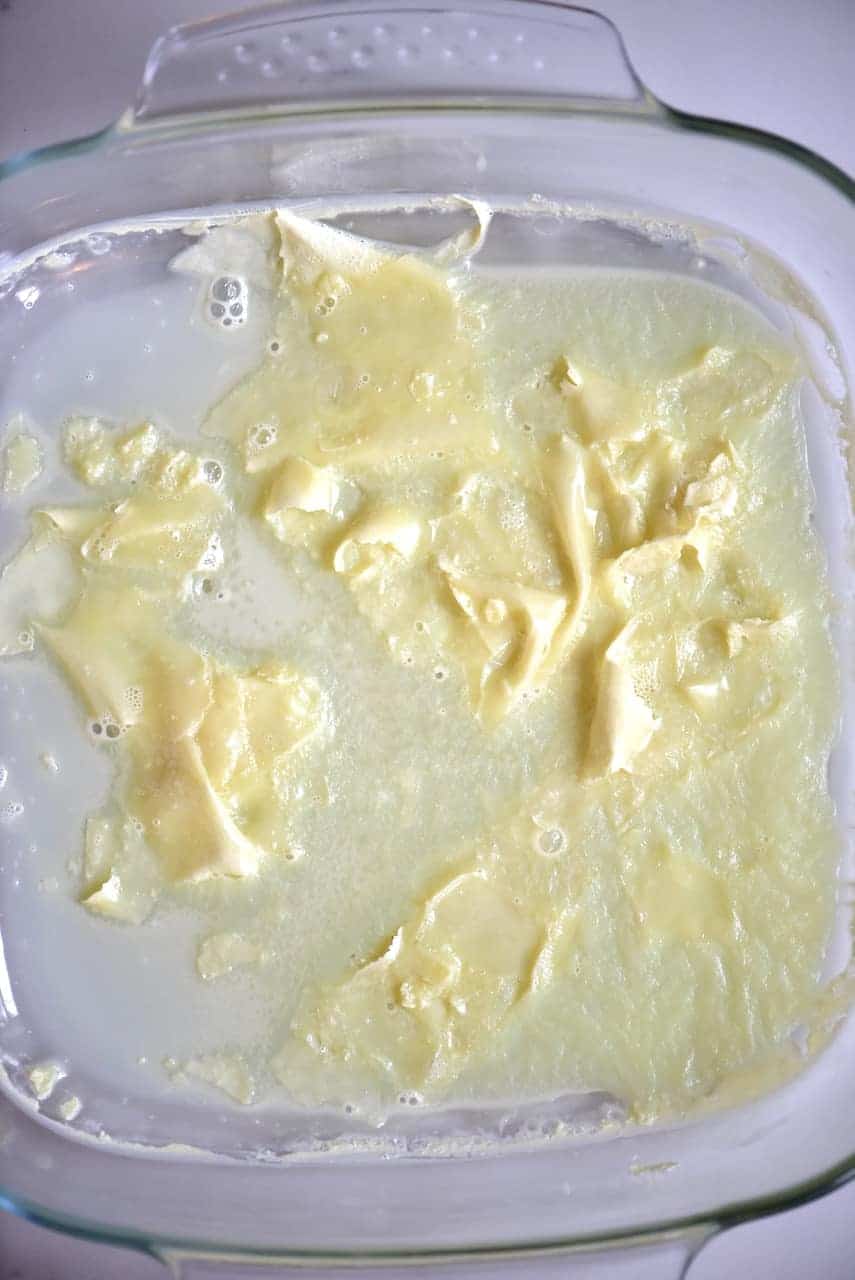
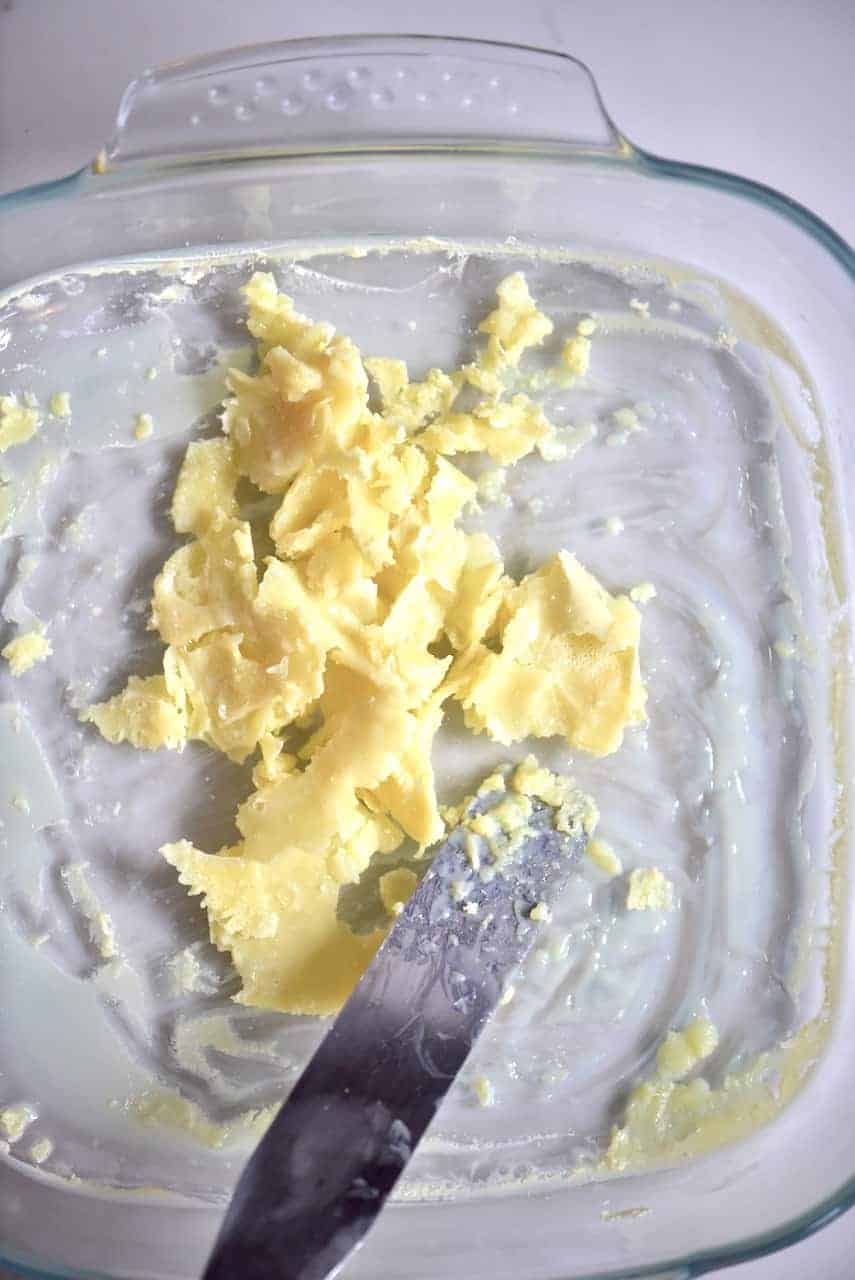
Note: If you stop in the middle of the process, you get condensed milk.
Once you get the milk paste, spread it out on a tray or over parchment paper and return to the oven or dehydrator to finish drying the milk.
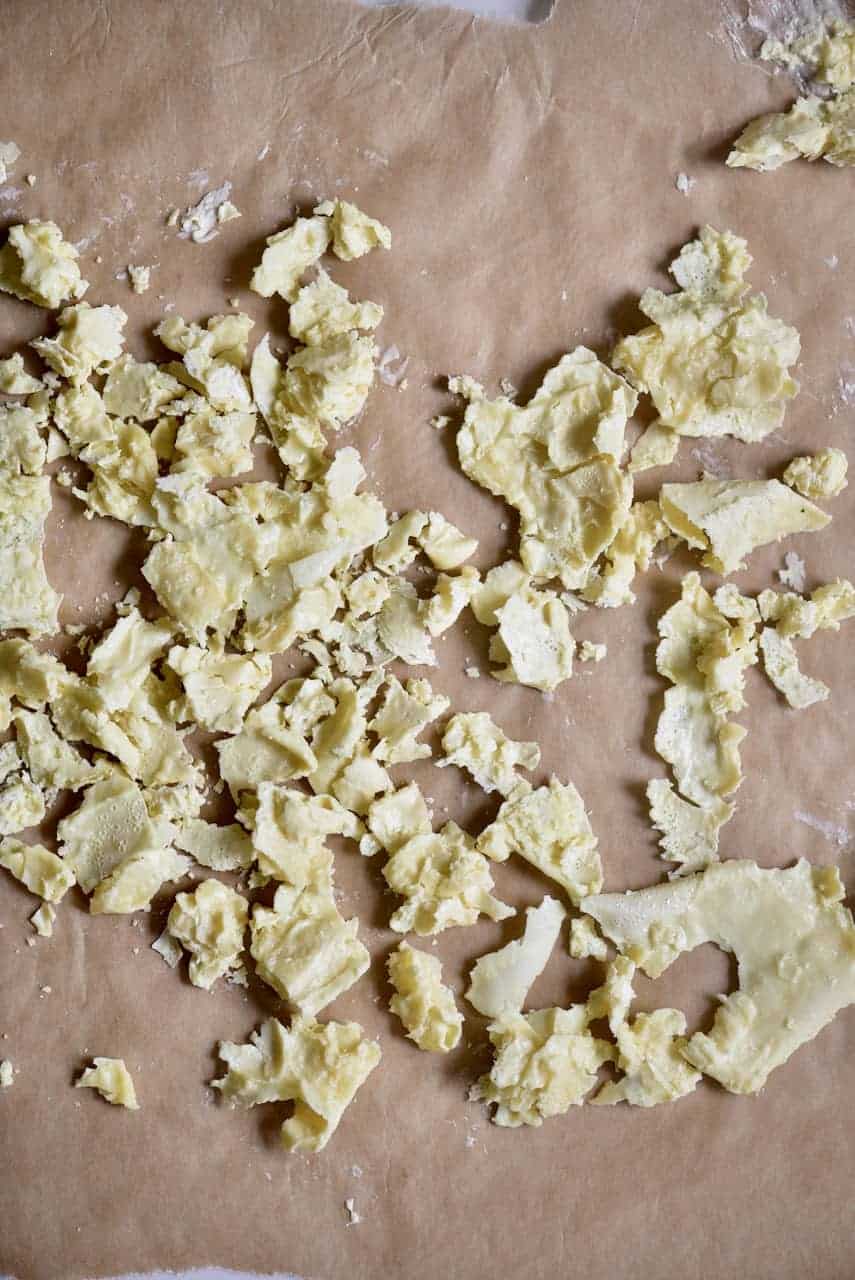
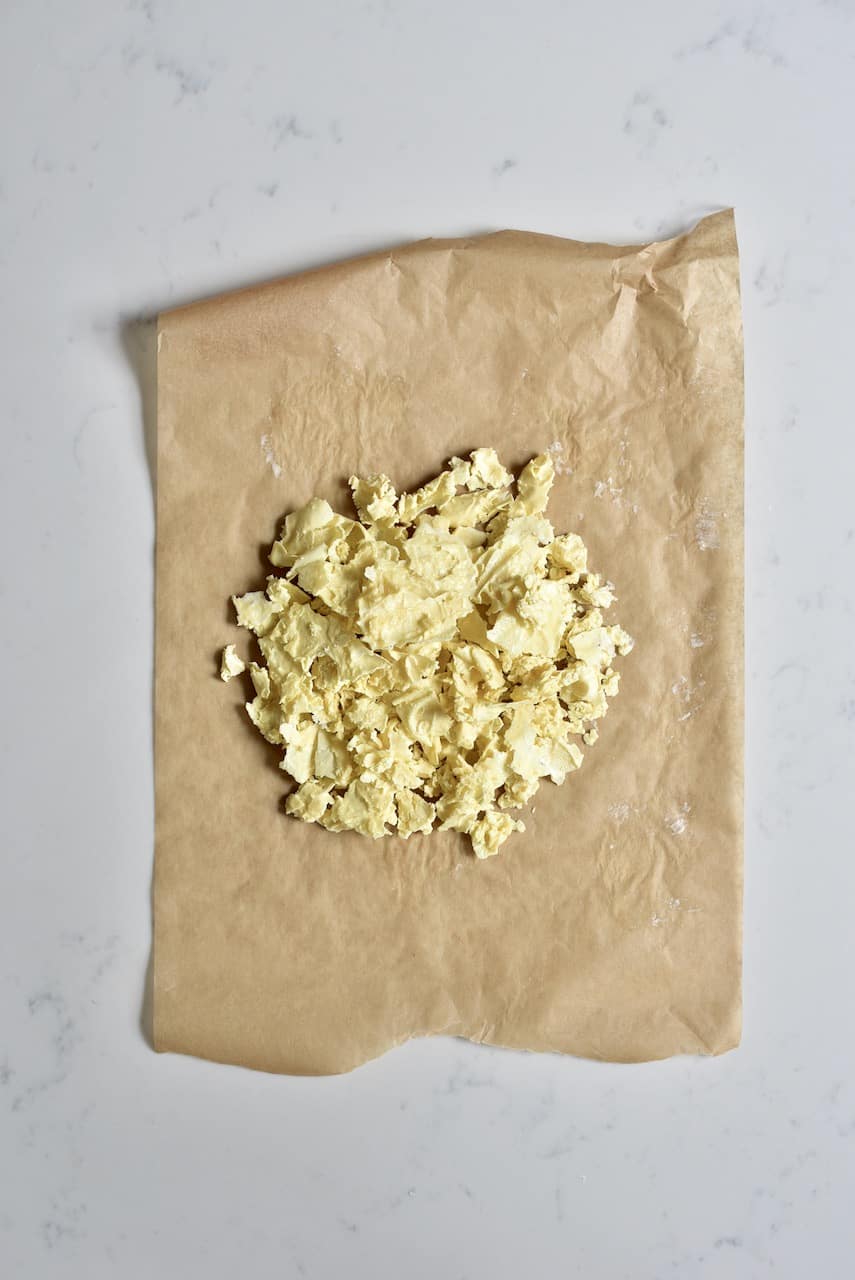
Once the paste is completely dry, you will be able to easily remove it from the tray/baking sheet. At this point, it will be easily swappable, with no bend.
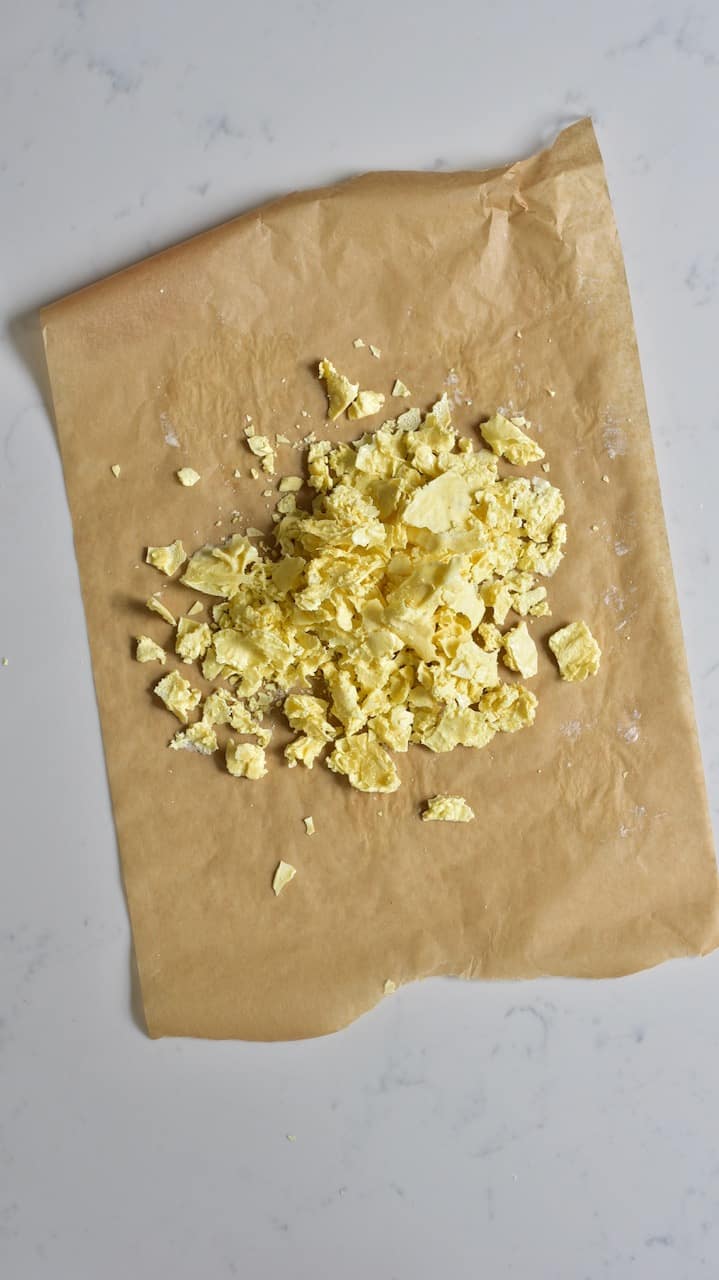
Grind the flakes into powder in a spice grinder or blender.
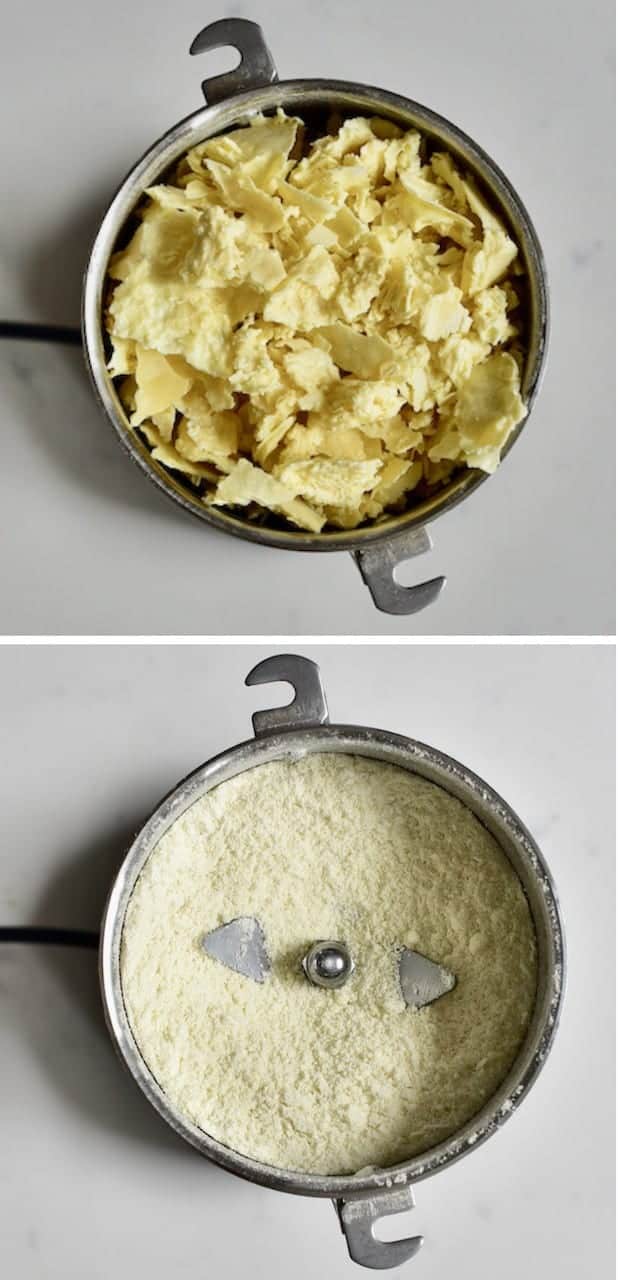
Pass the dehydrated milk powder through a fine-mesh sieve. Then grind the bigger pieces again- that way you’ll achieve a very fine powder.
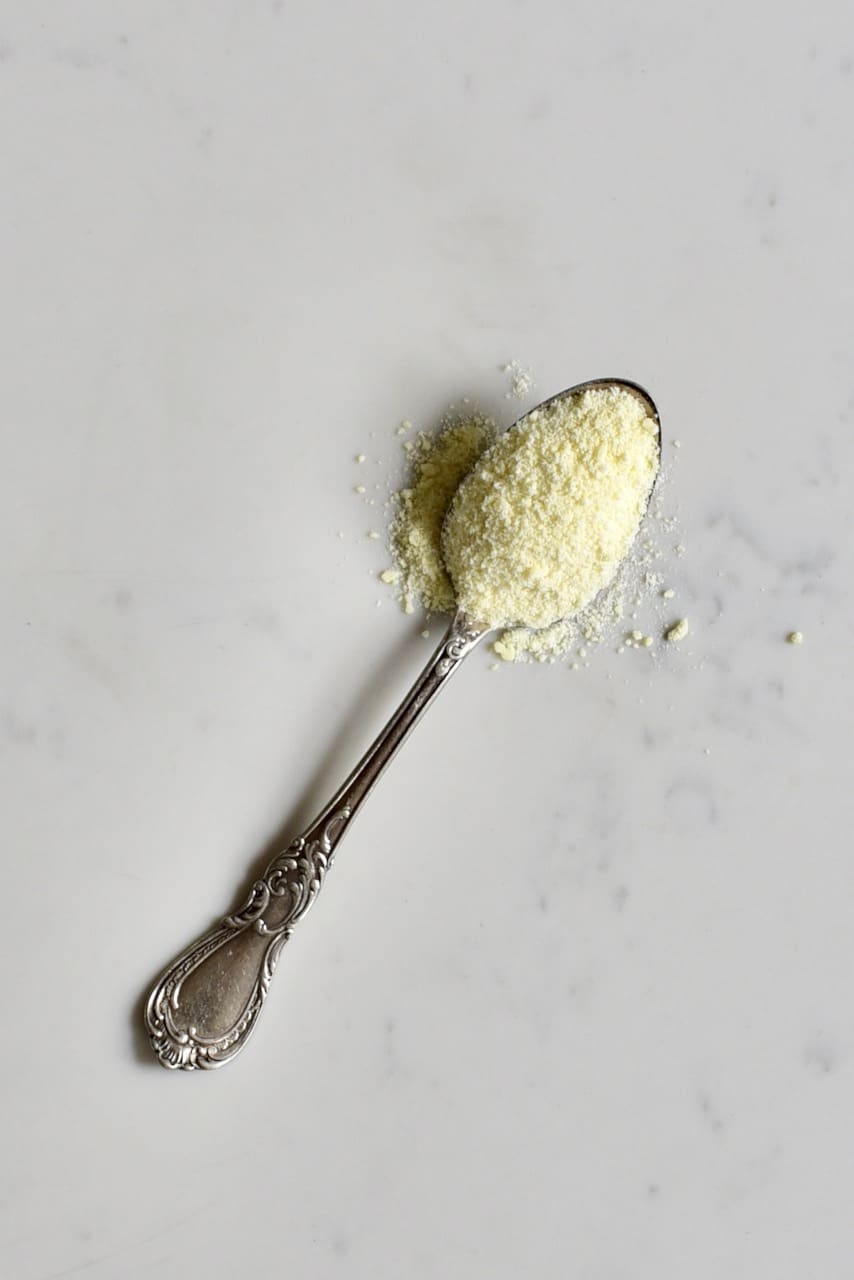
Store the powdered milk in an airtight container. Make sure there is no moisture in it at all and keep stored in a cool, dark place. Milk powder can be kept for months, if not years this way.
If you have any questions, leave a comment below. Also, I love seeing your recreations so feel free to tag me on Instagram @AlphaFoodie.
How To Make Powdered Milk At Home
Ingredients
- 1 L milk skimmed or full fat/whole milk will work
Instructions
- Pour room temperature milk into a big oven-safe dish. It's best to keep the milk at shallow levels, to dry out quickly. I tend to keep it at a maximum of an inch.
- Depending on the size of your oven and/or dish, you can pour the milk into several dishes. *
- Next, place the dishes into your oven at its lowest temperature. If it can go as low as 120-140ºF/50-60ºC, then that's ideal. Otherwise, select the lowest temperature that you can, using the fan-assisted option.
- If you don't have a fan option then leave the oven cracked open slightly, to let the evaporating liquid out so the milk dries quicker.
- As the water evaporates, the milk will become pastier and pastier until finally, it becomes a thick paste. Make sure the milk paste doesn’t turn brown while drying – that’s a sign that the temperature is too high.
- Stir from time to time – this allows the water to evaporate evenly, especially when the milk starts turning to a paste. **
- Once you get the milk paste, spread it out on a tray or over parchment paper and return to the oven or dehydrator to finish drying the milk.
- Once the paste is completely dry, you will be able to easily remove it from the tray/baking sheet. At this point, it will be easily snappable, with no bend.
- Grind the flakes into powder in a spice grinder or blender then pass the dehydrated milk powder through a fine-mesh sieve. Then grind the bigger pieces again- that way you’ll achieve a very fine powder.
- Store the powdered milk in an airtight container. Make sure there is no moisture in it at all and keep stored in a cool, dark place. Milk powder can be kept for months, if not years this way.
Video
Notes
Nutrition
Nutrition information is automatically calculated, so should only be used as an approximation.









My powder did not dissolve. After pouring boiling hot water on it for hot cocoa, I was left with little tiny balls of the milk powder. Do you know where I went wrong? I would appreciate knowing, so I can fix it for next time.
Hi Miriam,
Was the paste completely dry? Did you grind it into powder? You can also sieve and grind again to make it into fine powder. Please also make sure to store the milk powder in an airtight container so there is no moisture. I hope you give this another try!
Wow this is great I will try it
My question now is is only fresh milk that is milked or tou can get it from the store
Hi Erica! Fresh or store-bought, either works just fine! I hope you give it a try!
Thank u ma, I have understood all the part
But where did u get the liquid milk that was place on the fridge.
Pls did u make it from another powder milk?
Hi Rosemary,
You start with milk that you can buy from the store. You dehydrate it until all the moisture is removed. Then, you grind it to make it into powder. This powdered milk can then be mixed with some water when needed to make a drink, or it can be added to other recipes. I hope this helps.
How many TBSPs of milk powder do you get out of 1 litre of milk?
Hi Jonah,
1 liter of milk can yield on average about 100 grams of milk powder. That would be about 10-13 TBSPs.
Wondering if I could do this with colostrum?
Hi Jese,
You should be able to follow the same steps with colostrum.
Hi Thank you for this. I reside on a farm in Namibia and desperately need to do this with raw cows milk. I did read your advise in the comments. Are you kindly able to let me know who much hotter the oven would need to be please? ,
Hi Heidi,
The oven temperature should be low – 120-140ºF/50-60ºC is ideal. Otherwise, select the lowest temperature that you can, using the fan-assisted option.
If you don’t have a fan option then leave the oven door open slightly. I hope this helps.
Is this the recipe for homemade instant powdered milk?
Yes it is 🙂
Did you add sugar to the milk powder? Mine is darker than your one and I’ve seen a few people say you can only get it white by adding sugar.
Hi Laura,
I didn’t add any sugar. The color of milk and the powder can be affected by the amount of fat in it – full-fat dairy will have a more yellow hue. I hope this helps.
I am doing this today so I can have oat milk in my coffee in Bali. Thank you so much for sharing! Here’s to a dairy-free holiday, ( except for a gelato at Massimo’s.
Hi Lu,
I guess you are making the oat milk recipe 🙂 Hope you enjoyed it!
Would this be the process to use for non dairy milks like almond, oat, etc.? Any changes I would need to make? Thank you.
Hi Helene,
The same process should work with plant-based milk.
Can’t wait to make my own powdered milk. We take it on motorcycle camping trips. I see you have used glass dishes. Is there a reason I couldn’t use high sided metal sheet pans? Will the aluminum transfer a metal taste?
Hi Rider,
It is not recommended to use metal sheet pans because they conduct heat rapidly and can cause the milk to burn or become scorched. Also, as the process takes several hours, the metal pans might start to rust. I hope this helps.