

This post may contain affiliate links. Please read our disclosure policy.
Every year, I find myself reaching for a jar of strawberry cheong before strawberry season even peaks. It is one of those simple, no-cook preparations that makes everything it touches taste brighter, from a morning matcha latte to a scoop of vanilla ice cream on a warm afternoon.
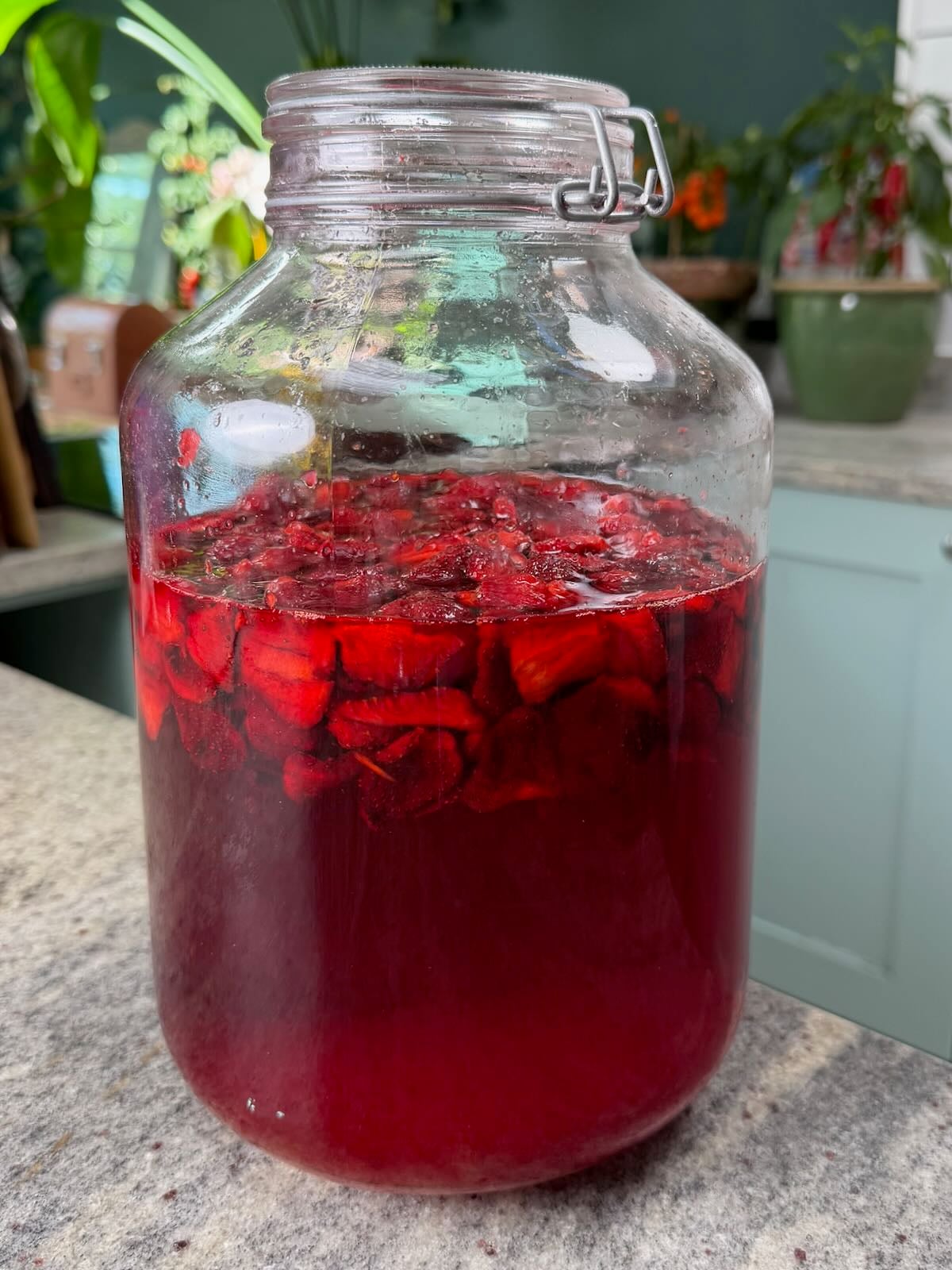
The technique is pure and straightforward: layer fresh strawberries with sugar, keep them cold, and let time do all the work. It’s ready in as little as 24 hours, though the flavor deepens the longer it sits. Plus, the syrup and fruit pieces are both useful.
If you love working with strawberries, you might also enjoy this homemade strawberry syrup (the hot method) or this strawberry compote. I’ve also shared a blackberry cheong recipe that you might enjoy!
Strawberry cheong ingredients
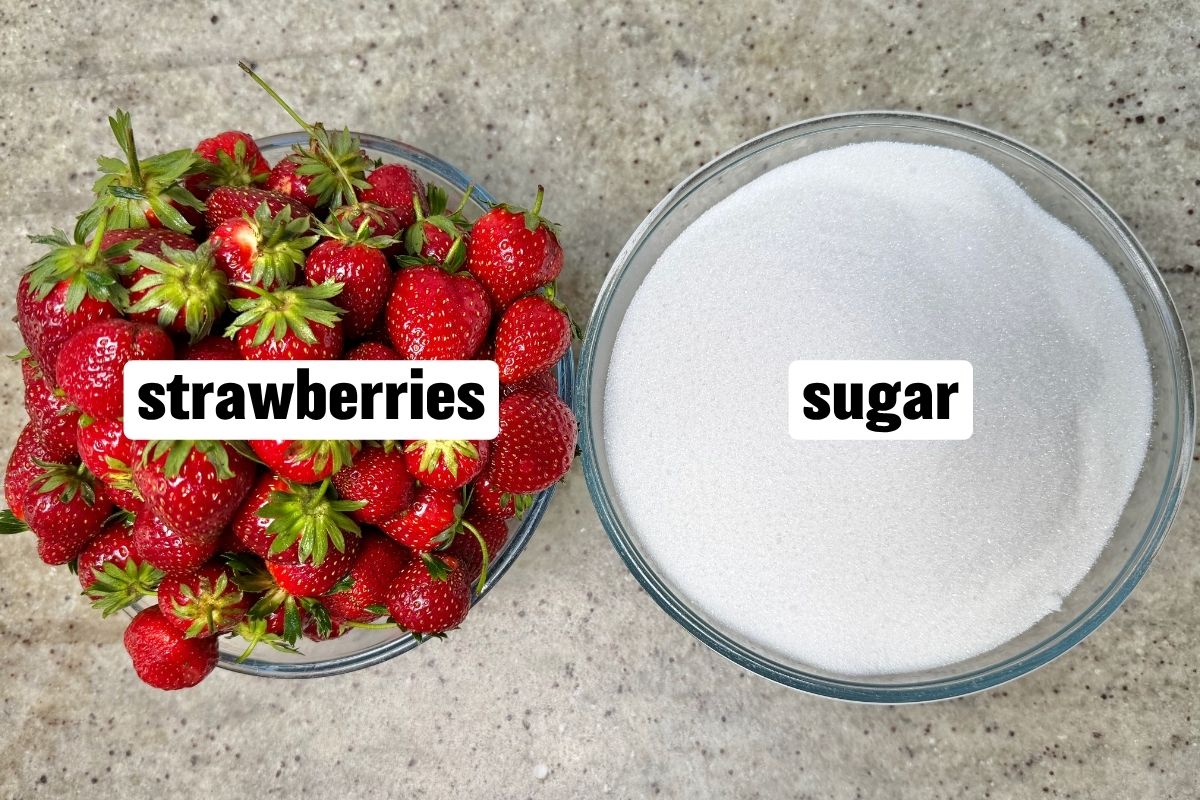
- Fresh strawberries: Choose ripe, fragrant strawberries for the best flavor and color. The riper they are, the more juice they release.
- Sugar: A 1:1 ratio of sugar to strawberries by weight is the standard. White granulated sugar gives a clean, bright syrup. Turbinado or raw cane sugar adds a slightly deeper, more complex flavor.
- Baking soda: Used only for washing the strawberries before you start. A short soak in water with baking soda helps remove surface dirt and residues.
- Lemon juice: Optional – a small amount brightens the flavor.
See printable recipe card below for the full ingredients list and quantities.
How to make strawberry cheong
Start by cleaning the strawberries properly. Fill a large bowl with cold water, add the baking soda, and submerge the strawberries with their stems still on. Let them soak for about 10 minutes, then rinse them thoroughly under cold running water.
Dry the strawberries completely. This step matters more than it might seem. Excess moisture dilutes the syrup and raises the risk of mold forming. Spread them on a clean kitchen towel or pat them dry with paper towels. The surface should feel dry to the touch, not damp.
Remove the stems and slice each strawberry in half or into quarters. Smaller pieces release their juice faster, so if you want the cheong ready sooner, cut them smaller. Larger chunks will take a bit longer but give you more texture in the finished syrup.
In a clean glass jar with a tight-fitting lid, start layering. Add a layer of strawberries, then a layer of sugar, and keep alternating until everything is used up. Finish with a generous layer of sugar on top so that no fruit is left exposed to the air. Press the layers down gently as you go to minimize air pockets.
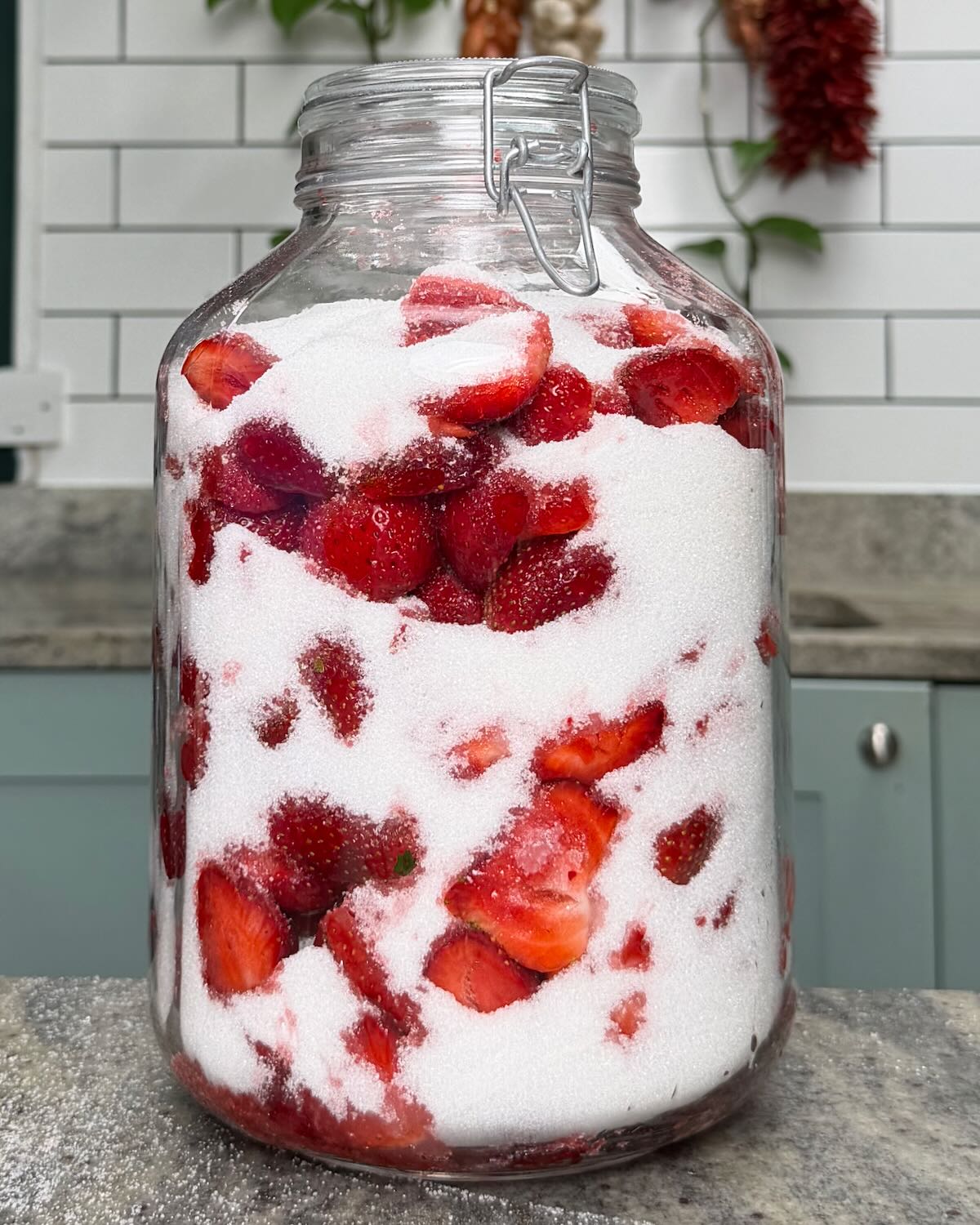 Fill a jar and refrigerate
 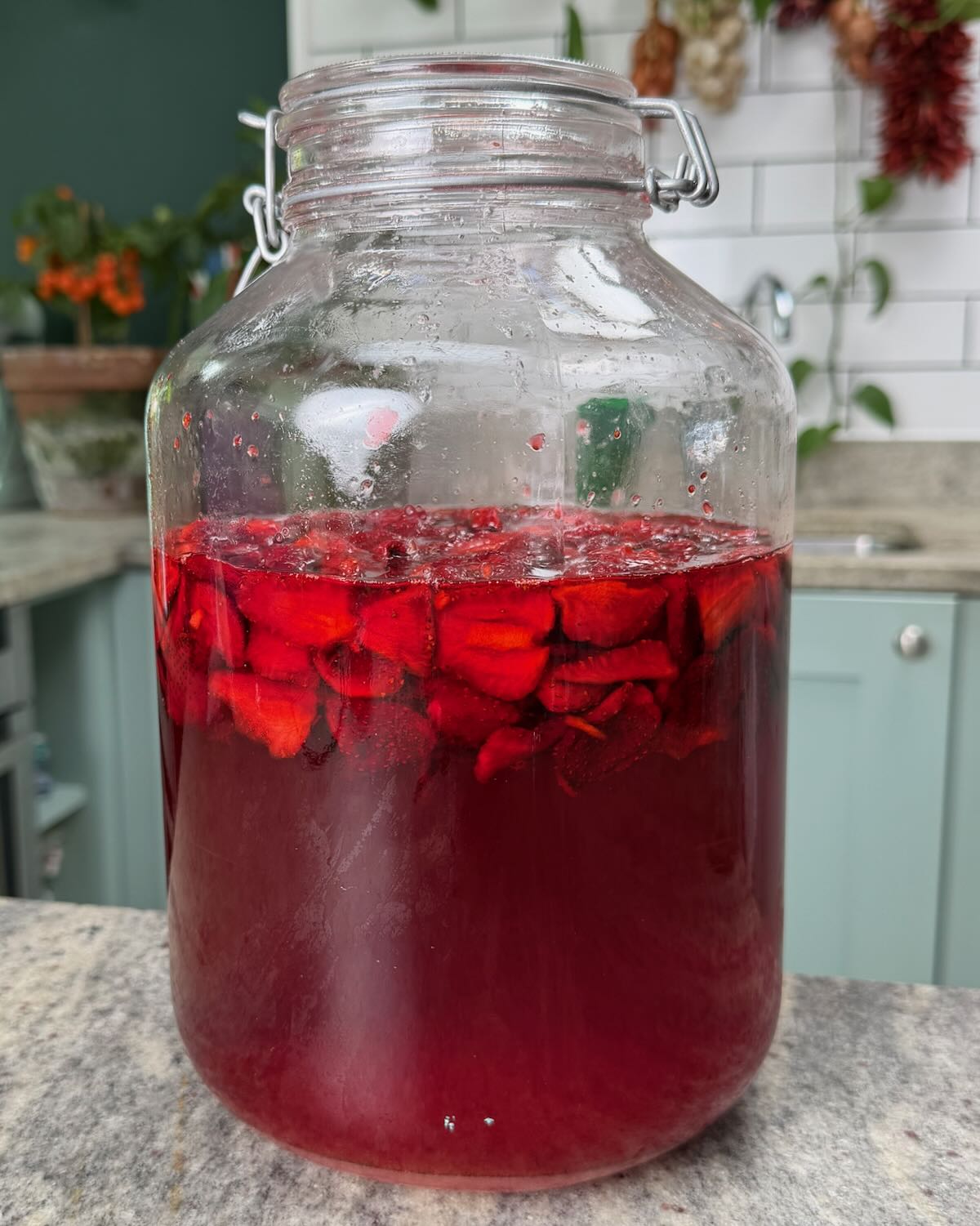 After refrigeration
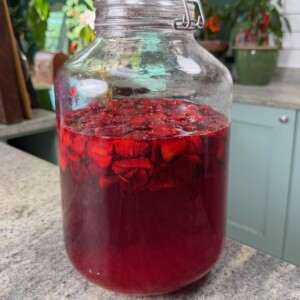
 Close the lid and place the jar in the refrigerator. Once or twice a day, shake the jar gently or stir with a clean spoon to help the sugar dissolve and distribute evenly. Within a day or two, you will notice the strawberries releasing their juice and the sugar beginning to liquefy. The cheong is ready to use once the syrup has formed and the sugar is mostly dissolved.
If you plan to keep the cheong longer than two weeks, strain out the strawberry pieces through a fine mesh strainer and store the syrup separately in a clean bottle. Optionally, you can add a little lemon juice to brighten the flavor. Do not discard the fruit pieces – see below how to use them.
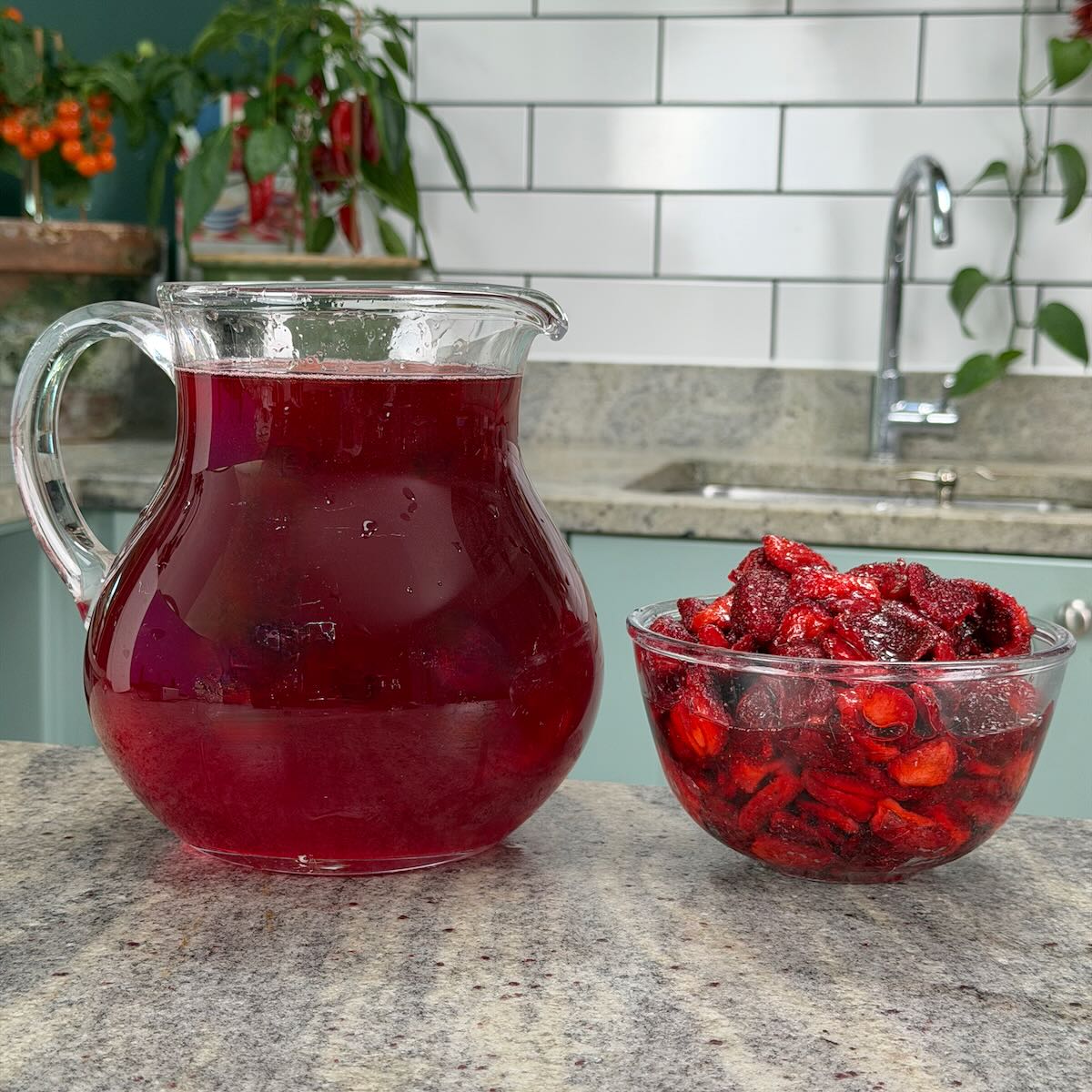
Always use a completely clean, dry spoon every time you stir or scoop the cheong. Introducing any moisture or bacteria from a used utensil is the fastest way to cause mold, even when the jar is refrigerated.
Ways to use strawberry cheong
Strawberry cheong is one of the most versatile things you can keep in your refrigerator. Here are some of the best ways to use both the syrup and the fruit pieces.
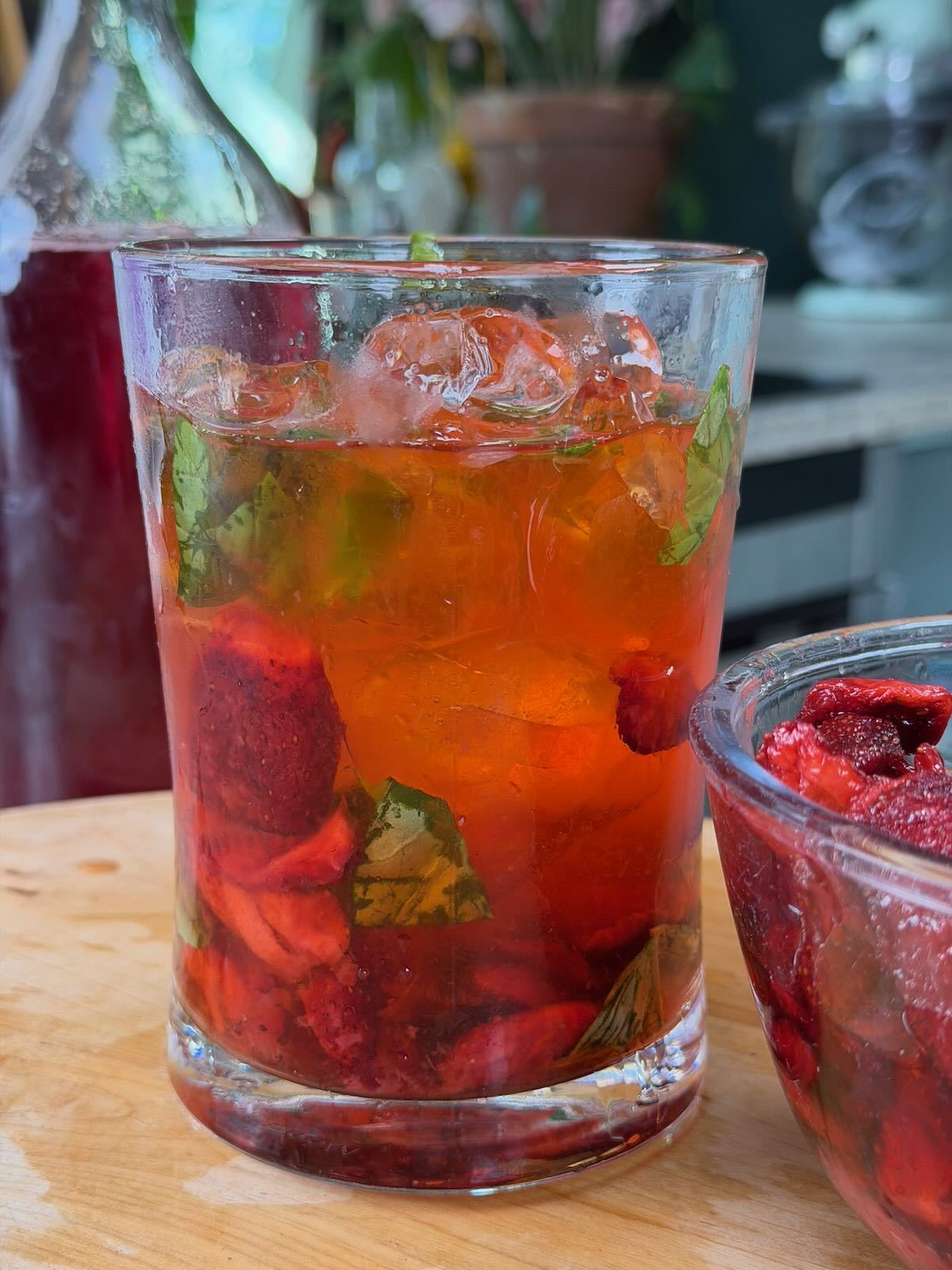
- Stir a spoonful of syrup and a few strawberry pieces into a hot matcha latte or an iced matcha latte for a sweet, fruity twist. The strawberry flavor pairs beautifully with the earthy bitterness of matcha.
- Mix the syrup with cold milk and ice for a quick Korean cafe-style strawberry milk.
- Combine the syrup with sparkling water and a squeeze of lime for a refreshing strawberry mocktail.
- Drizzle the syrup over protein pancakes or waffles instead of maple syrup.
- Use the syrup as a base for a simple strawberry vinaigrette by whisking it with olive oil, a splash of vinegar, and a pinch of salt.
- Spoon the leftover fruit pieces over plain yogurt, cottage cheese (check out these cottage cheese dessert ideas), oatmeal, or toast for a quick breakfast topping.
FAQs
No. Refrigerating it right away is the standard Korean home method. It preserves the fresh, bright strawberry flavor and prevents unwanted fermentation. You can use it after just 24 hours in the fridge.
I strongly recommend fresh strawberries. Frozen strawberries release too much water as they thaw, which dilutes the syrup and increases the risk of mold. Stick with fresh, ripe fruit for the best result.
This usually happens when the strawberries were not fully dry before mixing, when a dirty or wet spoon was used to stir, or when the cheong was left at room temperature too long. To prevent it, dry the strawberries thoroughly, always use a clean dry spoon, and refrigerate immediately after making.
More homemade syrups to try
If you love making your own syrups at home, these three are worth bookmarking next.
If you try this strawberry cheong recipe, I’d love to hear what you thought of it in the comment section below.
Strawberry Cheong (Korean Strawberry Syrup)
Equipment
- Airtight jar one large or several smaller
Ingredients
- 1 pound strawberries fresh, ripe, fragrant
- 1 pound granulated white sugar or turbinado sugar for a deeper flavor
- 1 tablespoon baking soda for washing only
- 1-2 tablespoons fresh lemon juice optional, to brighten the syrup
Instructions
- Fill a large bowl with cold water and add the baking soda. Add the strawberries with their stems still on and soak for 10 minutes to remove surface dirt and residue. After soaking, rinse the strawberries thoroughly under cold running water.
- Pat the strawberries completely dry with clean paper towels. Let them air-dry for a few minutes if needed until the surface feels fully dry.
- Remove the stems and slice each strawberry in half or into quarters. Smaller pieces release their juice faster.
- In a clean, dry glass jar with a tight-fitting lid, add a layer of strawberries followed by a layer of sugar. Continue alternating layers, pressing down gently as you go to minimize air pockets. Finish with a generous layer of sugar on top so that no fruit is exposed to the air.
- Close the lid and place the jar in the refrigerator. Once or twice a day, shake the jar gently or stir with a clean spoon to help the sugar dissolve evenly. The cheong is ready to use after about 1-2 days, once the syrup has formed and the sugar is mostly dissolved.
- For a clear, pourable syrup, strain out the fruit pieces through a fine-mesh strainer. Transfer the strained syrup to a clean airtight bottle. Optionally, add lemon juice, then refrigerate. Reserve the fruit pieces to spoon over yogurt, oatmeal, or toast.
Notes
- Sugar ratio: Always use equal weights of sugar and strawberries (1:1). Do not reduce the sugar, as it is essential for preservation and preventing mold.
- Sugar options: White granulated sugar gives a clean, bright syrup. Turbinado or raw cane sugar adds a slightly richer flavor and a golden tint.
- Dry strawberries are essential: Any moisture left on the fruit before mixing increases the risk of mold.
- Clean utensils only: Always use a completely dry, clean spoon every time you stir or scoop.
- Storage: Keep the unstrained syrup (with fruit) in the fridge for up to 2 weeks. Once strained, keep in the fridge for up to 6 months.
Nutrition
Nutrition information is automatically calculated, so should only be used as an approximation.









I love this idea so much, I am making it right now. It’s so simple!
Glad you liked it, Bertha. Enjoy! 🙂