

This post may contain affiliate links. If you buy through them, I earn a small commission at no extra cost to you. As an Amazon Associate I earn from qualifying purchases. Read my disclosure policy.
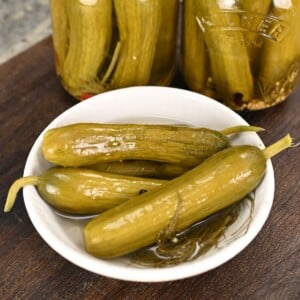
If you have never made quick pickled cucumbers at home, this recipe will change how you think about the store-bought jar. No canning equipment, no sterilizing, and no special skills required. Just crisp cucumbers, a simple vinegar brine, fresh dill, and garlic packed into jars and left to do their thing in the fridge.
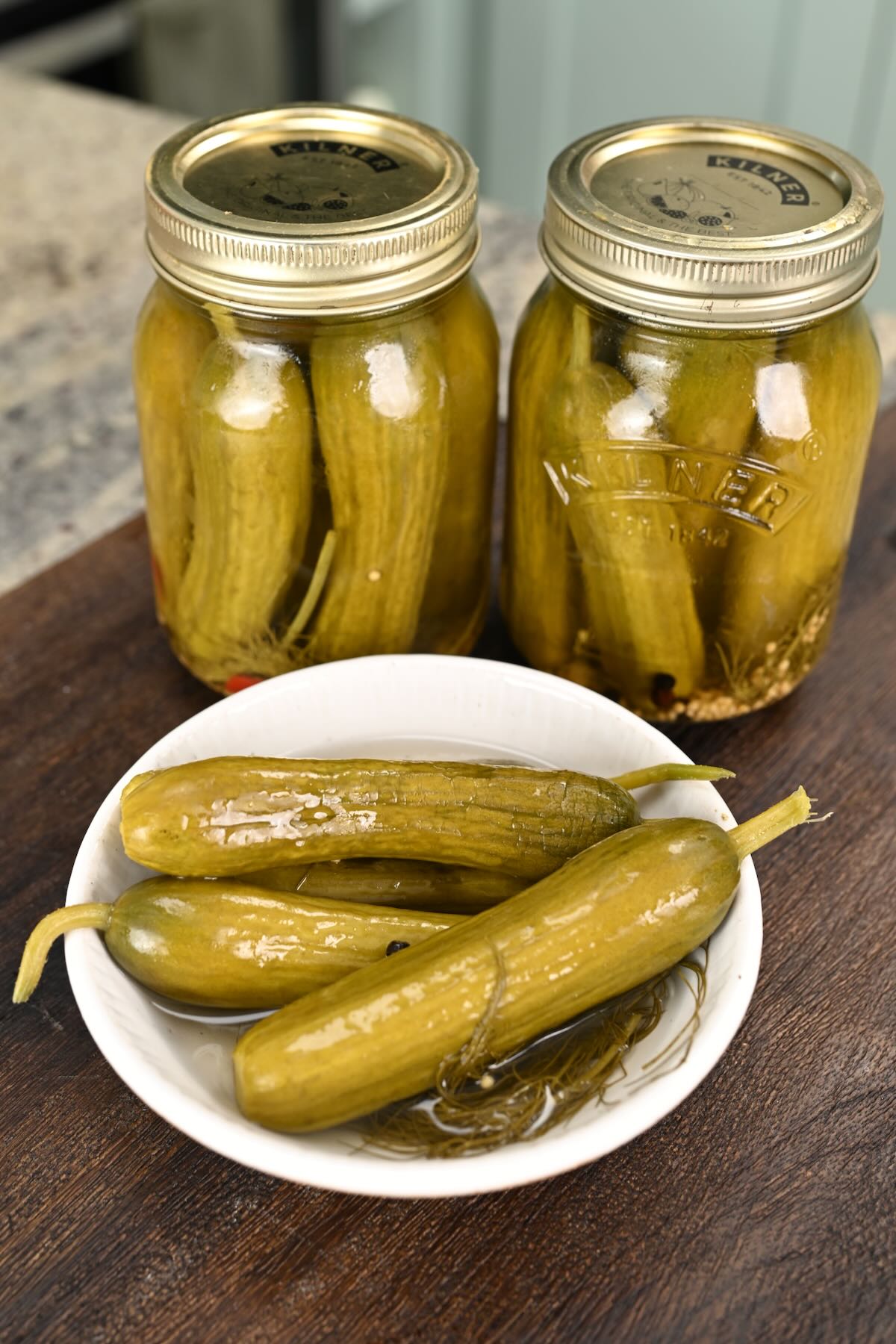
The key to getting that satisfying crunch is starting with small, firm cucumbers and pouring the brine over them while it is still hot. This draws the flavor in quickly without cooking the cucumbers soft, so every bite stays crisp and tangy all the way through.
If you love making your own pickles at home, be sure to check out these recipes for classic dill pickles and bread and butter pickles for even more ways to pickle from scratch.
What you need to make this recipe
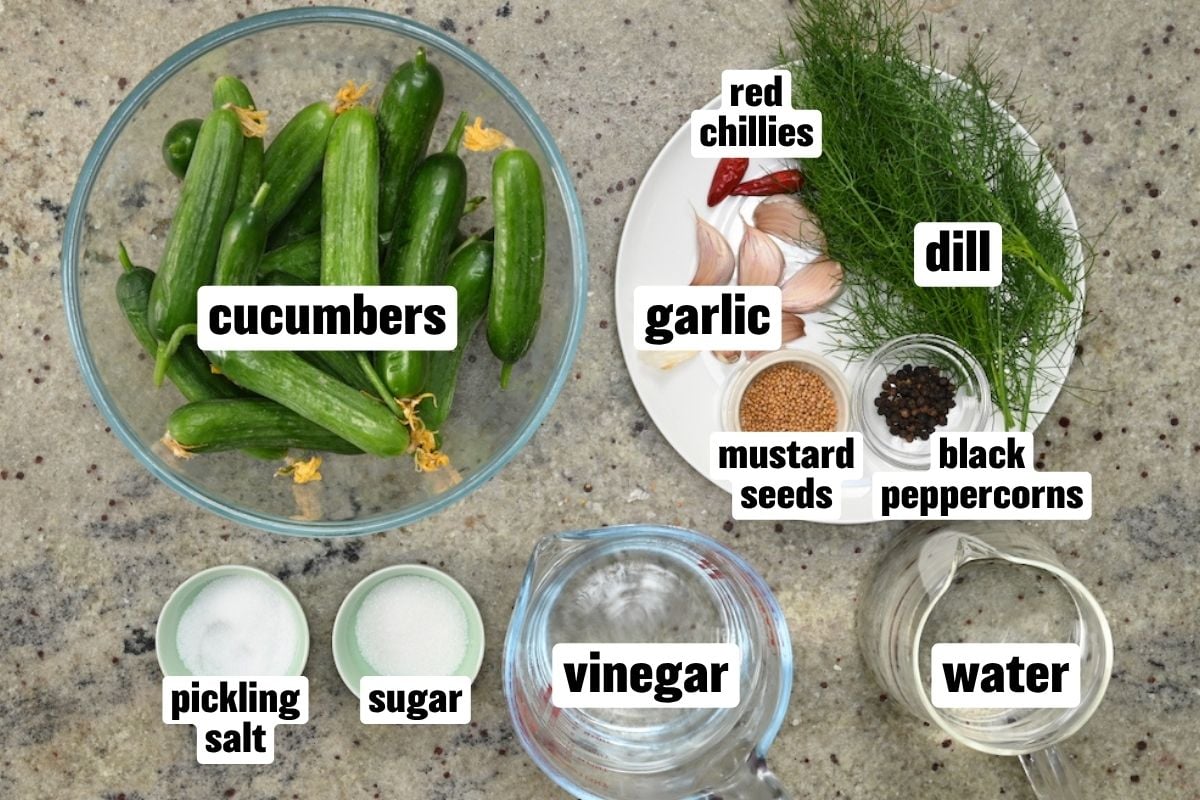
- Small cucumbers: Pickling cucumbers, Kirby cucumbers, or Persian cucumbers work best for the crispiest results; small whole garden cucumbers also work well. If using larger cucumbers, they can be cut.
- Garlic cloves: Peeled and lightly crushed to release more flavor into the brine.
- Fresh dill sprigs: Essential for that classic dill pickle flavor.
- Mustard seeds: They add a mild, earthy warmth.
- Whole black peppercorns: For gentle heat and depth.
- Dried red chilies: Optional; leave them out for a non-spicy pickle.
- Distilled white vinegar: Use 5% acidity for a clean, sharp tang; apple cider vinegar also works but adds a fruitier note and darkens the brine.
- Water: combined with vinegar for a balanced brine.
- Canning & pickling salt: It’s best to measure by weight for accuracy, since different salts vary significantly by tablespoon.
- Granulated sugar: Just enough to round out the sharpness of the vinegar.
See printable recipe card below for the full ingredients list and quantities.
How to make quick pickled cucumbers
Start by washing the jars and their lids thoroughly with hot, soapy water. Rinse them well. These are refrigerator pickles, so the jars do not need to be sterilized, but they should be very clean before you begin.
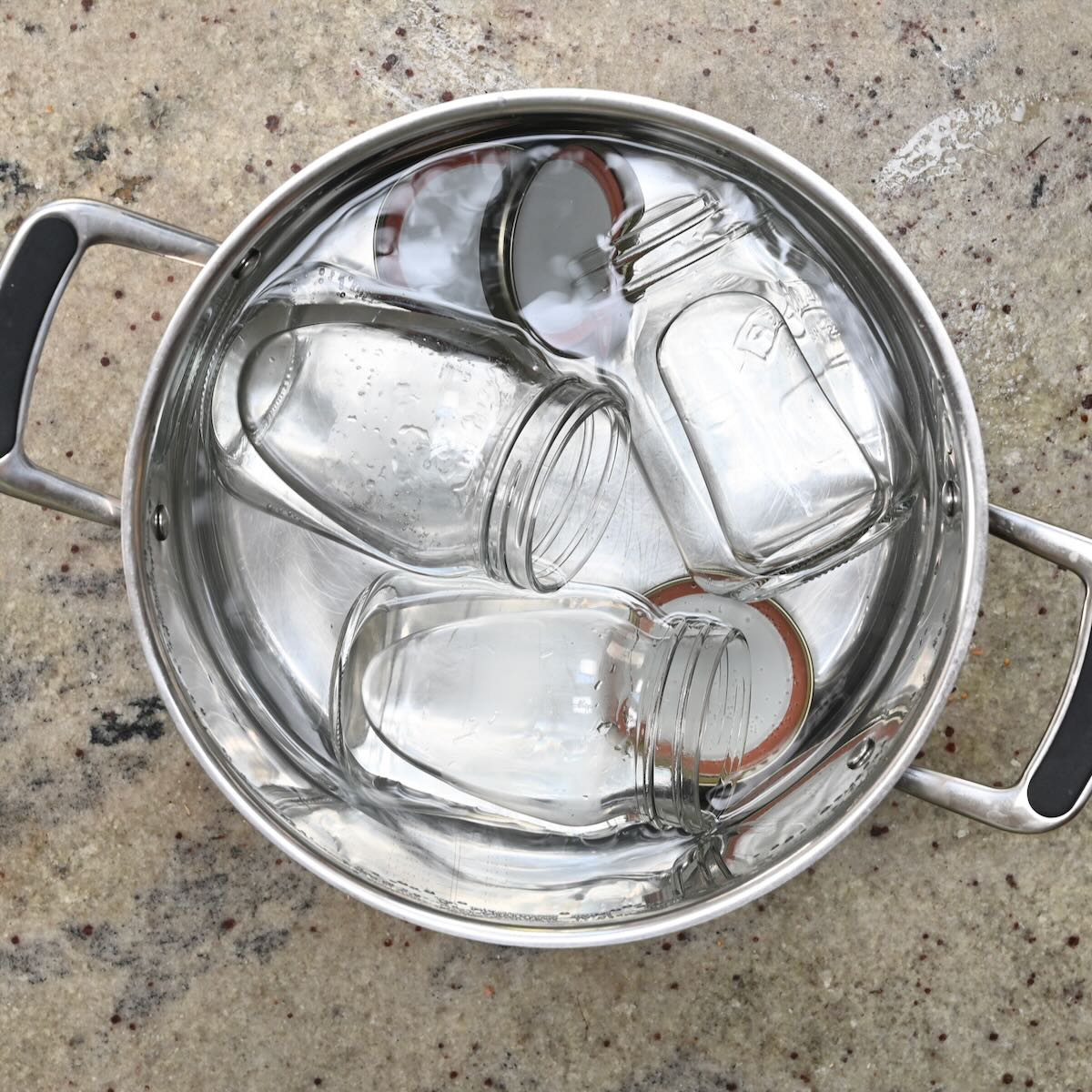 1. Clean the jars
Wash and dry your cucumbers. Trim about one-eighth of an inch from the blossom end only, leaving the stem end intact. The blossom end contains enzymes that can soften pickles over time, so removing just that small tip helps keep the crunch.
Leave small cucumbers whole. If you are using larger cucumbers, cut them into halves, spears, or slices. The smaller the cut, the faster the brine will penetrate.
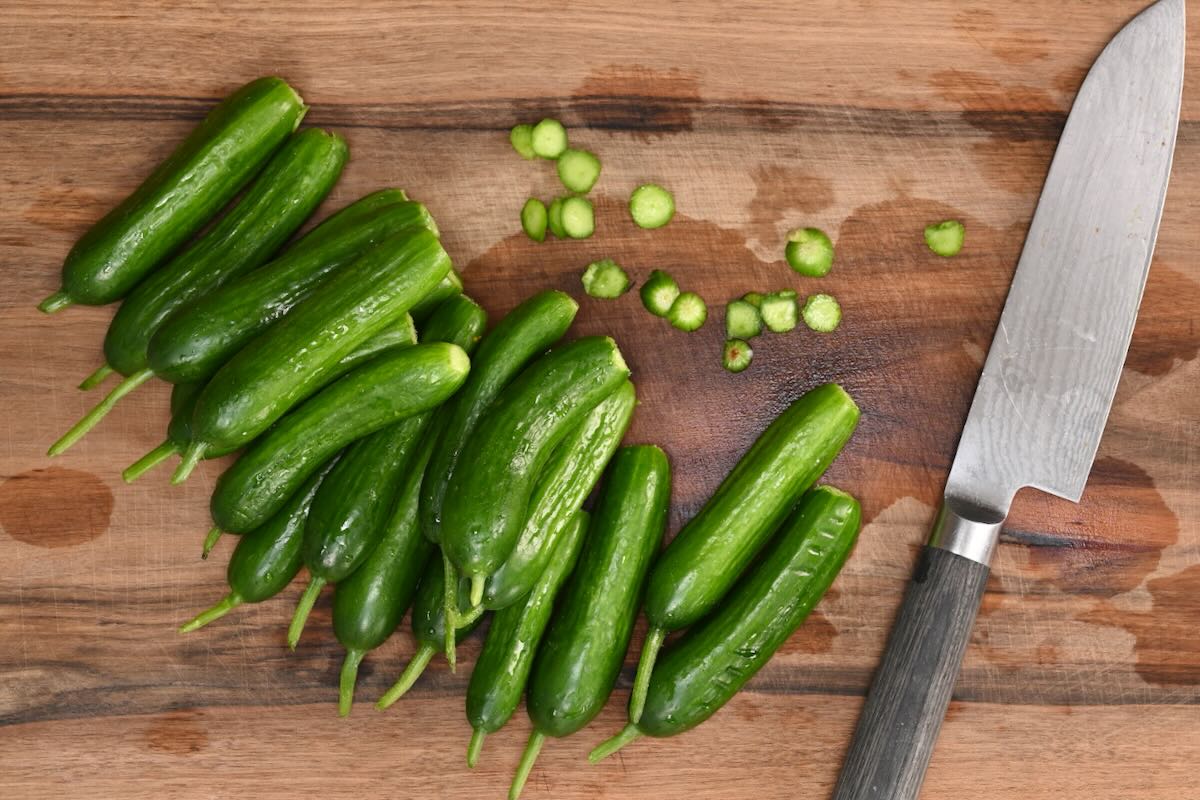 2. Prep the cucumbers
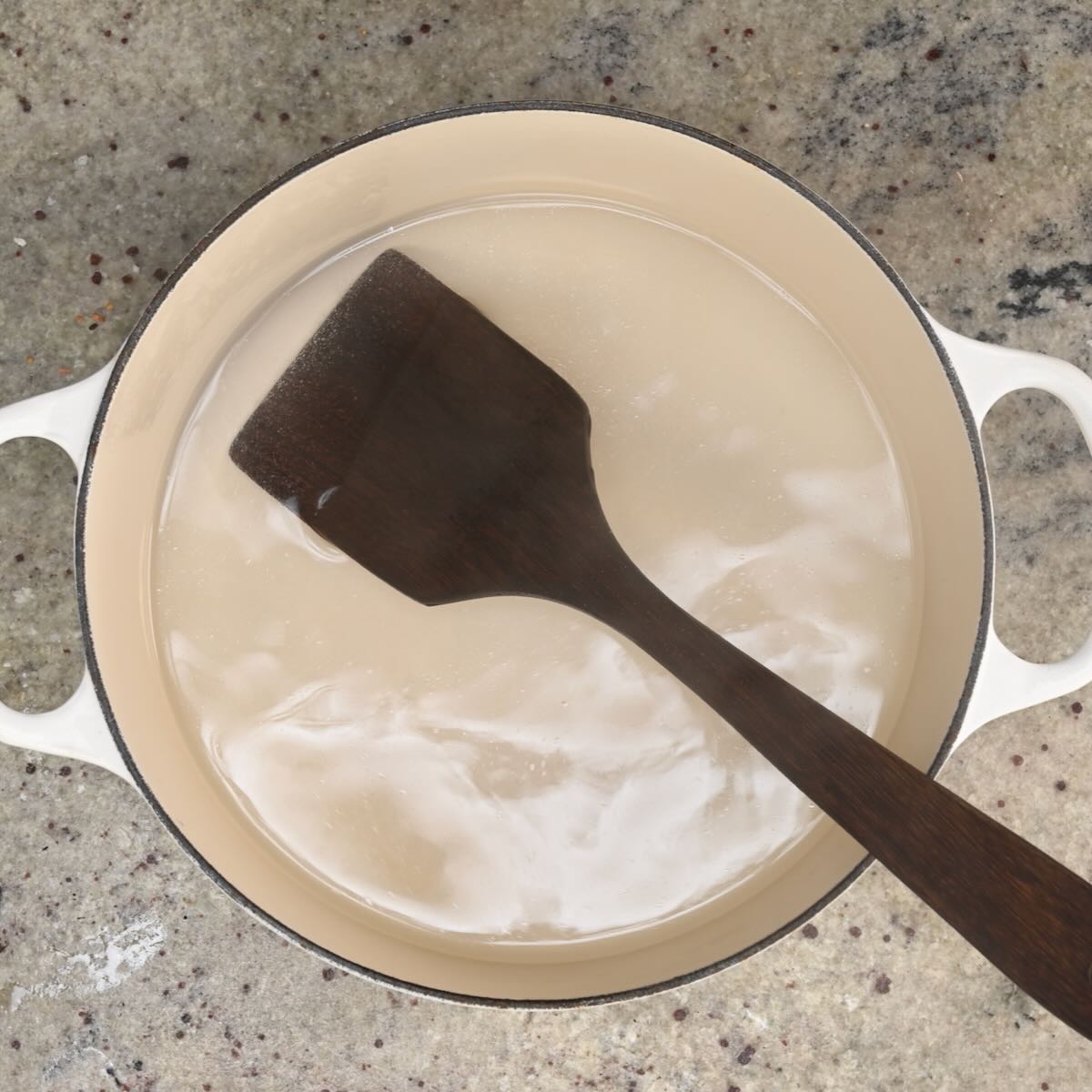
To make the brine, combine the white vinegar, water, pickling salt, and sugar in a saucepan. Bring the mixture to a boil over medium-high heat, stirring until the salt and sugar have completely dissolved.
Remove the pan from the heat and let the brine rest for about five to ten minutes. You want it still hot and steaming, but no longer at a rolling boil.
 3. Prepare the brine
Measure your pickling salt by weight, not volume. Different salt brands and types have very different weights per tablespoon. One level tablespoon of Morton Canning and Pickling Salt weighs 15 g. Using that weight every time keeps your brine consistent across batches.
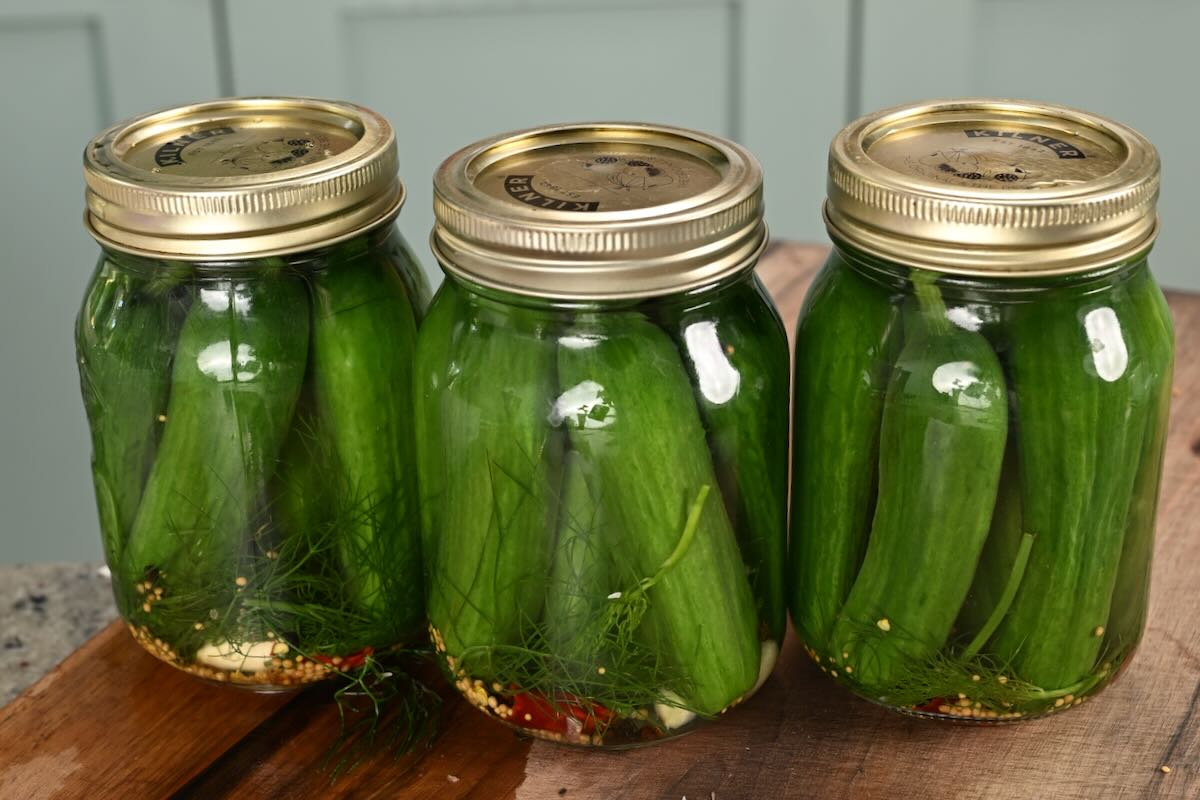
While the brine cools slightly, divide the garlic cloves, fresh dill sprigs, mustard seeds, black peppercorns, and optional dried red chilies evenly among the jars. Then pack the cucumbers snugly into each jar without crushing them. You want them firmly in place so they stay submerged once the brine is added.
Pour the warm brine over the cucumbers in each jar, making sure every cucumber is fully submerged. Leave about half an inch of headspace at the top.
Gently tap the jars on the counter or run a clean, thin utensil around the inside edges to release any trapped air bubbles. Add a little more brine if needed to keep the cucumbers covered.
 4. Pack the jars
 5. Refrigerate for 24h
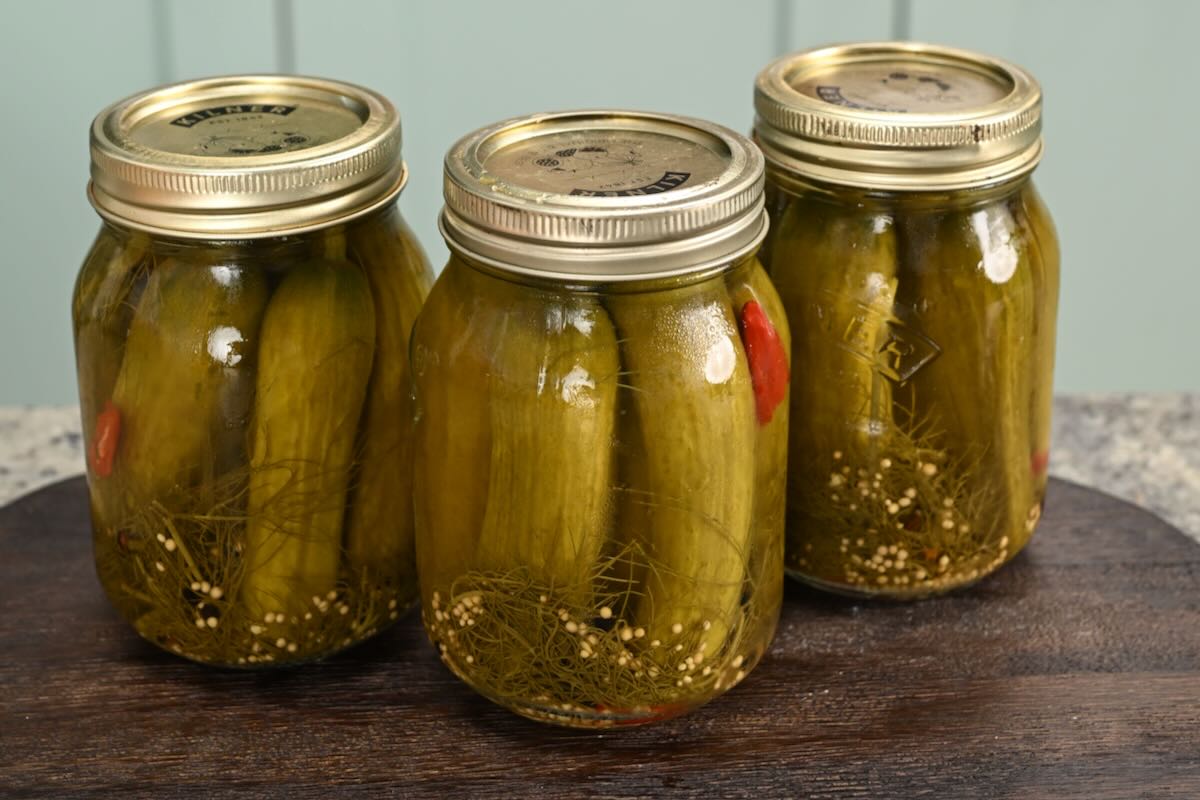
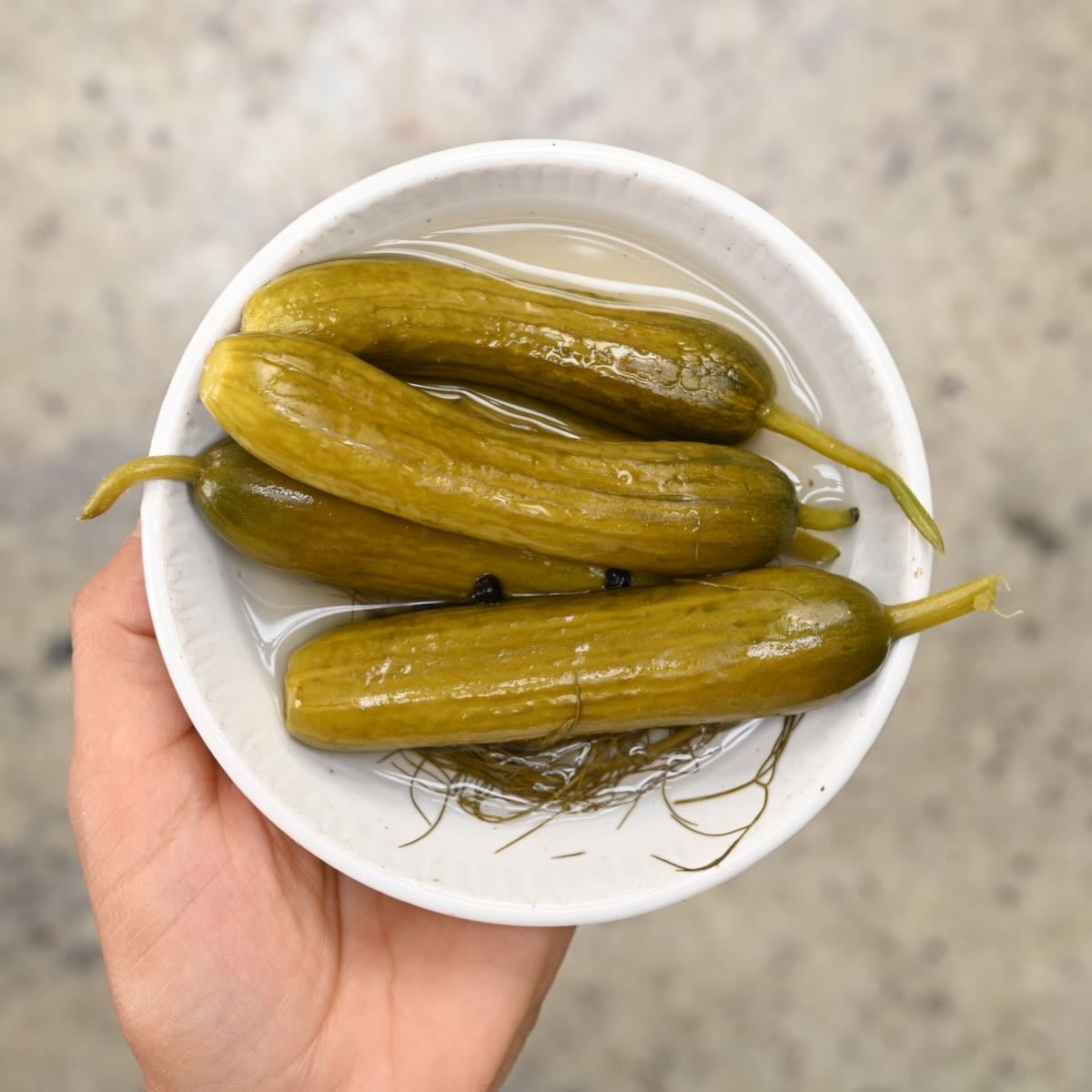
Let the jars cool to room temperature, then secure the lids and transfer them to the refrigerator. The pickles are ready to eat after 24 hours, but the flavor deepens and improves after two to three days. Whole cucumbers will take a little longer than sliced ones to fully absorb the brine. Keep the pickles refrigerated and submerged in their brine at all times, and use them within one month.
Serving suggestions
These pickles are incredibly versatile. Serve them straight from the jar as a crunchy snack, or use them as a tangy topping or side for almost any meal.
They are a natural match for grilled burgers, adding a sharp, crisp contrast to the smoky meat. Tuck a few spears into a turkey sandwich or a tuna salad sandwich for an instant upgrade. They also pair well alongside homemade sloppy joes or a creamy chicken salad.
Beyond sandwiches, try chopping them into a potato salad, adding them to a charcuterie board, or serving them as a bright, acidic side with any rich or heavy main dish.
Storage
- Fridge: Up to 1 month, kept submerged in brine with lids secured. Use clean utensils every time you pick one out of the jar.
- Important: These are quick refrigerator pickles. They have not been processed for shelf-stable storage and must be kept refrigerated at all times.
FAQs
You can enjoy the pickles after 24 hours. The flavor improves noticeably after 2 to 3 days. Whole cucumbers take longer to absorb the brine than sliced cucumbers.
Yes. The dried chili is optional. You can leave it out entirely for non-spicy pickles. Adjust the garlic, dill, mustard seeds, and peppercorns to suit your taste.
Yes, for another batch or two. Always use a clean utensil to remove pickles from the jar to avoid introducing bacteria.
No. These are refrigerator pickles only. They have not been processed for shelf-stable storage. You must keep in the refrigerator at all times.
Refrigerator pickles don’t go through a hot water bath or pressure canning process. They are not shelf-stable and must be kept in the fridge. Canned pickles are processed to be stored at room temperature. This recipe makes refrigerator pickles only.
More pickling recipes to try
If you enjoyed making these quick pickled cucumbers, here are a few more easy pickling recipes worth trying next.

If you make this recipe, I would love to hear how it turned out! Please leave a star rating on the recipe card and a comment below. Your feedback means so much!
Quick Pickled Cucumbers (Easy Refrigerator Dill Pickles)
Equipment
- 5 Mason jars (16 oz) (1 pint/500ml each)
- Heavy-bottomed saucepan
- Measuring cups and spoons
- Kitchen scale
Ingredients
For the Pickles
- 30-40 small cucumbers (pickling, Kirby, or Persian), enough to tightly fill 5 jars
- 10 garlic cloves peeled and lightly crushed (2 per jar)
- 10-15 sprigs dill (2 to 3 per jar)
- 2 1/2 teaspoons mustard seeds (1/2 teaspoon per jar)
- 2 1/2 teaspoons whole black peppercorns (1/2 teaspoon per jar)
- 5 dried red chilies small, optional (1 per jar)
For the Pickling Brine
- 1 2/3 cups distilled white vinegar 5% acidity
- 1 2/3 cups water
- 1 tablespoon canning & pickling salt
- 1 tablespoon granulated sugar
Instructions
- Thoroughly wash the jars and their lids with hot, soapy water and rinse well.
- Wash and dry the cucumbers. Trim about 1/8 inch from the blossom end only, leaving the stem end intact. Small cucumbers can be left whole. If using larger cucumbers, cut them into halves, spears, or slices as preferred.
- Combine the white vinegar, water, pickling salt, and sugar in a saucepan. Bring the mixture to a boil over medium-high heat, stirring until the salt and sugar have completely dissolved. Remove from the heat.
- Leave the brine to rest for about 5 to 10 minutes so it is still hot but no longer vigorously boiling.
- Divide the garlic, fresh dill, mustard seeds, black peppercorns, and optional dried chilies evenly among the 5 jars.
- Pack the cucumbers snugly into the jars without crushing them.
- Pour the warm brine over the cucumbers, making sure they are completely submerged. Leave about 1/2 inch of headspace at the top of each jar.Gently tap the jars on the counter or run a clean, thin utensil around the inside edges to release any trapped air bubbles. Add more brine if needed to keep the cucumbers covered.
- Allow the jars to cool to room temperature, then secure the lids and transfer them to the refrigerator.
- The pickles can be eaten after 24 hours, although the flavor improves after 2 to 3 days. Whole cucumbers will take longer to absorb the brine than sliced cucumbers.Keep the pickles submerged in their brine and refrigerated at all times. For best quality, use within 1 month.
Video
Notes
- Salt: It’s best to measure pickling salt by weight, not volume. Different salts vary significantly by tablespoon. I used 1 level tablespoon of Morton Canning and Pickling Salt, which weighs 15 g.
- Adjusting flavor: The dried chili is optional and can be omitted for non-spicy pickles. Garlic, dill, mustard seeds, and peppercorns can all be adjusted to taste.
- Brine quantity: This batch fills 5 pint jars using the stated amount of brine. The amount needed can vary depending on cucumber size and how tightly they are packed. If additional brine is needed, make more using the same proportions.
- Refrigerator only: These are quick refrigerator pickles. They have not been processed for shelf-stable storage and must be kept refrigerated at all times.









Can I cut the cucumbers into smaller pieces to make them fit in a jar?
Hi Tracey,
Yes, you can cut them into smaller pieces.
This sounds a very quick and easy recipe compared to many others I’ve seen.
I am a complete novice at pickling gerkins.
Can you tell me how long these can be stored, unopened and opened.
Thank you
Hi Deborah,
These are quick pickles and can be stored in the fridge for up to a month. Please note that water bath canning is not done for this recipe, so the pickles are not meant to last for months/years. I hope this helps.
hi your recipes are fantastic and easy to follow and very good options for vegetarians. one quick question on the pickled cucumbers can we slice them lengthwise for pickling rather ten using whole in bottles or jars to save space. thx once again
Hi, Unnat.
Yes, you can slice the cucumbers. Keep in mind that the pickles might be softer in that case. I hope this helps.
Hi I’m new to this, but how long after refrigeration can these be eaten? Is it the same day or is it a few days after? Thanks so much
Hi Amy,
Let them pickle for at least 48 hours (the flavor intensifies best after one week).
Hey,
Do we immediately place it in the fridge or let it rest at room temperature for a few days like 48-72 hrs n then refrigerate it?? Tia
Hi Neha,
You let them pickle in the fridge for at least 48 hours (the flavor is best after one week).
Where did you get the cute glass jars w glass lids? Love your recipes!!
Hi Kimberly,
These glass jars with clamp seals can be found online. They are linked on the Shop page here on the blog if you’d like to check them out!
Your recipe sounds delicious. I however, like a more vinegary taste, so today as I made this, I added more vinegar. Also didn’t have any coriander. Not sure if I can wait for the 48 hrs. Lol
Thank you for your comment, Tracy. Glad you adjusted the recipe to your liking 🙂
Fabulous recipe when you have a glut of cucumbers and not enough time to do the full boil up brine thing. Just delicious!!
Thank you! I’m glad you enjoyed the recipe.
What is dill I don’t know explain it please
Dill is a type of herb – it’s hard to explain the flavor but it’s a little citrusy and grassy and adds flavor to pickling liquids.
How long can you keep the pickles?
Hi Maisha,
As I don’t do the water bath canning for this recipe, I recommend consuming the pickles within a month. I hope this helps.
Love this recipe! Wondering if it can be hot processed and sealed? They are very close to French Cornichons in flavor!
Hi Irene,
I am glad you like the recipe 🙂 You could hot process and seal them and that would extend their shelf life. But as it’s such a quick recipe and I love pickled cucumbers, I find that I don’t need to do that.
Always love all of your diys,your amazing at what you do!! X
Thank you so much Sarina :). So glad you like the DIYs xx