

This post may contain affiliate links. If you buy through them, I earn a small commission at no extra cost to you. As an Amazon Associate I earn from qualifying purchases. Read my disclosure policy.
Every summer when plums hit their peak, I find myself standing at the stove making batch after batch of plum jam. The color alone is worth it, that deep ruby-purple that fills the jars and makes the whole kitchen smell like warm fruit and sugar. It spreads beautifully on toast, melts into crepes, and tastes nothing like anything you’ll find at the store.
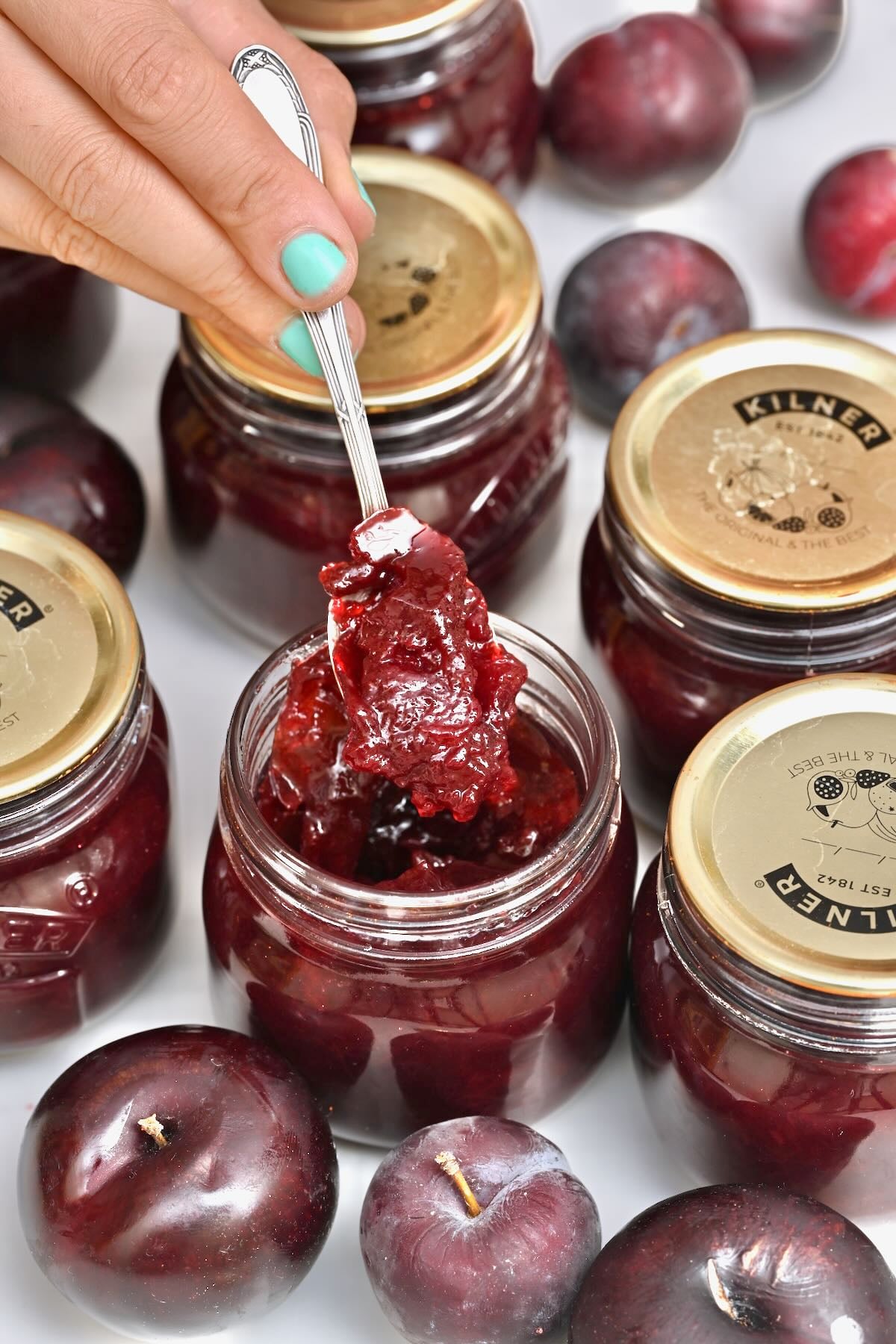
This recipe uses liquid pectin so you get a reliable, firm set in a single session, without the multi-day boil-and-cool method. However, I’ve also included tips on how to use powdered pectin or no pectin at all.
If you love making homemade fruit preserves, you’ll also want to try my cherry jam, apricot jam recipe, and this simple peach jam while stone fruits are in season. And if you have extra plums, turn them into a cozy plum crisp with juicy fruit and a golden, crunchy topping.
Why you’ll love this recipe
- One pot, one session: liquid pectin means you do not need to boil and cool the jam over two days. You can go from fresh plums to sealed jars in a single afternoon.
- No peeling needed: the skins soften completely during cooking and add color, flavor, and natural pectin. No extra prep step required.
- Reliable set every time: using liquid pectin takes the guesswork out of reaching the setting point, which is especially helpful if you are new to jam making.
- Versatile: use it on toast, stir it into yogurt, spread it on pancakes, or give it as a gift. A jar of homemade plum jam goes a long way.
Plum jam ingredients
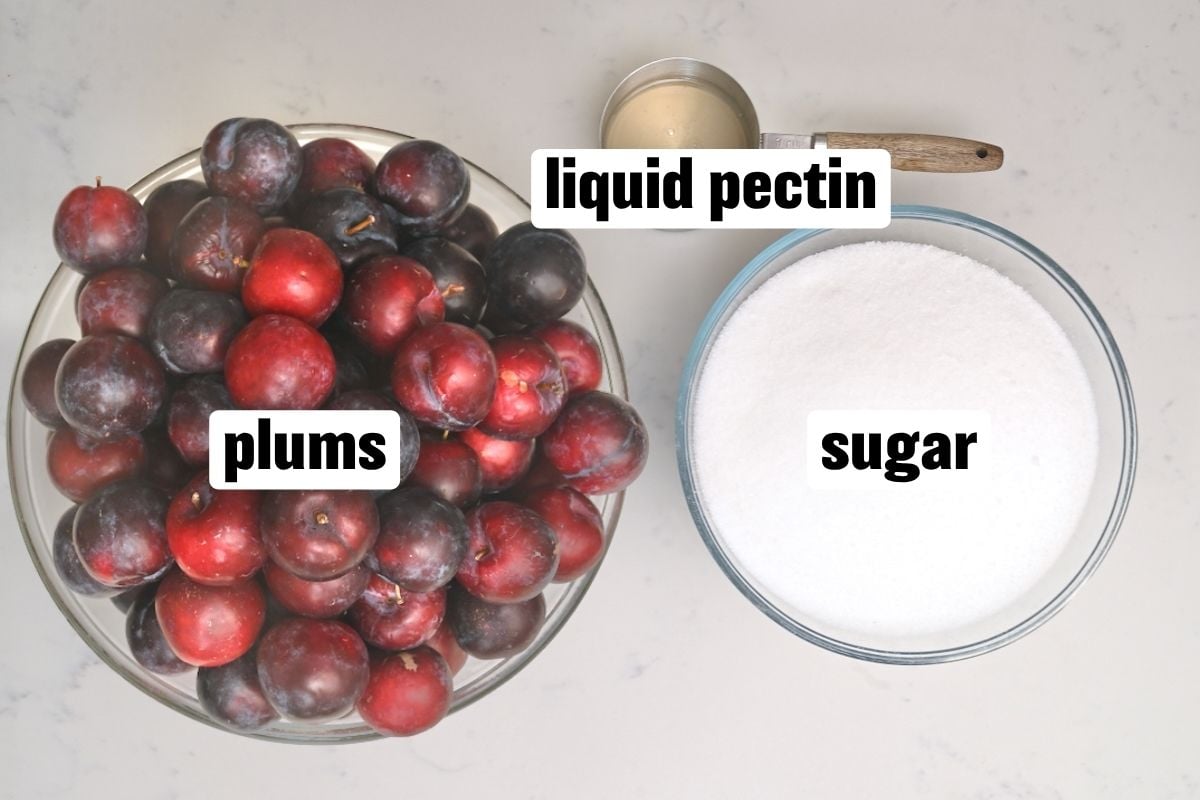
- Ripe plums: the star of the recipe. Choose plums that are ripe and juicy but still firm, not soft or bruised. Any variety works, including Italian prune plums, black plums, or Victoria plums. A few slightly underripe plums mixed in can actually help the jam set because they contain more natural pectin.
- Granulated sugar: essential for sweetness, setting, and shelf stability. Do not reduce the amount, as sugar is what allows the jam to be preserved safely.
- Lemon juice: optional but recommended. It balances the sweetness of the plums, brightens the flavor, and adds a touch of acidity that supports a good set.
- Liquid fruit pectin: one pouch of liquid pectin gives you a reliable, consistent set without a long cooking time. See the recipe notes if you prefer to use powdered pectin or skip pectin entirely.
- Butter: just a small amount, optional. It helps reduce the foam that forms on the surface during cooking, so you spend less time skimming.
See the printable recipe card below for the full ingredients list and quantities.
How to make plum jam
Start by preparing your canning setup. First, wash the canning jars and keep them hot until you are ready to fill them. Wash the lids and bands according to the manufacturer’s instructions. Finally, have your water-bath canner ready.
Wash the plums, cut them in half, remove the pits, and roughly chop them. There is no need to peel them.
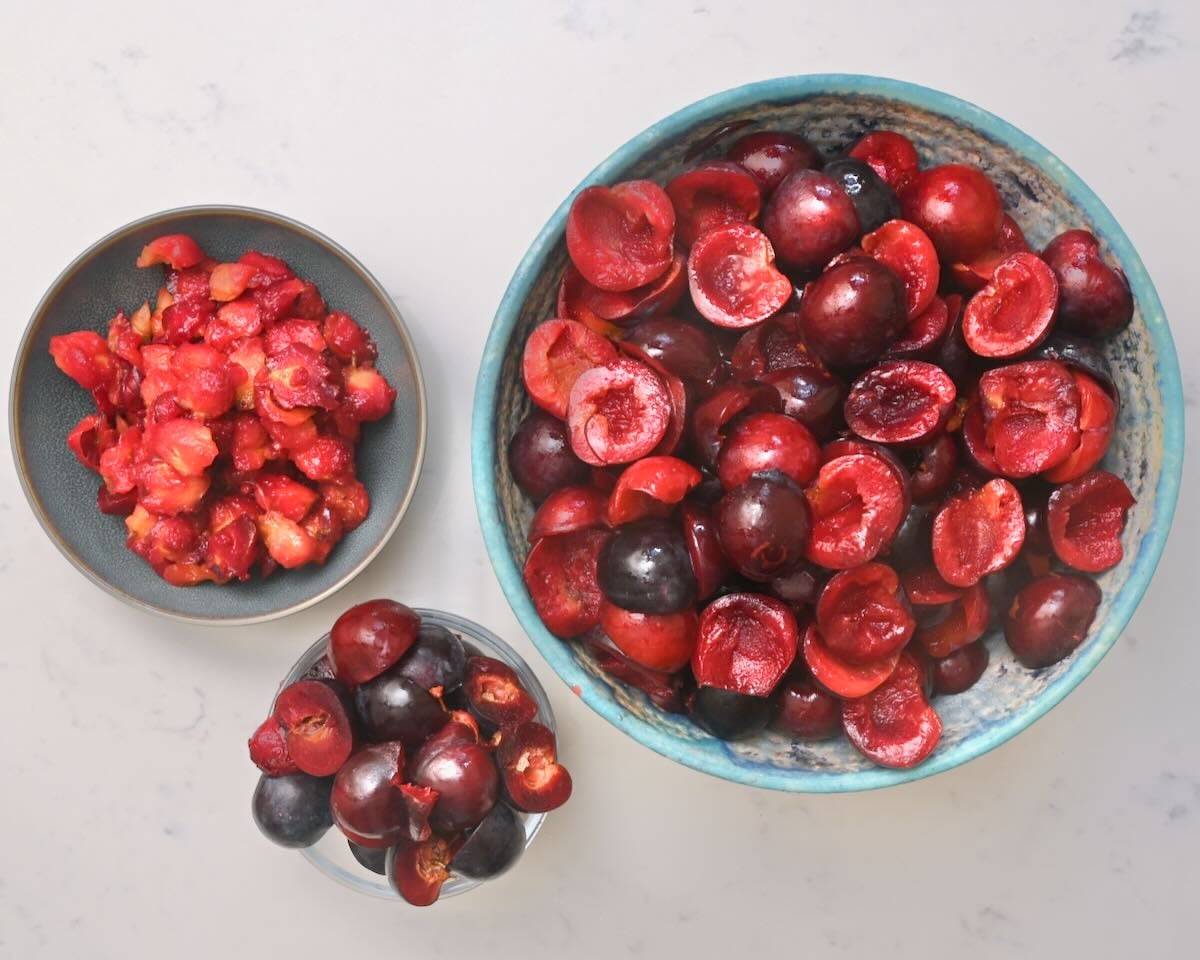 1. Prepare the plums
Place the chopped plums into a large, deep, heavy-bottomed saucepan. Add the sugar, lemon juice, and the optional butter. Mix everything together and use a potato masher to lightly crush the fruit. Do not add water. The sugar will draw moisture from the plums, and the fruit will release plenty of juice as it heats.
Cook over medium heat, stirring frequently. As the mixture warms, the sugar will dissolve and the plums will release their juices. Keep mashing the fruit against the sides and bottom of the pan as it softens. After about 10 to 15 minutes the fruit should be very soft and jammy, with no large firm pieces remaining. Small soft fruit pieces are completely fine.
Increase the heat and bring the mixture to a full rolling boil. This is a vigorous boil that keeps going even when you stir it. Stir constantly at this stage to prevent the jam from catching on the bottom.
Once you have a full rolling boil, stir in all of the liquid pectin. Return the mixture to a full rolling boil, then boil hard for exactly 1 minute, stirring constantly. Remove the pan from the heat and skim off any foam from the surface.
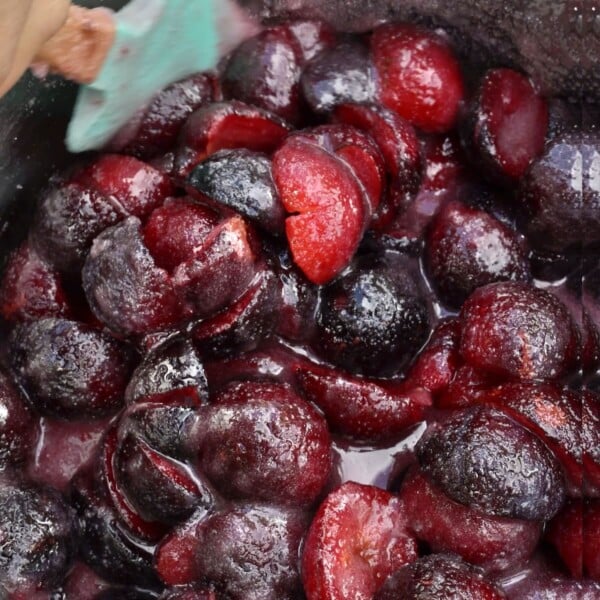 2. Add plums and sugar to saucepan
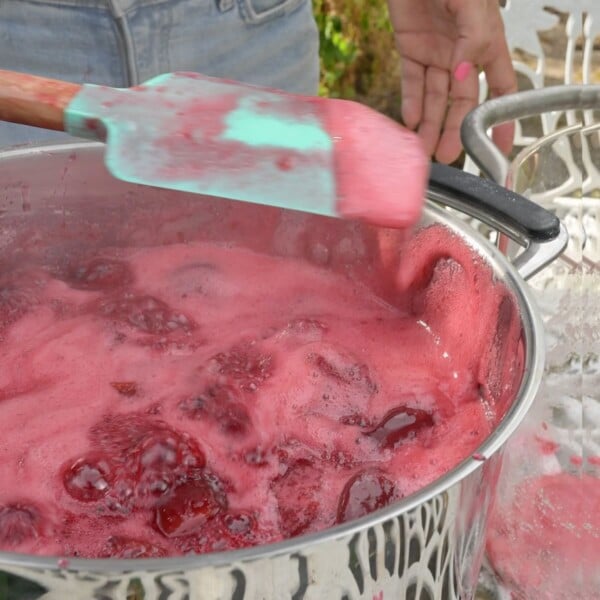 4. Remove foam
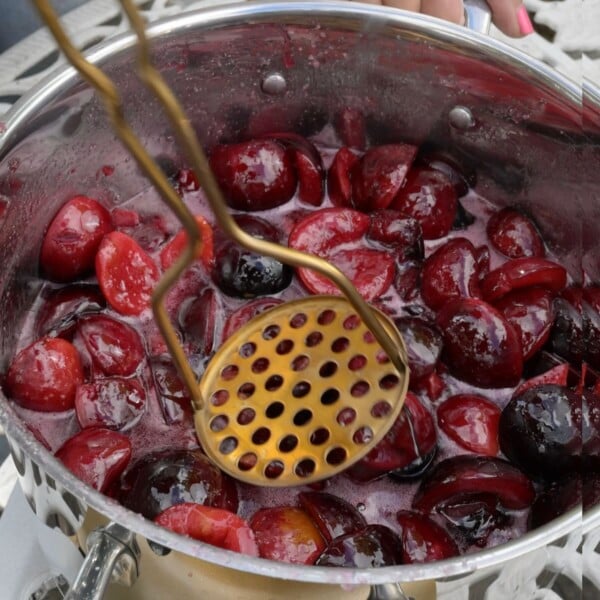 3. Mash
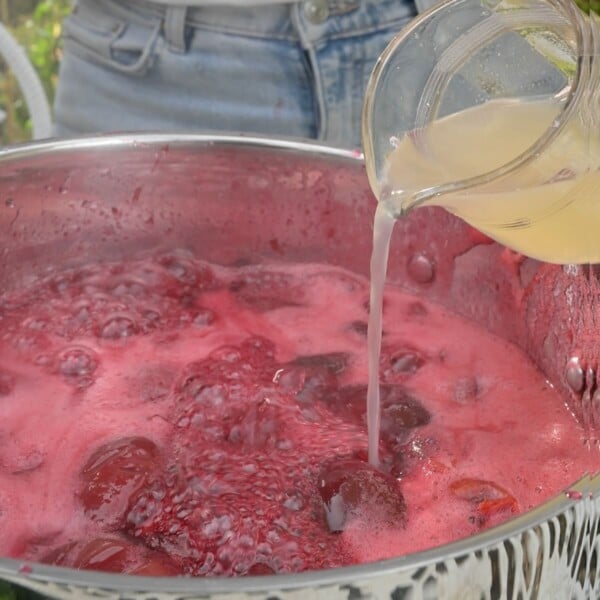 5. Pour liquid pectin
Ladle the hot jam into the hot jars, leaving about a quarter inch of headspace at the top. Remove any trapped air bubbles, wipe the rims clean, position the lids, and tighten the bands until fingertip-tight.
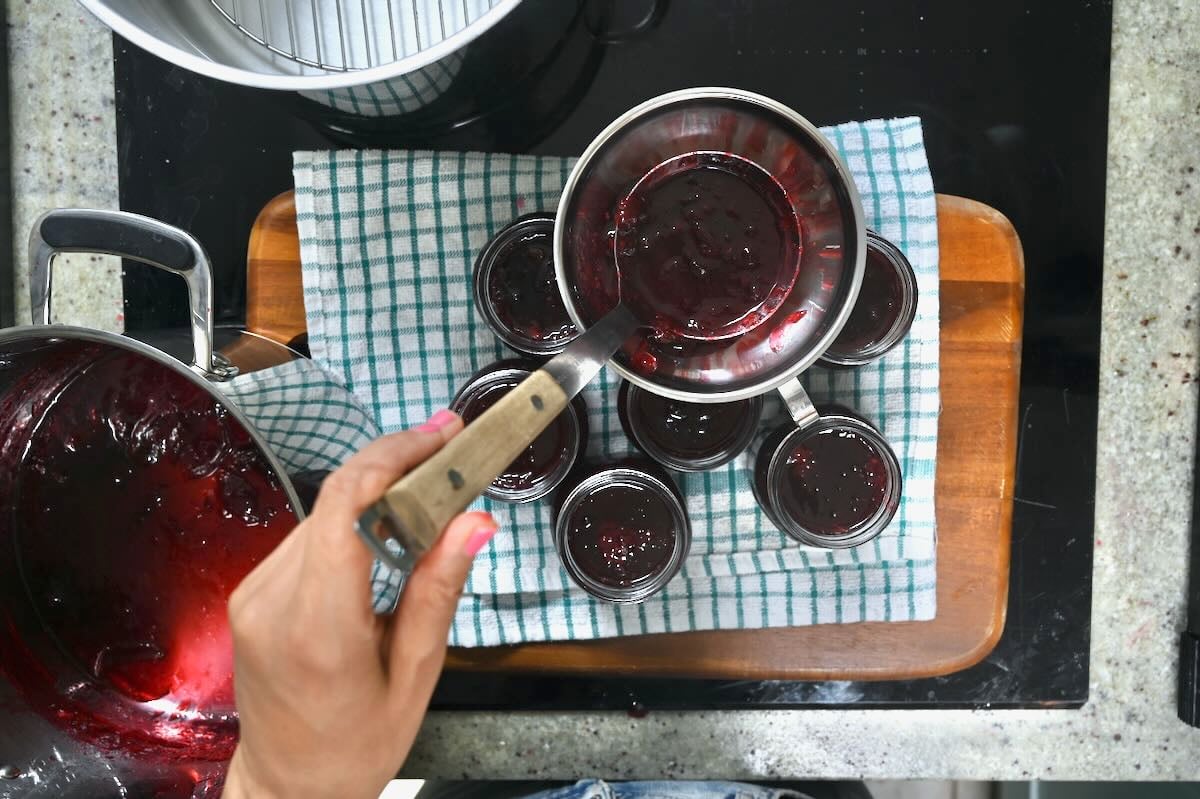 6. Ladle jam into jars
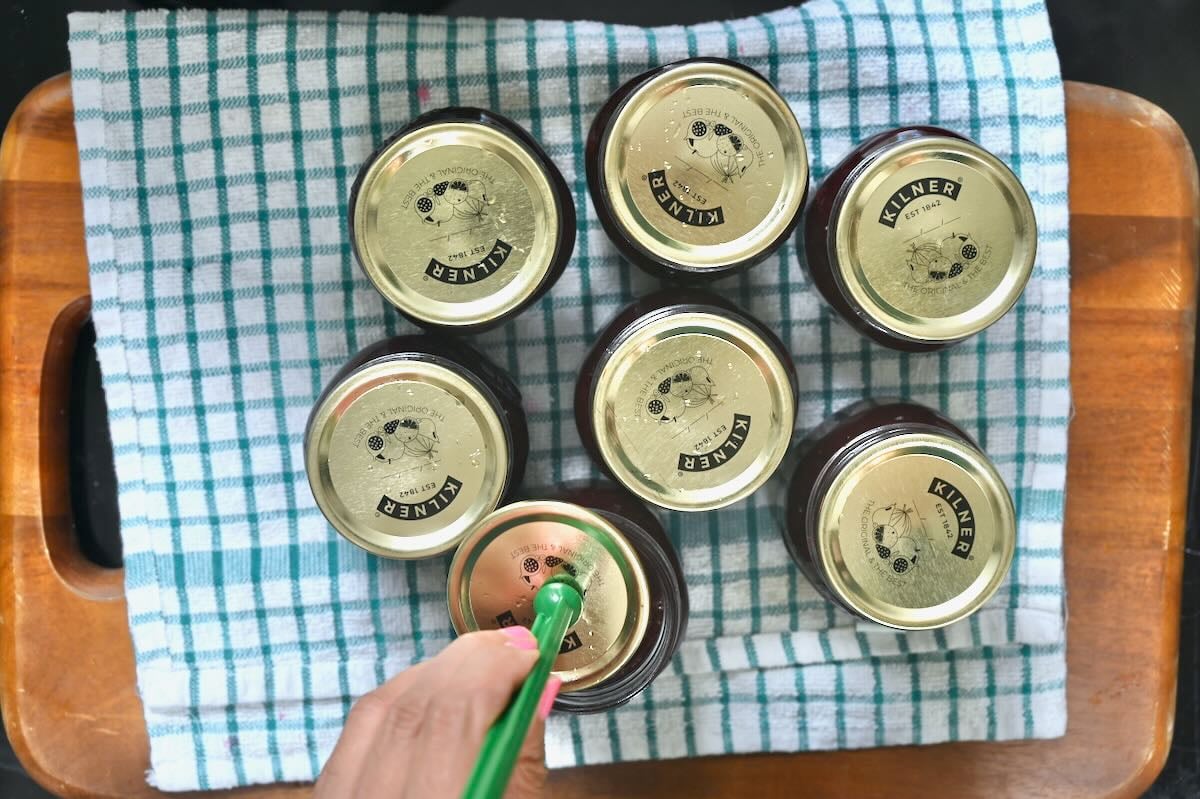 8. Close the lids
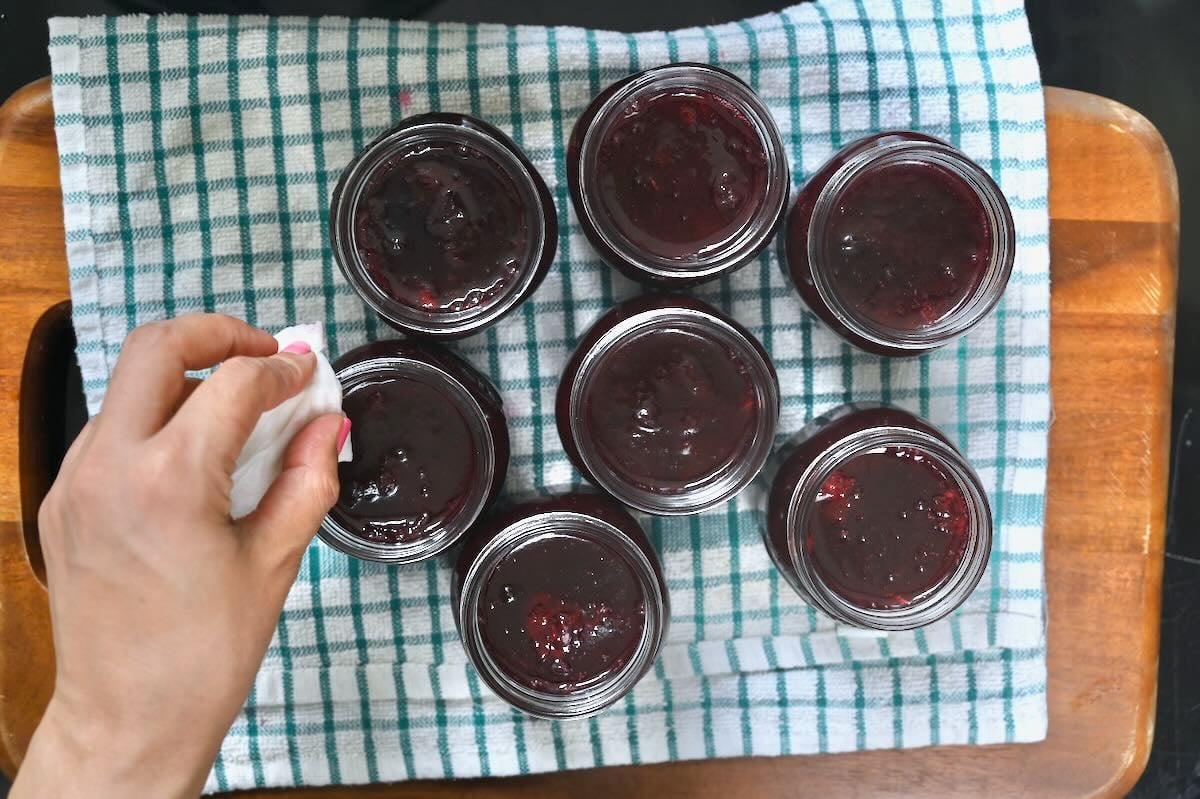 7. Clean the rims
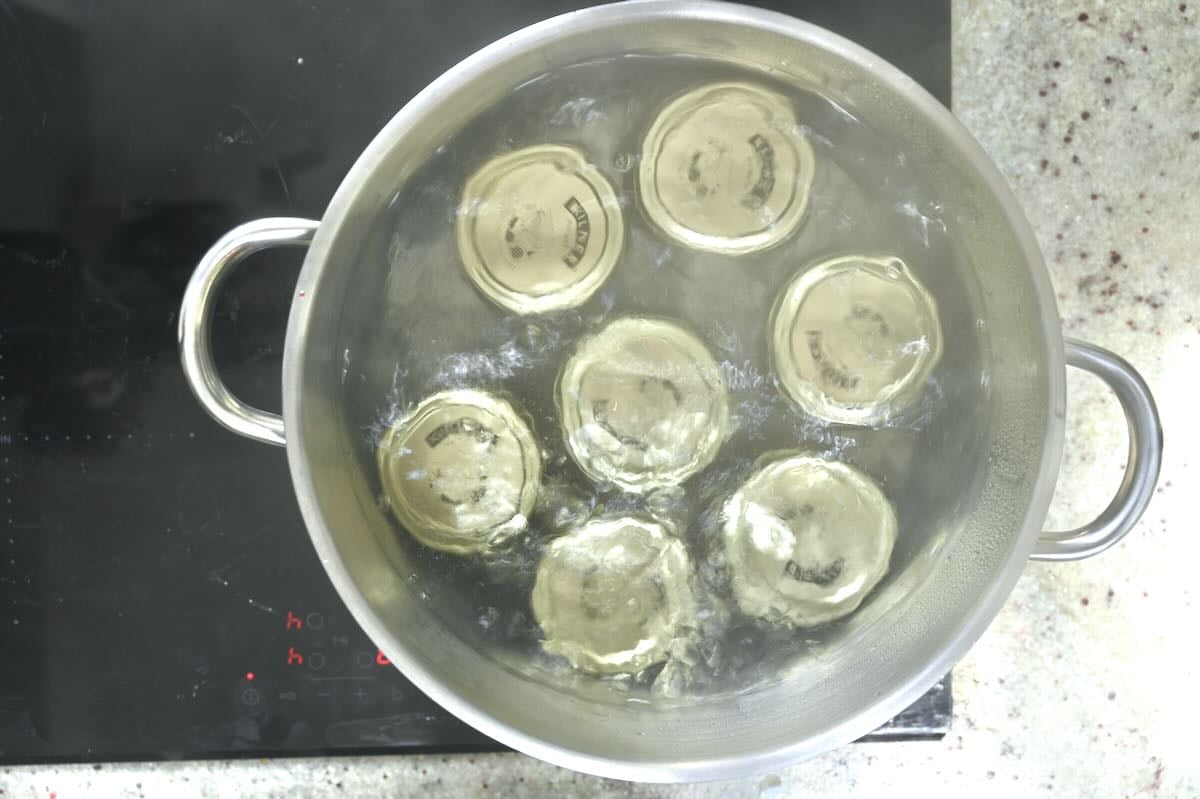 9. Water bath can
Place the filled jars in the canner, making sure they are covered by at least 1 inch of water. Bring the water to a full rolling boil and process for 10 minutes, adjusting for altitude if needed.
Turn off the heat, remove the canner lid, and wait 5 minutes before lifting the jars out. Place them upright on a towel and leave them undisturbed for 12 to 24 hours. You may hear the lids pop as they seal.
Once cooled, check the seals by pressing the center of each lid. It should not flex or move. The jam will continue to thicken as it cools, so do not judge the consistency while it is still hot.
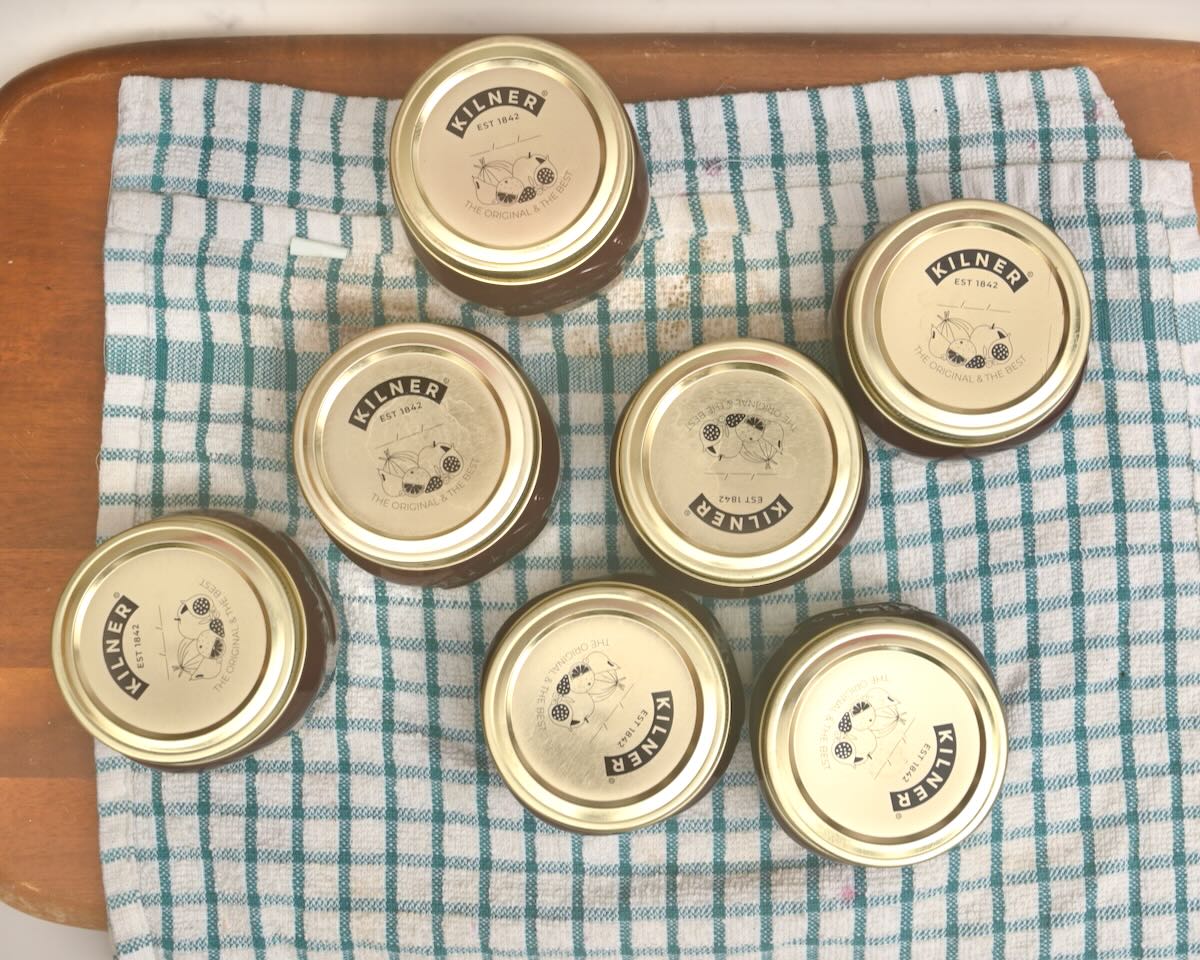 10. Rest the jars.
Do not judge the set while the jam is hot. It will look thinner than expected straight off the stove, but it firms up significantly as it cools. Give it the full 12 to 24 hours before deciding whether it has set properly.
Ways to serve plum jam
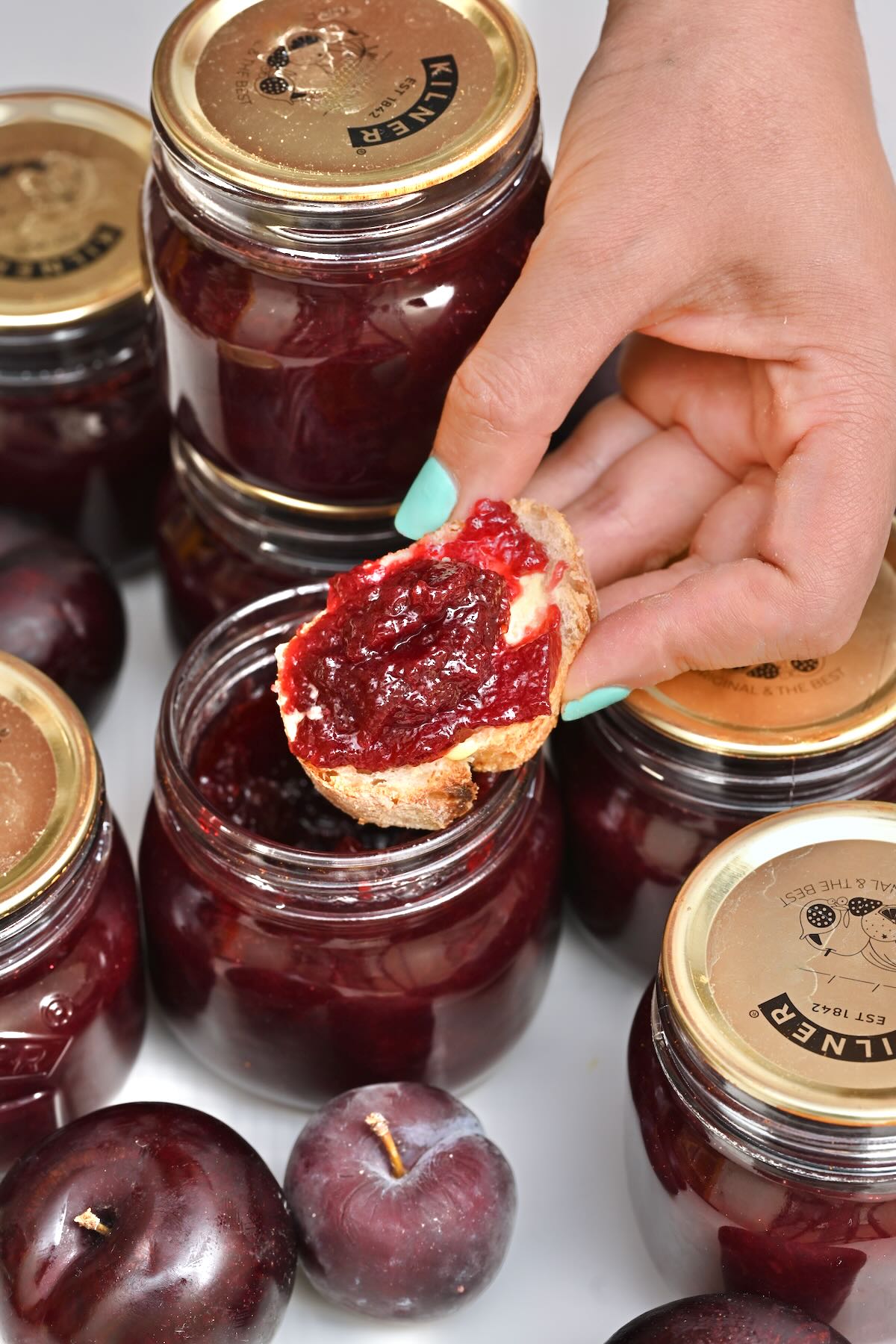
Plum jam is wonderful spread on toast or an English muffin in the morning. It also pairs beautifully with these protein pancakes for a filling breakfast. Stir a spoonful into plain yogurt or oatmeal, use it as a filling for thumbprint cookies or sponge cakes, or serve it alongside a cheese board with sharp cheddar or brie. It also makes a thoughtful homemade gift, especially around the holidays.
Storage and shelf life
- Pantry: Properly sealed jars will keep in a cool, dark place for up to 12 months.
- Fridge: Once a jar is opened, store it in the refrigerator and use within 6 weeks. Always use a clean spoon.
- Freezer: Not recommended for sealed jars. If a jar does not seal properly, transfer the jam to a freezer-safe container and freeze for up to 3 months.
- Reheat: Not needed. Use straight from the jar at room temperature.
FAQs
Yes. Omit the pectin and bring the fruit and sugar to a full rolling boil, then continue boiling for about 20 to 30 minutes, stirring frequently. Start testing after 20 minutes using a chilled plate or a thermometer. The jam is ready at 220º F (104º C) at sea level, or when a small spoonful on a cold plate wrinkles slightly when pushed and does not flow back. No-pectin jam tends to have a softer set and a deeper, more concentrated flavor.
You can, but the method is different and the quantities are not interchangeable. For powdered pectin, whisk it into the prepared fruit before adding the sugar, then bring the fruit and pectin to a full rolling boil, add all the sugar at once, return to a rolling boil, and boil hard for 1 minute. Follow the fruit, sugar, and pectin quantities listed on the powdered-pectin package for the best result.
No. The skins are thin and soft, and they break down completely during cooking. They also contain natural pectin, which helps the jam set, and they contribute to the deep color of the finished jam.
More homemade drinks and preserves to try
If you enjoyed making this jam, here are a few more ways to make the most of fresh seasonal fruit.


If you made this plum jam recipe, please leave a rating and a quick comment. Your feedback supports the blog and helps other readers.
Quick Plum Jam
Equipment
- 7 Canning jars (8 oz) (250 ml) with lids and bands
- Heavy-based stainless steel saucepan
- Water bath canner
- Canning tongs (Jar lifter)
- Canning funnel optional
- Bubble remover optional
- Magnetic lid wand optional
- Potato masher
- Ladle
Ingredients
- 3.3 pounds plums ripe, washed, pitted, and roughly chopped (skins on)
- 3.3 pounds granulated white sugar about 7.5 cups
- 2 tablespoons lemon juice optional but recommended
- 1/2 teaspoon unsalted butter optional, to reduce foam
- 3 fl oz liquid pectin 1 standard pouch
Instructions
- Prepare a boiling-water canner. Wash the canning jars and keep them hot until needed. Wash the lids and bands according to the manufacturer's instructions.
- Wash the plums, cut them in half, remove the pits, and roughly chop them. Keep the skins on.
- Place the chopped plums in a large, deep, heavy-bottomed saucepan. Add the sugar, lemon juice, and optional butter. Mix well and lightly crush the plums with a potato masher. Do not add water.
- Cook over medium heat, stirring frequently, until the sugar has dissolved and the plums have released their juices. Continue cooking and mashing the fruit against the bottom and sides of the pan until it is very soft and jammy, with no large firm pieces remaining. Small soft fruit pieces are fine. This takes about 10 to 15 minutes.
- Increase the heat and bring the mixture to a full rolling boil, a vigorous boil that continues even when stirred. Stir constantly to prevent the jam from catching on the bottom.
- Stir in the entire pouch of liquid pectin. Return the mixture to a full rolling boil, then boil hard for 1 minute, stirring constantly. Remove the pan from the heat and skim off any foam from the surface.
- Ladle the hot jam into the hot jars, leaving 0.25 inch (0.5 cm) headspace. Remove any trapped air bubbles, adjust the headspace if needed, and wipe the rims clean. Position the lids and tighten the bands until fingertip-tight.
- Place the filled jars in the canner, ensuring they are covered by at least 1 inch (2.5 cm) of water. Bring the water to a full rolling boil, then process for 10 minutes, adjusting for altitude when necessary.
- Turn off the heat, remove the canner lid, and wait 5 minutes before lifting out the jars. Place them upright on a wooden board or towel and leave undisturbed for 12 to 24 hours. Check the seals before storing by pressing the center of each lid. It should not flex o
Video
Notes
- Plums: Choose ripe, juicy plums for the best flavor. A few slightly underripe plums mixed in can help the jam set because they contain more natural pectin.
- Making plum jam without pectin: Omit the pectin and follow the same preparation. Once the fruit and sugar reach a full rolling boil, continue boiling for approximately 20 to 30 minutes, stirring frequently and then constantly as the jam thickens. Begin testing after 20 minutes. The jam is ready when it reaches 220º F (104º C) at sea level, or when a spoonful placed on a chilled plate wrinkles slightly when pushed with a finger and does not immediately flow back. No-pectin jam generally has a slightly softer set and a deeper, more concentrated flavor.
- Liquid versus powdered pectin: This recipe was developed with liquid pectin, which is added near the end of cooking. For regular powdered pectin, whisk the pectin into the prepared fruit before adding the sugar. Bring the fruit and pectin to a full rolling boil, add all the sugar at once, return to a rolling boil, and boil hard for 1 minute. Use the fruit, sugar, and pectin quantities stated on the powdered-pectin package, as powdered and liquid pectin are not interchangeable measure for measure.
- Batch making: Do not double the batch when using commercial pectin, as a larger volume may not set reliably. Do not judge the consistency while the jam is hot. Allow it to cool completely before checking the set.









This is the recipe I needed. Thank you for sharing all your tips. My jars are resting now – can’t wait to open one and try the jam. 🙂
Thank you so much for your comment. Glad to hear you made the recipe. I hope you enjoye the jam 🙂