

This post may contain affiliate links. Please read our disclosure policy.
Goat cheese (or chevre cheese) is super simple to make at home, not to mention ridiculously cost-effective. Using just 3 ingredients, you can whip up a batch of customizable homemade goat’s cheese ready to impress your family and friends!
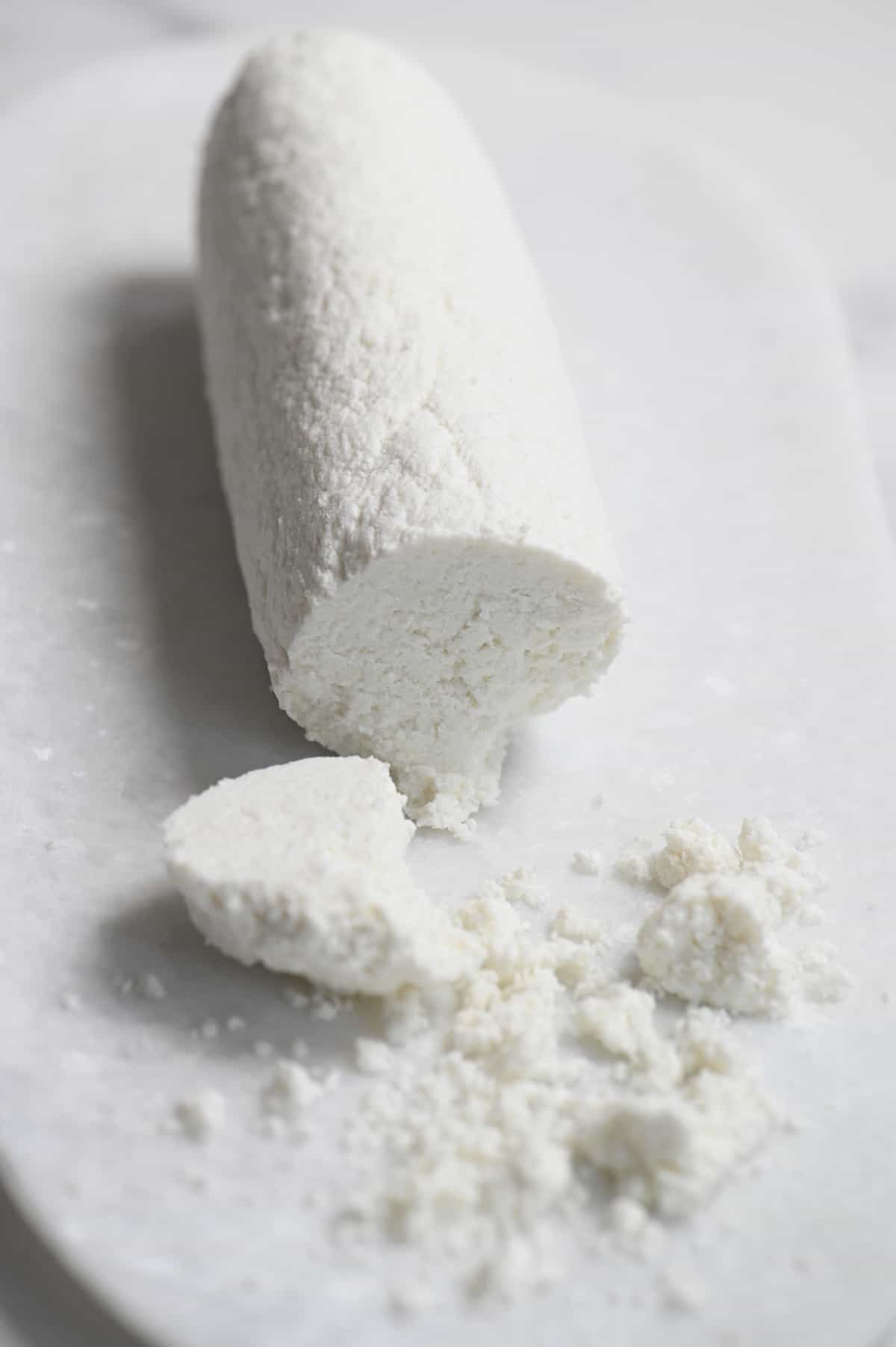
Out of all the DIYs I’ve done over the last few years, I think cheese-making is one of the ones that has truly revolutionized my spending habits. I honestly barely ever buy cheese at a store now because it’s so easy to make batches at home that I can flavor how I want, know exactly what went into them, and this homemade goat’s cheese (french chèvre – which translates to goat) is no different.
Plus, the process for making homemade cheese is FAR simpler than you may be imagining if you’re a complete newbie. This creamy goat cheese uses a ‘coagulation’ method, which means that we combine the goat’s milk with heat and acid. This then breaks down the milk into curds and whey. The curds are what we collect and drain to become our cheese – it’s as simple as that!
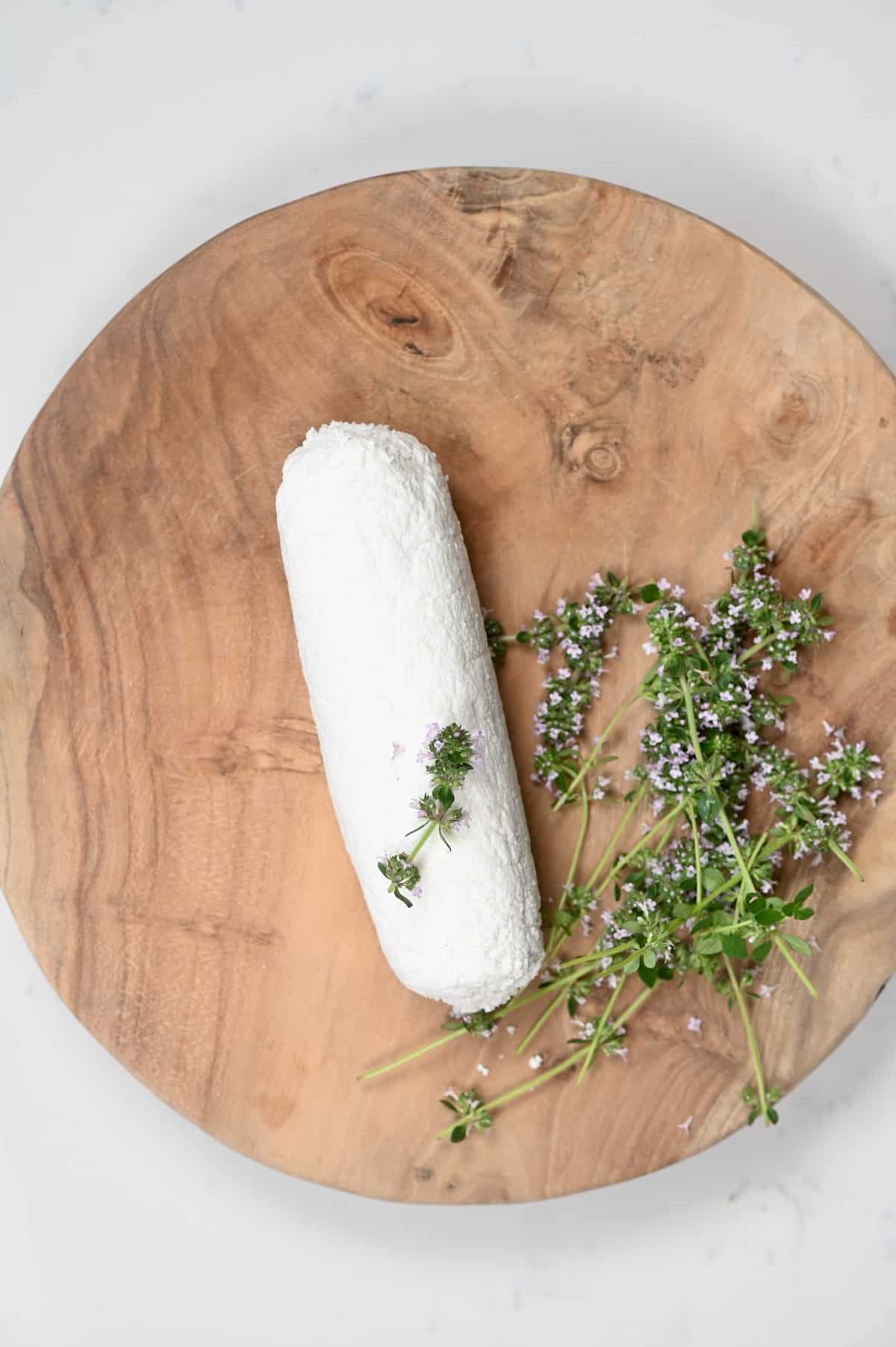
There’s honestly no specialty equipment you even need for this method – other than cheesecloth and a thermometer (which I honestly suggest you get anyway – because they are SUCH a handy kitchen gadget for anyone wanting to make their own DIYs and even ice cream, etc.).
Want to save this recipe?
Why try this recipe
It also tends to be easier on the stomach than cow’s milk/cheese, thus many people who have issues with cow’s milk/cheese can eat goat’s cheese.
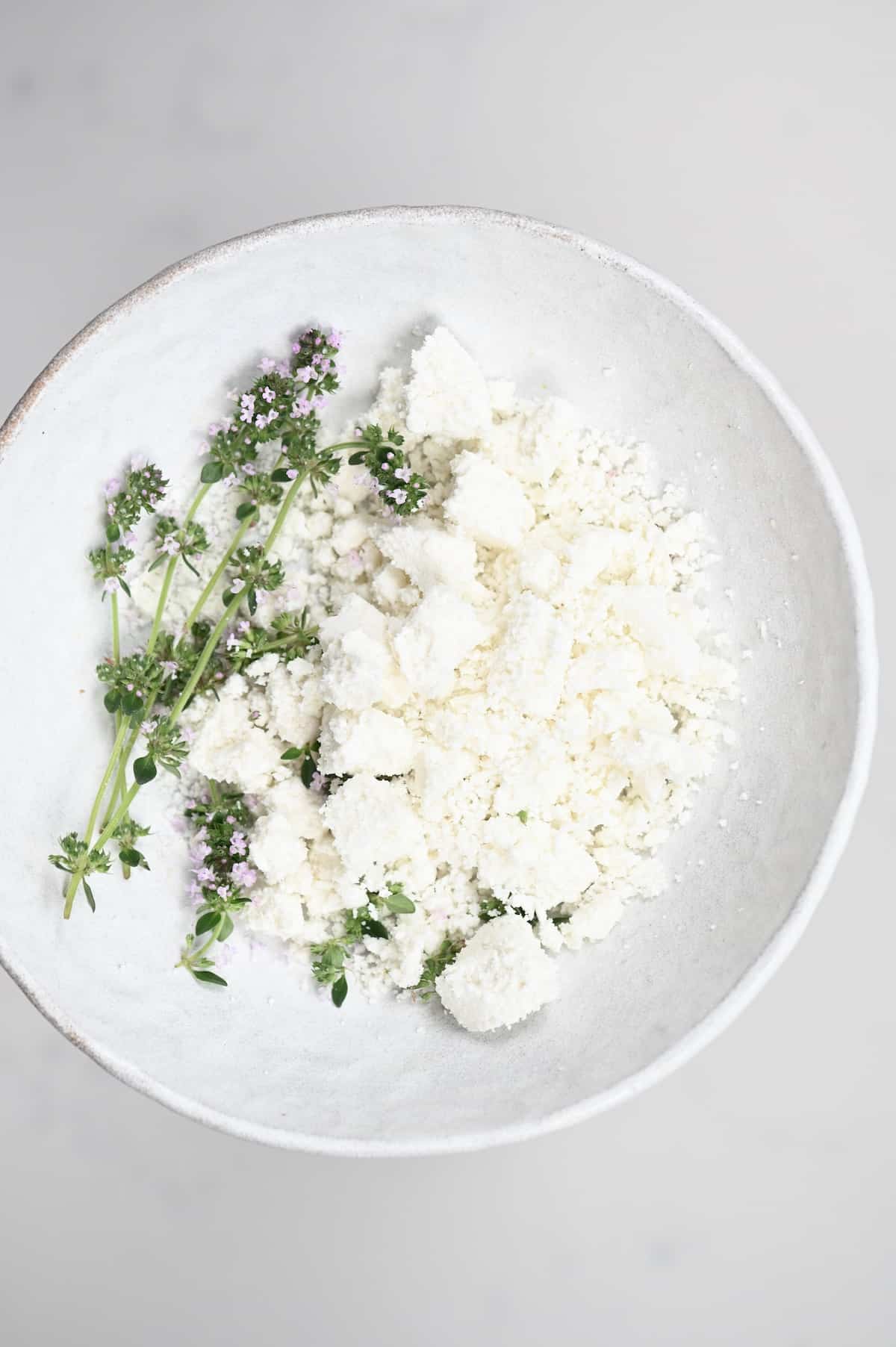
On top of that, this homemade cheese uses just three ingredients and tastes absolutely delicious!
Ingredients you need and variations
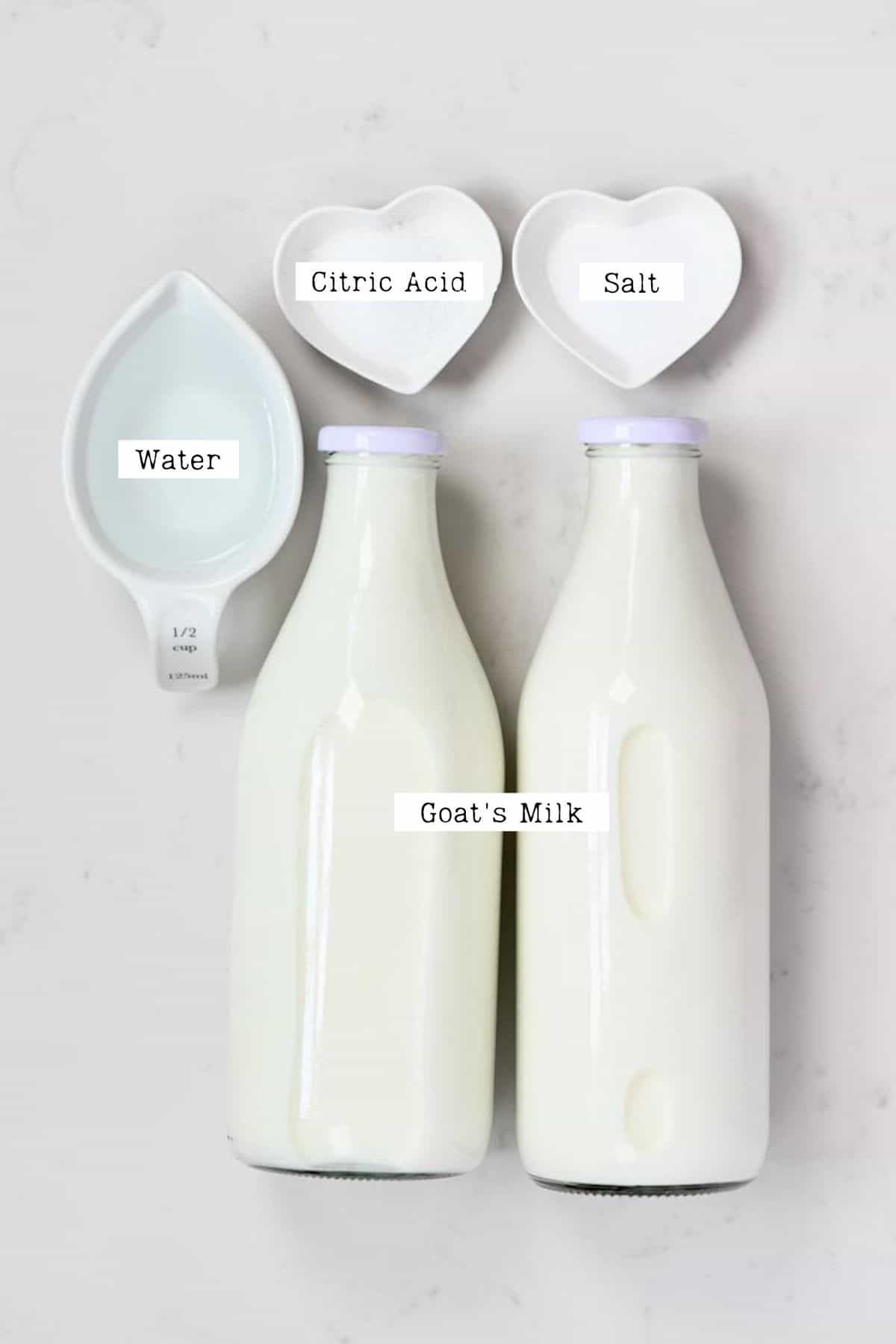
- Fresh goats milk: It’s best to use full-fat goats milk (I used pasteurized goat milk), avoiding anything ultra-pasteurized, as it won’t curdle the same way. You can use raw goats milk if you’re able to source some.
- Citric acid and water: This is what I decided to use as my curdling agent because I have it in my kitchen after lots of DIY-ing. However, if you’re new to cheesemaking and want options that you probably already have in the house (like lemon juice, and vinegar), then check out the FAQ section for more information.
- Cheese salt (kosher salt): This is a non-iodized salt perfect for cheese as the lack of iodine means that it won’t inhibit the needed cultures/bacteria within the cheese. You can use sea salt as well, but only add after the cheese had curdled and drained.
Optional ingredient add-ins
I love to make plain goat’s cheese, and then adapt smaller portions to individual meals/uses. However, you can also flavor the entire batch. Here are a few options:
- You can make a herbed goat cheese using dried herbs such as chives, thyme, rosemary, etc. Add at the same time as adding milk to distribute evenly throughout the cheese.
- You could also cover the goats’ cheese in fresh herbs, once molded. I like to use chives or dill. You can also use dried herbs and spice blends such as tarragon, za’atar, basil, etc.
- When making logs/disks, you could also cover them in chopped nuts (raw or toasted).
- For a sweet variation, drizzle with honey and, optionally, some cinnamon.
Step by step instructions
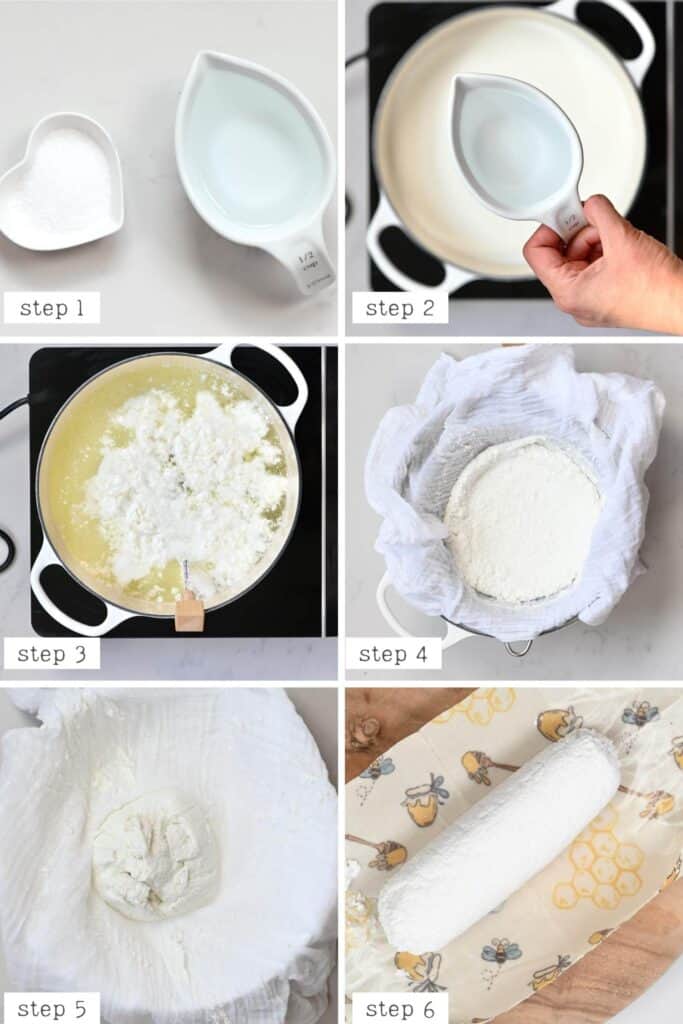
Step 1. Prepare the Citric acid
Start by dissolving the citric acid in the water. There’s no need to heat the mixture.
Step 2. Heat The Goats milk
Pour the milk into a large saucepan and add the dissolved citric acid. Heat over medium heat gently, until you reach 85ºC/185ºF.* Then remove from heat.
*This method will differ if using lemon juice/vinegar. In that case, you only add the acid once the milk has reached this temperature and you’ve turned the heat off.
Step 3. Leave the milk to curdle
Set the milk aside and allow to rest, covered (with a lid or tea towel), for 10 minutes.
Goats milk doesn’t curdle in the same way that cows milk does, as the curds can be fairly small and less ‘formed’, unlike when making ricotta. This means the mixture can still look fairly liquid after 10 minutes.
Step 4. Drain the cheese
Place cheesecloth inside a sieve and pour the milk into the cheesecloth and allow to drain for around an hour.
You can leave the sieve over a large bowl and collect the leftover whey to use in other recipes. Alternatively, you can bundle up the cheesecloth and hang it from the faucet, to drain.
Step 5. Flavor and mold it
Add your salt to the drained cheese and mix well. Now it’s time to form the cheese. You can place it in a mold or roll it into a log.
To easily roll into a log, place it over a piece of beeswax wrap, plastic wrap, or wax paper and use it to roll into a log. Twist/fold in the ends to secure the cheese parcel.
Move to the fridge to chill and ‘set’. Your homemade goat cheese is ready to use!
How to serve
There are tons (and tons and tons) of ways to serve and consume goats cheese. SO much so that I couldn’t possibly hope to list them all here. However, here are some of my top picks.
- Spread over toast (whole wheat or multigrain), bagels, or even croissants.
- Serve as part of a cheese platter, with crackers and this easy homemade fig jam.
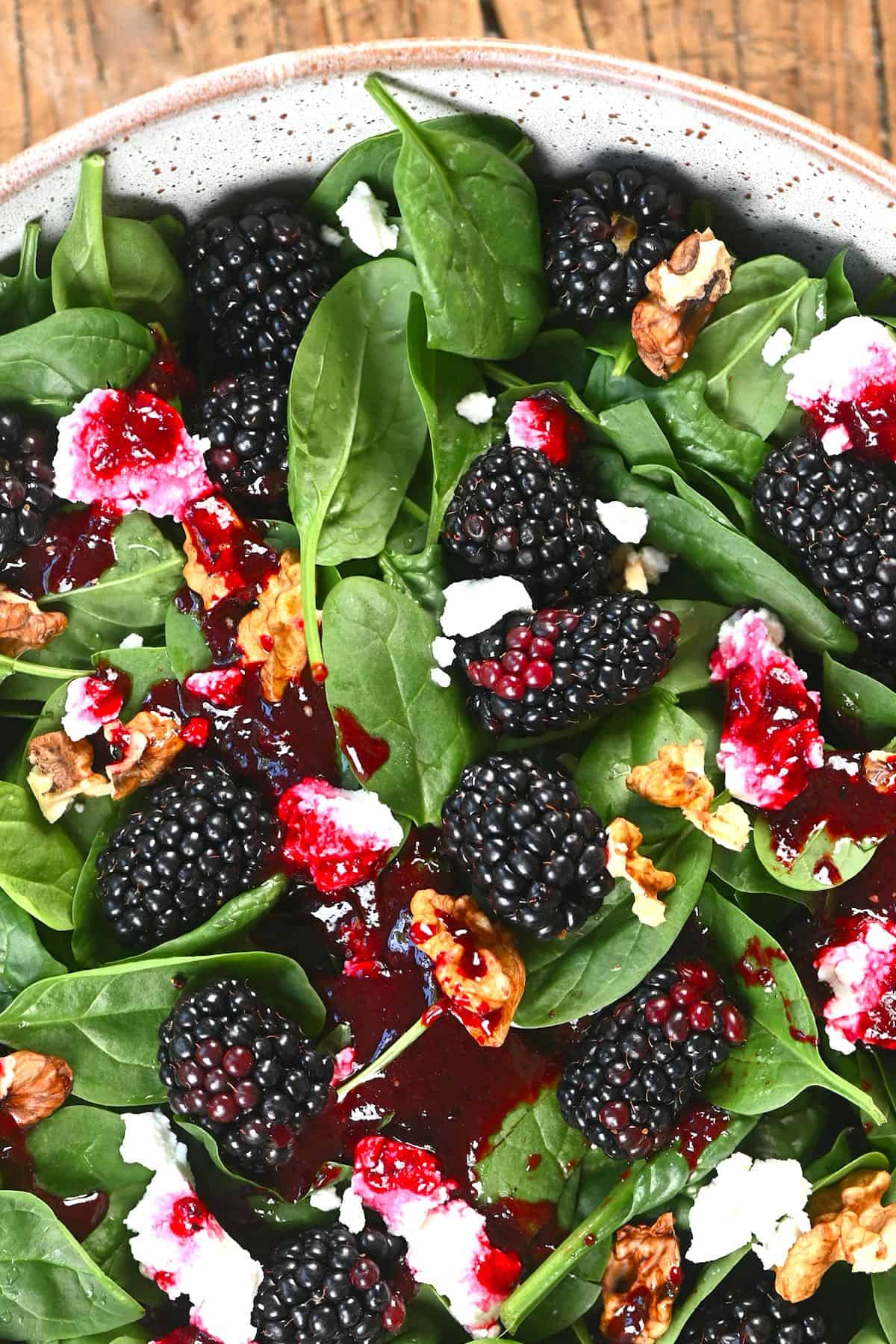
- Crumble over/into salads – like this beet salad recipe, simple quinoa salad, or blackberry spinach salad.
- Mix into pasta sauces – like this Vegetarian One-Pot Pasta bake, including within lasagne.
- Make a pizza and top with goat cheese.
- Use on baked potatoes (including sweet potatoes).
- Marinate in olive oil and herbs.
- A goat cheese and caramelized onion tart.
Let me know in the comments what your favorite goat cheese recipes are.
FAQs and tips
This cheese can last between 1-2 weeks in the fridge (although, I suggest aiming to use it within a week). It’s best kept with slight ‘humidity’, so keep in a drawer, if possible.
If there is any mold on your cheese then you’ll have to discard the entire cheese. It will also, usually, develop an odd smell and appearance.
Yes. It’s best to freeze soon after preparing the batch, tightly wrapped, to maintain its texture and moisture content. It is best consumed within 6 months. Allow to thaw slowly in the fridge, before using.
If the texture changes upon thawing you can blend it into a creamier texture, or even add a few tablespoons of milk to it and mix well.
You can also use simple home ingredients to help the milk curdle. This includes white vinegar, apple cider vinegar, or lemon juice. You’ll need 1/3 cup fresh lemon juice per quart (950ml) of milk or 1/4 cup vinegar.
I’ve never had this issue happen. However, this could be down to heating the milk too quickly. Slow and steady is the name of the game (the same goes for stirring the milk – stir too fast and you’ll have tougher cheese).
It could also be down to the amount of acid used with the milk. Goats milk changes in acid throughout the year (highest after giving birth), so this can affect the amount you need to add.
The key to a soft and spreadable goat cheese is simply mixing it with a spoonful or two of milk or cream. Mash them together in a small bowl, and within seconds, the goat cheese will be just softened enough to be spreadable.
If you do find the cheese too crumbly, you can whip it into a spreadable, creamy consistency. Simply combine goats cheese and cream cheese 2:1 ratio in a blender. You can even add extra ingredients such as garlic, red pepper flakes, herbs, etc.
Yes, sure can! I like tangy goat cheese – but to reduce the tangy flavor, lightly rinse the cheese curds gently with some cold water before leaving to drain and it will wash away some of the ‘tang’ from the acid.
Related recipes
- Super Easy Homemade Cream Cheese
- Homemade Ricotta Cheese
- DIY How To Make Paneer At Home
- Simple Smoky Vegan Cheddar Cheese
- Easy Stretchy Vegan Mozzarella Cheese
- Simple Herby Vegan Feta Cheese
- How To Make Butter (ONE ingredient)
If you give this recipe a go, then let me know your thoughts in the comments. Also, feel free to tag me in your recreations @AlphaFoodie.
How to Make Goat Cheese
Equipment
- Beeswax wrap or parchment paper, or wrap
Ingredients
- 8 cups fresh goats milk best to use full-fat goat's milk, avoiding ultra-pasteurized
- ½ cup water if using citric acid
- 1.5 tsp citric acid OR 2/3 cup fresh lemon juice and 1/4 cup vinegar(4 tbsp)(no water needed if using lemon/vinegar)
- 1 tsp cheese salt
Instructions
Using Citric Acid:
- Add citric acid to water and stir until fully dissolved.
- Pour milk into a large saucepan. Add dissolved citric acid and stir gently.
- Heat over medium heat until milk reaches 185ºF/85ºC. Remove from heat.
- Cover milk and let it rest for 10 minutes. It may still appear liquid after 10 minutes, but this is sufficient.
- Place cheesecloth in a sieve over a bowl. Pour milk into cheesecloth and allow to drain for about an hour. Reserve leftover whey if desired.
- Mix salt into drained cheese. Add spices or herbs as desired.
- Roll cheese into a log and wrap in beeswax, plastic wrap, or wax paper. Secure ends.
- Chill cheese in the fridge. Your homemade goat cheese is ready to enjoy!
Using Lemon Juice and Vinegar:
- Heat goat milk to 185ºF/85ºC.
- Remove from heat, add lemon juice, and stir gently.
- Add vinegar, stir to combine, and let sit for 30 minutes. And continue with straining the cheese and forming it the same method as using citic acid.
Optional step – Smooth creamy cheese
- Once the cheese has set, you can blend it with a bit of water, milk, or cream (2-3 Tbsp as needed) to achieve a smooth creamy goat cheese.
Video
Notes
Nutrition
Nutrition information is automatically calculated, so should only be used as an approximation.









I’m a first time cheese maker using my homegrown goat’s milk. Two batches down now and absolute success. I had no idea it was so easy to have beautiful delicious cheese to share with friends and family. Thanks for recipe and thanks to my lovely goats Pixie and Cheryl.
Thank you so much for your comment, Rachael. Glad you hear you liked the recipe! Say Hi to Pixie and Cheryl for me <3
The first time I made this with great success, but the second time I doubled the recipe (including the citric acid) and was left with a sharp tasting, grainy disappointment. Should I have not increased the citric acid proportionally? Any guesses as to what went amiss? Thank you!
Hi Kimberly! So glad the first batch was a success – and sorry the doubled one disappointed, plus apologies for the late reply. A sharp, grainy result usually points to too much acid and/or heating too fast. When doubling, the citric acid doesn’t always need to scale up perfectly linearly, and goat’s milk acidity varies through the year too, so the extra acid likely tipped it over. Next time try doubling everything except hold back a little on the citric acid, heat slowly, and stir gently. You can also rinse the curds with cold water before draining to wash away some of the sharp tang. Hope that helps! 😊
How many ounces is the cheese log when it’s finished? Thanks!
Hi Amy! Sorry for the late reply. 😊 The finished cheese log is about 8 ounces. Hope that helps!
I followed the recipe exactly, used whole goats milk and lemon juice and it hasn’t curdled. Should I reheat it? I used a thermometer and it got to 85oc but it hasn’t worked… I don’t even want to drain it through the cheesecloth as I fear they’ll be nothing there! … Any suggestions?
Hi Rebecca! 😊 Sorry to hear it didn’t curdle! Goat’s milk curdles much more subtly than cow’s milk, the curds are small and the mixture can look quite liquid even when it’s worked, so don’t give up before draining. A few likely culprits: ultra-pasteurized milk (it often won’t curdle properly, standard pasteurized or raw is best), or needing a touch more acid (goat’s milk acidity varies through the year). Try gently reheating to 85ºC and adding a little more lemon juice (a tablespoon at a time), then let it rest covered for 10-15 minutes. Go ahead and strain through the cheesecloth, you may have more curds than you think. Let me know how it goes!
I’d like to try this with doubling the recipe. How long will it need to curdle with doing that? Looking forward to trying!
Hi Lindsay,
The curdling time will still be the same. Let me know if you tried it!
Ive heard that you can add milk to whey to get a higher yield of ricotta. Can I use cows milk if I have left over whey from goats milk? Or vis versa? Thank you
Hi Lucia,
I haven’t tested that myself, but I’ve heard of people experimenting with it. If you try it, let me know how it turns out!
Absolutely fantastic. I had to reduce the recipe since I don’t get a lot of milk off my dwarf goat and I wanted to try this recipe. I added some fresh basil leaves to my heat up process and then added some other dried herbs after and it is absolutely delicious
Thank you for your comment, Renee! Adding fresh basil sounds delicious!
I don’t have access to fresh goat’s milk, so I’m using canned. I’ve used this recipe twice, and I’m getting ready to make my third batch. Because this is condensed milk, my question is do I have to add water to it? It seems to me the answer would be no, but I’d rather ask first.
Hi Laura,
Did you say you are using condensed milk? Or did you mean canned milk? Did it work with canned milk?
I have not tried this recipe yet, but my favorite way to eat goat cheese is on the Fig & Coat Cheese burger from Eureka! Creamy goat cheese, fig jam & a slightly spicy aioli plus Red oinion & arugula. To die for!
Sounds delicious, Jo 🙂
First time making cheese and this worked out perfectly, thank you
So happy to hear this. Thanks, Sherry!
Very easy and delicious recipe. First time making it and it came out great!!
Thank you for your comment, Nancy. Glad you enjoyed it!
This worked perfectly the last couple times I made it. Best recipe I’ve found. This last time though it didn’t seem to curdle. I got only half as much cheese as usual. The whey was much milky-er. The goats milk was fresh and unpasteurized and I use the citric. Any ideas what could have gone wrong ?
Hi Diana,
It’s best to use full-fat milk – was the one from your last try the same milk you’ve used before?
Makes fantastic cheese.
Thank you for your comment, Erin! 🙂
Could you use 8 cups of goat milk instead of 8 & 1/3 cup?
Hi Ash,
Yes, you can. I hope you managed.
i just love this cheese it is delicous
Thank you for your comment. Glad you liked it 🙂
Great recipe!I have just one question.. after the drain, do i have to squeeze the exta liquid?
Hi Nikoleta,
Thank you for your comment. No it’s not necessary if you followed the steps correctly.
Wow, simple recipe! We will be making this soon.
I hope you like it, Ellie!